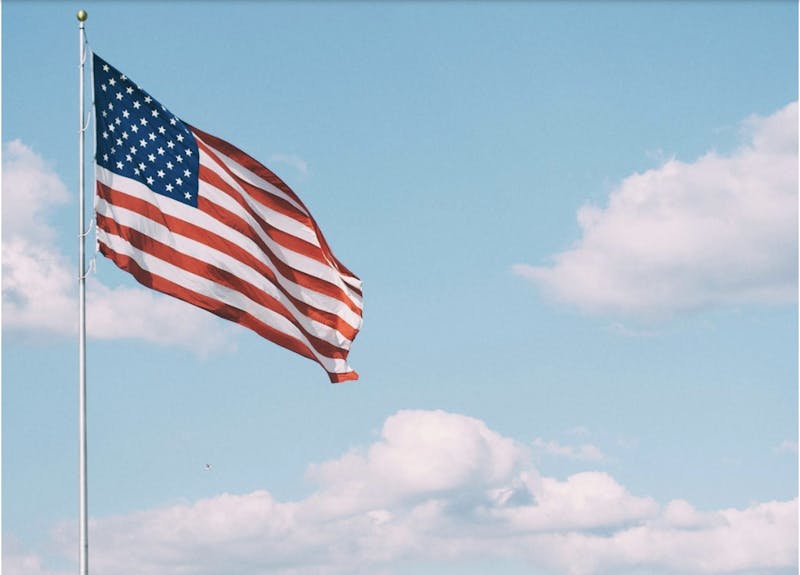
During his first semester at Johns Hopkins University, Bryce Leiberman engaged in a conversation that prompted him to reconsider his beliefs about identity and bias in the context of American foreign policy. While working on a paper about the Iraq War, a discussion with a friend challenged him to reflect on how his American identity influenced his perspective on the conflict.
Identity and Bias in Foreign Policy Discussions
Leiberman was drafting his paper when a peer expressed curiosity about his topic. After he explained the various causes of the Iraq War, the friend made an observation that resonated deeply: “It will be interesting to see how you keep your own bias out of your work.” This comment caught Leiberman off guard, leading him to question why he had unconsciously used “we” to refer to America, despite having no direct involvement in the events.
This moment of introspection revealed a broader dilemma surrounding national identity. Leiberman realized that his automatic association with the United States, even in discussions about historical events, reflected a complex mix of personal and collective identity. He recognized that pride in one’s nationality does not imply agreement with all actions taken by that nation. “Being proud to be an American citizen and endorsing everything associated with America are not the same,” he stated.
The Complexity of Group Identity
Leiberman’s reflections highlighted an essential truth: identities are multifaceted and shaped by various factors, including geography, culture, and personal experiences. In a diverse academic environment like Hopkins, he noted the stark contrast to his more homogenous hometown in Madison, Connecticut. This difference underscored the importance of recognizing varying perspectives, especially when discussing sensitive topics like foreign policy.
As he delved deeper, Leiberman discovered that the bias in his writing stemmed from his upbringing. While he had not actively supported any political agenda, the mere act of identifying with “Team America” influenced his viewpoint. He emphasized that Americans are not a monolith and that the act of aligning oneself with a national identity can lead to oversimplified perceptions of complex global issues.
Leiberman concluded that while group identities can foster a sense of belonging and cohesion, they can also create divisions. “Teamsmanship is a double-edged sword,” he reflected. The need to belong often leads individuals to form alliances that may overshadow their personal beliefs and values. Recognizing this tendency is crucial for fostering meaningful dialogues across cultural and national boundaries.
As he continues his studies in Political Science and Philosophy, Leiberman aims to navigate these complexities. He believes that acknowledging and addressing biases can lead to more nuanced understandings of international relations. “While bias and identity may be our first instincts, learning how to adjust our mental calculus can help us understand how lines in the sand are drawn,” he stated thoughtfully.
This ongoing journey of self-exploration not only enriches Leiberman’s academic pursuits but also enhances his ability to engage in discussions about identity and foreign policy with a greater sense of awareness and empathy.