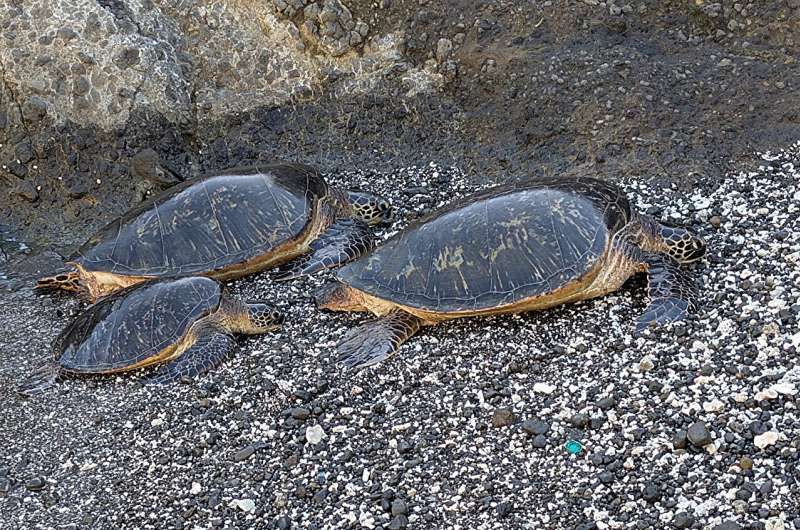
Researchers from Rissho University have uncovered concerning evidence of cross-regional marine plastic pollution affecting green sea turtles around the Ogasawara Islands in Japan. The study, published in the journal PeerJ on January 11, 2026, involved an examination of the diet and plastic ingestion of ten green turtles, revealing that plastics were present in seven of the individuals studied. This finding highlights the broader implications of transboundary marine pollution and its impact on wildlife.
The research team employed a combination of genetic, isotopic, and plastic analyses to trace the origins of the ingested plastics. The results indicated that these materials originated from regions outside the turtles’ usual migratory patterns. Prof. Lee, a lead researcher, emphasized the significance of these findings, stating, “This study demonstrates that plastic pollution is a transboundary issue.”
Impact of Plastics on Marine Life
Plastics pose a significant threat to various marine organisms, including fish, whales, and zooplankton. Among these species, sea turtles are particularly vulnerable to the adverse effects of marine plastic pollution. Turtles can ingest plastic through two primary pathways: by unintentionally consuming plastics mixed with their natural food, such as algae, or by selectively feeding on plastics that resemble their typical prey, mainly jellyfish. Despite the severity of the issue, detailed data regarding the diets of sea turtles remain scarce.
The green turtle, known scientifically as Chelonia mydas, is found predominantly in tropical and subtropical waters worldwide. In Japan, these turtles nest mainly on the Ogasawara Islands, located approximately 1,000 km south of the main island. They migrate from the Pacific coasts of Japan to these islands for mating and nesting, a journey that exposes them to various plastic pollution sources.
Prof. Lee explained that during their migration, green turtles are likely to ingest plastics that exist in multiple forms, including floating debris and items intertwined with seaweed. The study aimed to estimate the factors influencing plastic ingestion and analyze the origins of these ingested materials by integrating morphological and genetic analysis with isotopic assessments.
Findings on Plastic Ingestion
At the time of capture, the turtles were primarily feeding on macroalgae. DNA analysis suggested that the feeding grounds could be traced to three locations where their preferred seaweed species—Ectocarpus crouaniorum, Sargassum muticum, and Lobophora sp.—were abundant. Additionally, stable isotope ratios of carbon and nitrogen in the turtles’ muscle tissue indicated that they might have consumed drifting seaweed and gelatinous plankton during their southward migration.
Out of the ten turtles examined, plastics were detected in the digestive tracts of seven. The average number of plastic items found per turtle was 9.2, with a range from 0 to 31. Notably, macroplastics measuring between 10 cm² and 1 m² comprised 56.5% of all plastic items found. While most plastics reported in marine organisms are microplastics (less than 5 mm), this study confirmed that sea turtles also ingest larger mesoplastics (between 5 mm and 2.5 cm) and macroplastics (between 2.5 cm and 1 m), which can have more severe negative impacts on both the turtles and their ecosystems.
The analysis indicated that the ingested plastics were likely associated with large drifting seaweeds, which the turtles may have mistaken for gelatinous plankton such as jellyfish and salpas. Furthermore, markings on the plastics suggested that they originated from regions extending beyond the turtles’ migratory range, underscoring the issue of cross-border pollution.
Prof. Lee concluded by calling for international cooperation to address plastic pollution. “Efforts to reduce plastic pollution—including reduction in the production, use, and disposal of plastic products—must be pursued through international cooperation, alongside continued research,” he stated.
The findings of this study not only shed light on the dietary habits of green turtles but also stress the urgent need for collaborative actions to combat the transboundary issue of marine plastic pollution. The research was co-authored by Tenzo Fujitani and provides critical insights into the challenges facing marine conservation efforts today.