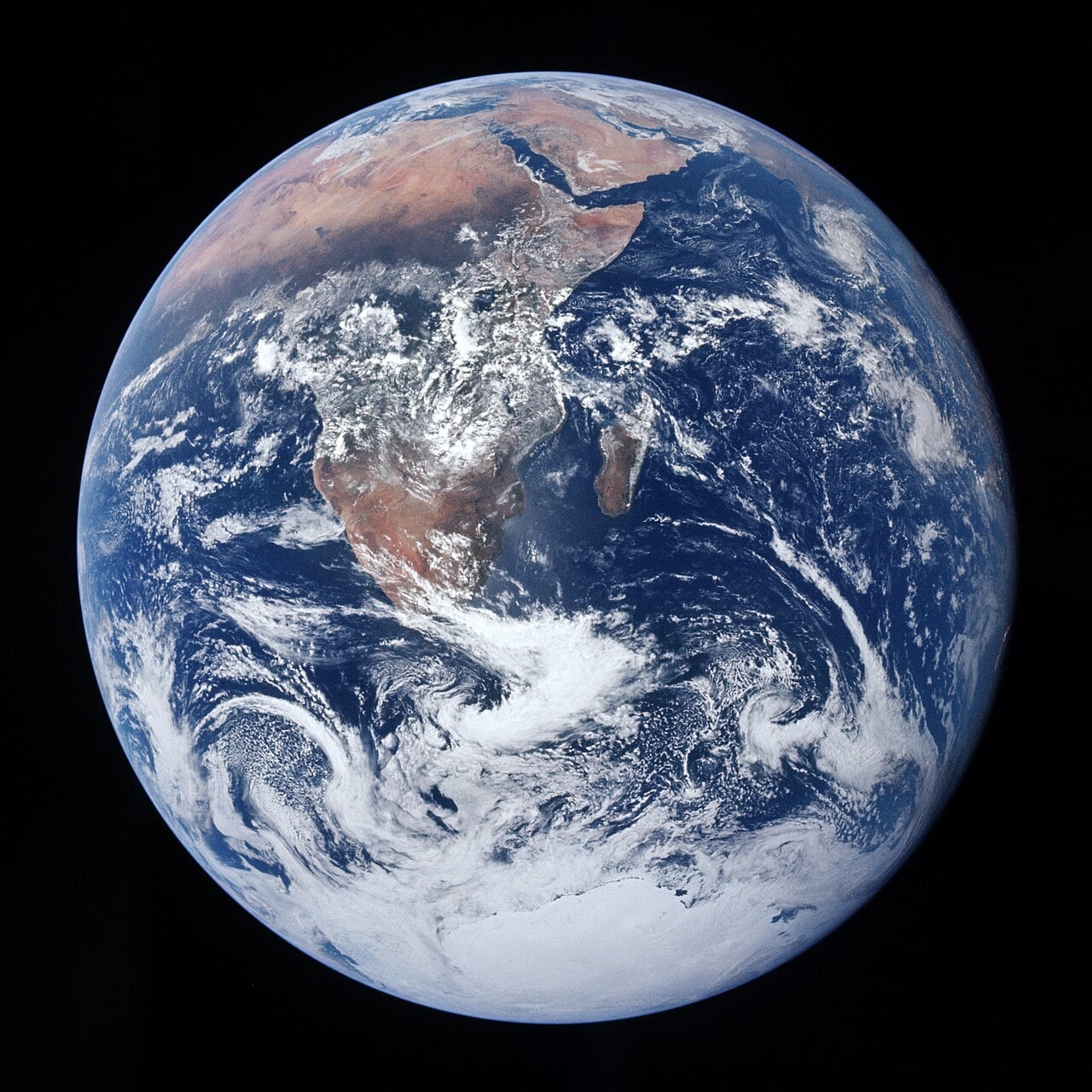
Planetary scientists have made a significant breakthrough by developing a detailed computer model of Earth without any life. This research, which examines how our planet would have evolved over the course of 4.5 billion years without biological influence, raises important questions about the nature of habitability and the potential for life on other planets.
The study reveals that Earth could remain a viable environment for life, even in the absence of any organisms. This finding has profound implications for how scientists search for life beyond our Solar System. Traditionally, it was believed that complex life was essential for maintaining a stable and hospitable planet. However, the new model suggests that geological processes alone are sufficient to sustain conditions suitable for life.
Modeling a Lifeless Earth
The research team constructed the most comprehensive model to date of a lifeless Earth, analyzing various factors including the slow cooling of the planet’s interior, volcanic outgassing, and the gradual formation of the atmosphere. The model also examined the carbon cycle and how sunlight interacts with a world covered by oceans.
Remarkably, the model accurately replicated 19 key measurements of pre-industrial Earth, including its temperature, atmospheric composition, and ocean chemistry, all without the influence of living organisms. This achievement is crucial as it provides scientists with a baseline for understanding what a habitable yet lifeless planet might look like.
The implications of this model are particularly pertinent as NASA develops the Habitable Worlds Observatory (HWO). This pioneering telescope will be the first capable of directly imaging rocky planets orbiting Sun-like stars. The HWO aims to collect light from these distant worlds and analyze their atmospheres in search of signs of life. To effectively interpret the data collected, researchers need to understand the atmospheric characteristics of a lifeless planet to differentiate it from one that supports life.
Implications for the Search for Life
One of the most intriguing aspects of this research is its potential to reshape our understanding of habitability. The findings indicate that even without biological processes, a planet can maintain conditions conducive to life, such as comfortable surface temperatures and liquid water, for billions of years, driven solely by geological activity.
The team also generated a simulated spectrum of what a lifeless Earth would appear like to a distant telescope. This spectrum serves as a vital reference point for scientists interpreting signals from the HWO.
The research challenges long-held assumptions about the necessity of life in maintaining a planet’s stability. It suggests that life may not have been essential in creating a habitable environment; rather, it found a planet already suitable for existence. Consequently, this raises the possibility that there are numerous habitable worlds scattered throughout the cosmos, with intact oceans and optimal temperatures, waiting to be discovered.
As scientists continue to explore the universe, understanding the conditions that allow planets to remain habitable without life could significantly enhance the search for extraterrestrial life. The findings underscore a growing realization that the universe may be more hospitable than previously believed, opening new avenues for exploration and discovery in the vast expanse beyond our Solar System.