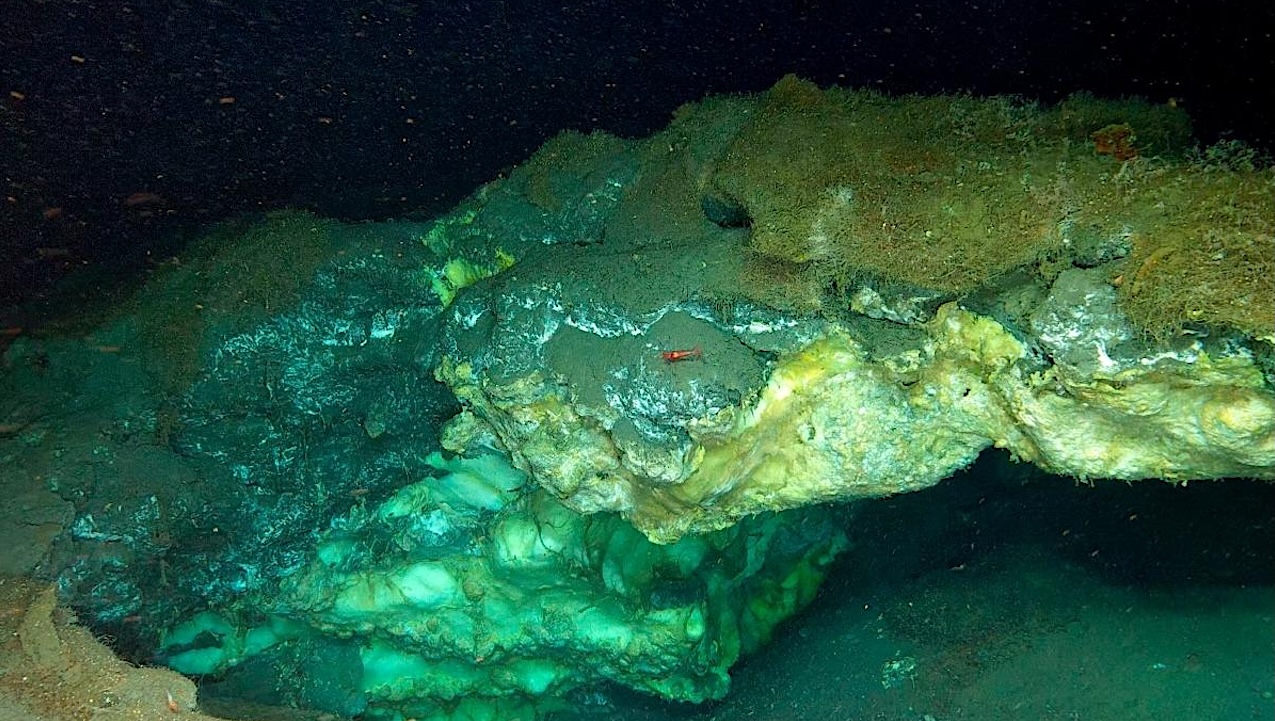
A multinational scientific team led by the University of Tromsø (UiT) has identified the deepest known gas hydrate cold seep on Earth. This significant discovery occurred during the Ocean Census Arctic Deep – EXTREME24 expedition, revealing a previously undocumented ecosystem thriving at a depth of 3,640 meters on the Molloy Ridge in the Greenland Sea. The findings, recently published in Nature Communications, have profound implications for Arctic governance and sustainable development.
The newly documented Freya Hydrate Mounds are characterized by active methane seepage and crude oil emissions, alongside robust chemosynthetic communities. This discovery extends the known depth limit for gas hydrate outcrops by nearly 1,800 meters, challenging existing assumptions about biological connections between deep-sea seeps and hydrothermal vents in the Arctic region.
Groundbreaking Ecosystem Insights
“This discovery rewrites the playbook for Arctic deep-sea ecosystems and carbon cycling,” stated Giuliana Panieri, Professor at UiT and Chief Scientist of the expedition, alongside Alex Rogers. The team unearthed an ultra-deep system that showcases both geological dynamism and biological richness. The findings underscore the importance of biodiversity and climate processes, highlighting the need for future stewardship of the High North.
According to Jon Copley from the University of Southampton, “There are likely to be more very deep gas hydrate cold seeps like the Freya mounds awaiting discovery in the region.” He emphasized that the marine life surrounding these seeps could play a critical role in deep Arctic biodiversity. Copley also noted the necessity of protecting these habitats from potential threats such as deep-sea mining.
The research team mapped various seafloor features during their expedition, identifying significant locations of seeps and vents. This includes the Freya gas hydrate mounds, which are part of a wider network of cold seeps and hydrothermal vents in the region.
New Perspectives on Geological and Ecological Dynamics
The discovery sheds light on the intricate geological and ecological dynamics of the Arctic. The gas hydrate deposits found at 3,640 meters exceed the typical occurrences, which generally lie below 2,000 meters. This revelation offers new opportunities to explore hydrate formation and other geological processes. Notably, the identification of methane gas flares rising over 3,300 meters through the water column marks one of the tallest flares ever recorded globally, highlighting the unique geological features of this area.
The ecological aspects of these findings are equally compelling. The presence of chemosynthetic communities, dominated by organisms such as siboglinid and maldanid tubeworms, snails, and amphipods, indicates remarkable adaptations to this extreme environment. Furthermore, the overlap of these communities with those near hydrothermal vents suggests a previously unrecognized ecological connectivity across deep-sea habitats.
The hydrate mounds, observed in various growth and dissociation stages, demonstrate that this ecosystem is active and evolving, rather than static. Panieri remarked, “These are not static deposits. They are living geological features, responding to tectonics, deep heat flow, and environmental change.”
The implications of this research extend beyond geological interest; they are crucial for understanding climate change dynamics. The Freya mounds serve as a natural laboratory for investigating methane behavior in the water column, particularly regarding the potential impacts of warming waters in the Fram Strait.
Governance and Future Research Directions
These findings contribute to a broader narrative about the complex interplay between geology and biology in the Arctic deep-sea environment. They highlight the urgent need for intensified research efforts to explore and understand these habitats, their evolutionary significance, and their responses to both natural and human-induced changes.
As international interest in the Arctic Ocean grows, the discovery of these ultra-deep ecosystems becomes increasingly relevant. They are situated in regions being considered for resource exploration, emphasizing the necessity for evidence-based environmental assessments.
Panieri concluded, “Understanding these unique habitats is essential for safeguarding biodiversity and supporting responsible decision-making in polar regions.”
The Ocean Census Arctic Deep – EXTREME24 expedition is part of the larger EXTREME Project, which focuses on interdisciplinary research in extreme environments. The expedition utilized advanced imaging technology and ROV sampling, providing crucial data for these groundbreaking findings. The Nippon Foundation-Nekton Ocean Census, the largest global initiative to discover ocean life, facilitated this research, revealing the rich and largely unexplored ecosystems of the Arctic Deep Sea.