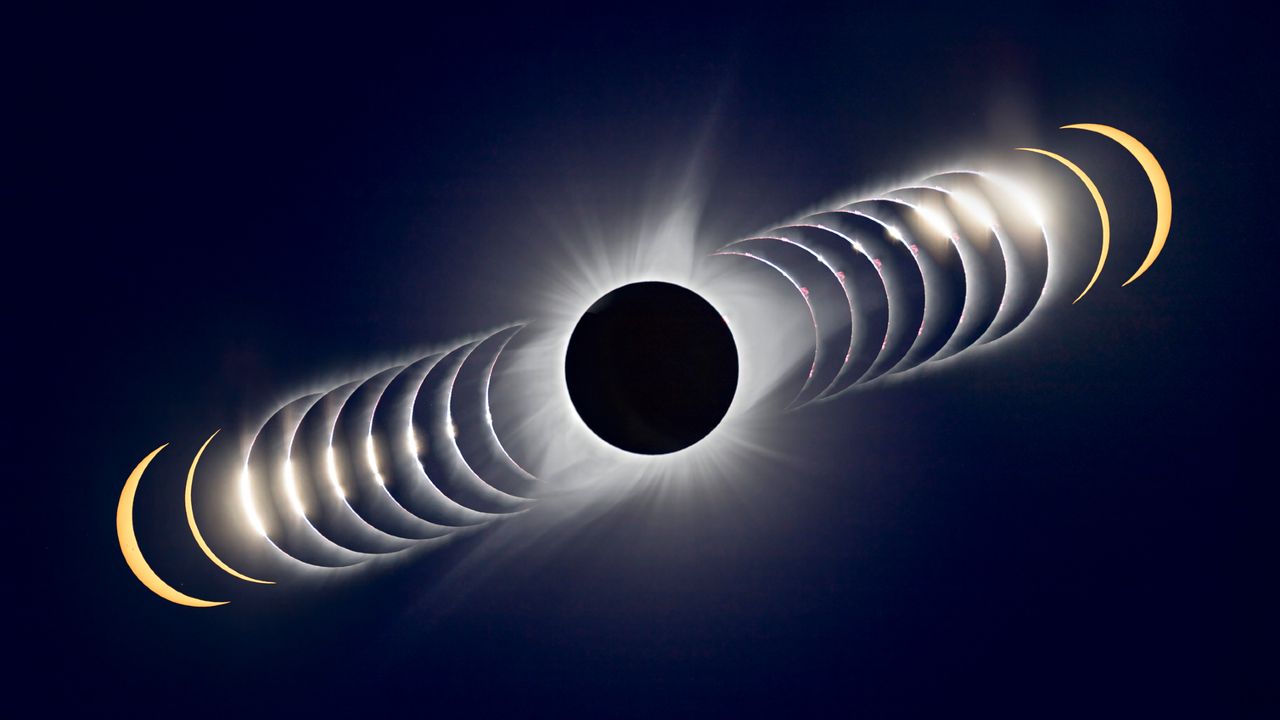
The years 2026 to 2028 promise a remarkable series of solar eclipses, featuring three total eclipses and three annular eclipses. This upcoming celestial event follows a quiet period in 2025 and provides an exciting opportunity for eclipse enthusiasts around the world. Starting with a total solar eclipse on August 12, 2026, this sequence offers a chance for millions to experience one of nature’s most extraordinary phenomena.
The Total Eclipses: A Journey Across Continents
The first total solar eclipse will be visible from a broad path that begins in remote Siberia, crosses eastern Greenland and western Iceland, and sweeps through northern Spain. Observers in locations like Scoresby Sund in Greenland, Reykjanes and Snæfellsnes in Iceland, and cities such as Leon, Burgos, and Valladolid in Spain can expect to witness the sun’s eerie corona. This eclipse will last just over two minutes at its peak, providing stunning photographic opportunities, particularly in Spain where the sun will be low in the sky.
Following closely is the much-anticipated total solar eclipse on August 2, 2027, often referred to as the “eclipse of the century.” This event holds the potential for a breathtaking totality lasting up to 6 minutes and 22 seconds. The moon’s shadow will traverse southern Spain, North Africa, and the Middle East, with notable visibility from historic sites like Luxor in Egypt. This location offers an excellent chance for clear skies, although observers should be mindful of possible dust storms.
The final total solar eclipse in this series will occur on July 22, 2028, crossing the Australian Outback and New Zealand. For the first time since 1857, Sydney will experience totality, while areas in Western Australia are projected to enjoy over five minutes of totality, with favorable weather conditions expected.
Exploring the Annular Eclipses
This extraordinary period will also include three annular, or “ring of fire,” solar eclipses occurring within a span of just over two years. The first will take place on February 17, 2026, visible only from a remote region of Antarctica. Following this, another annular eclipse on February 6, 2027 will be visible across parts of Chile, Argentina, Brazil, and several West African nations, allowing for diverse viewing experiences.
The final annular eclipse will occur on January 26, 2028, with its path crossing the Galápagos Islands, mainland Ecuador, and parts of southern Portugal and Spain. This eclipse will be especially significant for Spanish observers, marking the third major solar eclipse in just over a year.
While the upcoming sequence of solar eclipses is not unique, the accessibility and geographical range of these events make them particularly noteworthy. With three total solar eclipses visible across three continents in just two years, avid eclipse chasers can enjoy an unprecedented celestial showcase.
For those planning to witness these spectacular events, careful preparation is essential. Each eclipse presents its own unique character and viewing opportunities. Whether it is embarking on a cruise near Greenland for the 2026 solar eclipse or seeking the longest totality in Luxor for the 2027 eclipse, enthusiasts have a range of options to consider. The 2028 eclipse offers a chance to experience the breathtaking landscapes of the Australian Outback.
In summary, the period from 2026 to 2028 marks a golden age for solar eclipses, providing multiple opportunities for viewers across the globe. As these celestial events draw nearer, the excitement continues to build among those eager to witness the beauty and wonder of the universe.