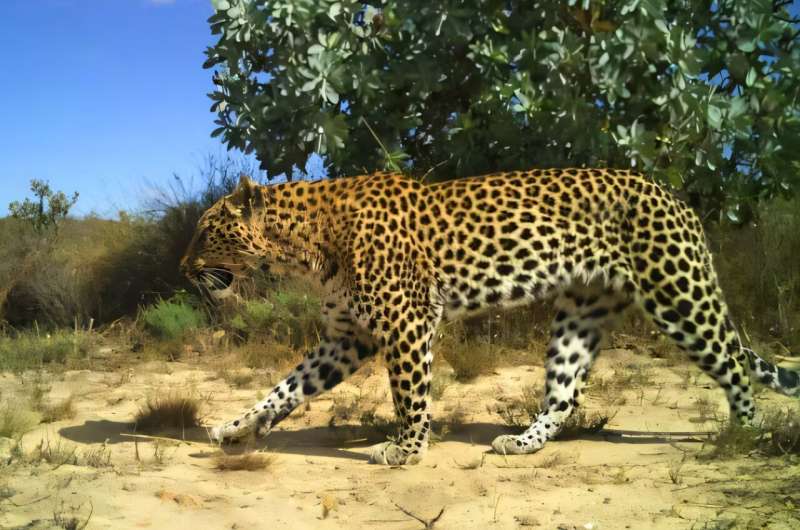
Research has revealed that leopards in South Africa’s Cape Floristic Region are not only unique in their physical characteristics but also genetically distinct from other leopards across Africa. This finding sheds light on the adaptive evolution of this population, which numbers fewer than 1,000 individuals. The study, published in the journal Heredity, indicates that these leopards have been isolated for thousands of years, leading to significant changes in their genetic makeup.
The Cape leopards are considerably smaller than their counterparts in other regions, weighing as much as half of the typical leopard. This distinctive trait has prompted ongoing discussions among conservationists and researchers regarding the genetic identity of these leopards and the factors influencing their evolution. Previous studies primarily focused on a limited number of genetic markers, which did not provide a comprehensive understanding of the leopards’ genetic diversity.
To address this gap, the research team utilized whole-genome sequencing, analyzing the complete DNA sequences of the leopards from the Cape and comparing them to those from other parts of Africa. The results confirmed that the Cape population has diverged genetically, remaining isolated for approximately 20,000–24,000 years. This divergence is attributed to climatic changes during the Last Glacial Maximum, which made the region cooler and drier, hindering the movement of animal populations.
Understanding Genetic Diversity and Adaptation
The study highlights that while some may assume isolated populations suffer from reduced genetic diversity, the Cape leopards were found to possess only slightly lower genetic diversity compared to other African populations. This outcome is promising as it suggests the population is still capable of adapting to environmental changes and threats.
Additionally, researchers identified around 90 genes that are prevalent in the Cape leopards, linked to characteristics such as body size and energy utilization. These genetic adaptations are likely a response to the unique ecological conditions of the Cape, where prey species are smaller and more dispersed than in other leopard habitats. The primary prey for these leopards includes rock hyrax, klipspringer, and Cape grysbok.
The implications of this research extend beyond academic interest; they are crucial for conservation efforts. Genetically distinct populations are often identified as evolutionarily significant units, necessitating targeted conservation strategies that consider their unique environmental adaptations.
Conservation Challenges and Strategies
The Cape Floristic Region, characterized by its rich biodiversity, is under increasing threat from human activities, including habitat loss and poaching. Leopards in this area often traverse agricultural and urban landscapes, leading to conflicts with humans. Although the bounty on leopards was lifted in 1968, allowing for some population recovery, ongoing threats remain significant.
To ensure the survival of these genetically unique leopards, it is essential to maintain connectivity between their habitats. This can facilitate safe movement and reduce human-wildlife conflict. Addressing issues such as poaching and road mortality is critical for the persistence of the Cape leopard population.
The partnership with local landowners and communities plays a vital role in these conservation efforts. Protecting the Cape leopards not only preserves a key predator in the ecosystem but also safeguards an evolutionary legacy shaped by the region’s distinctive landscapes over thousands of years.
Research co-authored by Katy Williams and Jeannie Hayward from the Cape Leopard Trust underscores the importance of understanding local adaptations in wildlife conservation. By recognizing the unique genetic characteristics of the Cape leopards, stakeholders can better formulate strategies to protect them as they navigate the challenges posed by a rapidly changing environment.