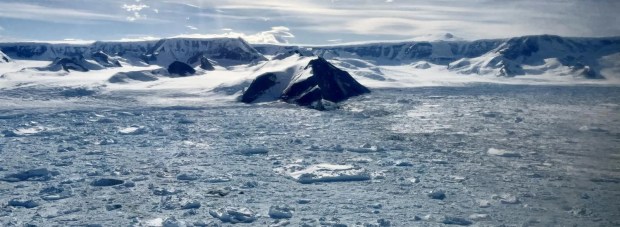
A rare snowstorm recently struck the Atacama Desert in northern Chile, forcing the shutdown of the Atacama Large Millimeter/submillimeter Array (ALMA), one of the world’s most advanced space telescopes. This unexpected weather event led ALMA’s research team to activate an emergency “survival mode” to protect its sensitive equipment from snow accumulation.
The Atacama Desert is renowned for its extreme aridity, receiving as little as 0.5 millimeters of rain annually. This unique climate has made it an ideal location for astronomical observations, as the lack of atmospheric interference enhances the performance of telescopes like ALMA. Situated on the Chajnantor plateau at an altitude of approximately 5,000 meters, ALMA consists of 66 antenna dishes that capture faint energy signals from distant galaxies.
Impact of the Snowstorm
The unusual snowstorm occurred between late June and early July 2025, prompting ALMA to reposition its dishes to prevent snow buildup. While the storm was localized, telescopes such as the Southern Astrophysical Research (SOAR) Telescope and the Vera C. Rubin Observatory, located a few hundred miles southwest, remained operational. The intense solar radiation typical of the Atacama quickly eliminated most of the snow, with some potentially sublimating directly into gas due to the region’s high temperatures and low humidity.
According to a study published in the Bulletin of the American Meteorological Society, the Atacama has experienced snowfall sporadically in recent years, with notable occurrences in 2011, 2013, and 2021. The recent storm raises questions about changing weather patterns in this typically dry region.
Climate Shifts in the Atacama
The climate in the Atacama Desert appears to be subtly shifting. Historical data reveals that the area recorded no rainfall from October 1903 to January 1918. In contrast, the recent increase in precipitation, including unseasonal desert rains, has led to unexpected blooms of flowers, showcasing the resilience of local flora and fauna.
However, these changes also carry risks. In March 2015, heavy rains resulted in devastating floods in the coastal city of Chañaral, which borders the Atacama. The Salado River reached a depth of approximately 14.76 feet (4.5 meters), leading to widespread destruction and the loss of 31 lives. Such events highlight the potential dangers posed by climate change in this fragile ecosystem.
The recent snowfall at ALMA may become a recurring challenge as the climate continues to evolve. As temperatures rise globally, the frequency of extreme weather events could increase. The implications of these changes extend beyond the Atacama, affecting astronomical research and local communities alike.
In summary, the snowfall that temporarily halted operations at ALMA illustrates the delicate balance of nature in one of the driest places on Earth. As scientists continue to monitor these shifts, the future of desert astronomy may depend on adapting to a changing climate.