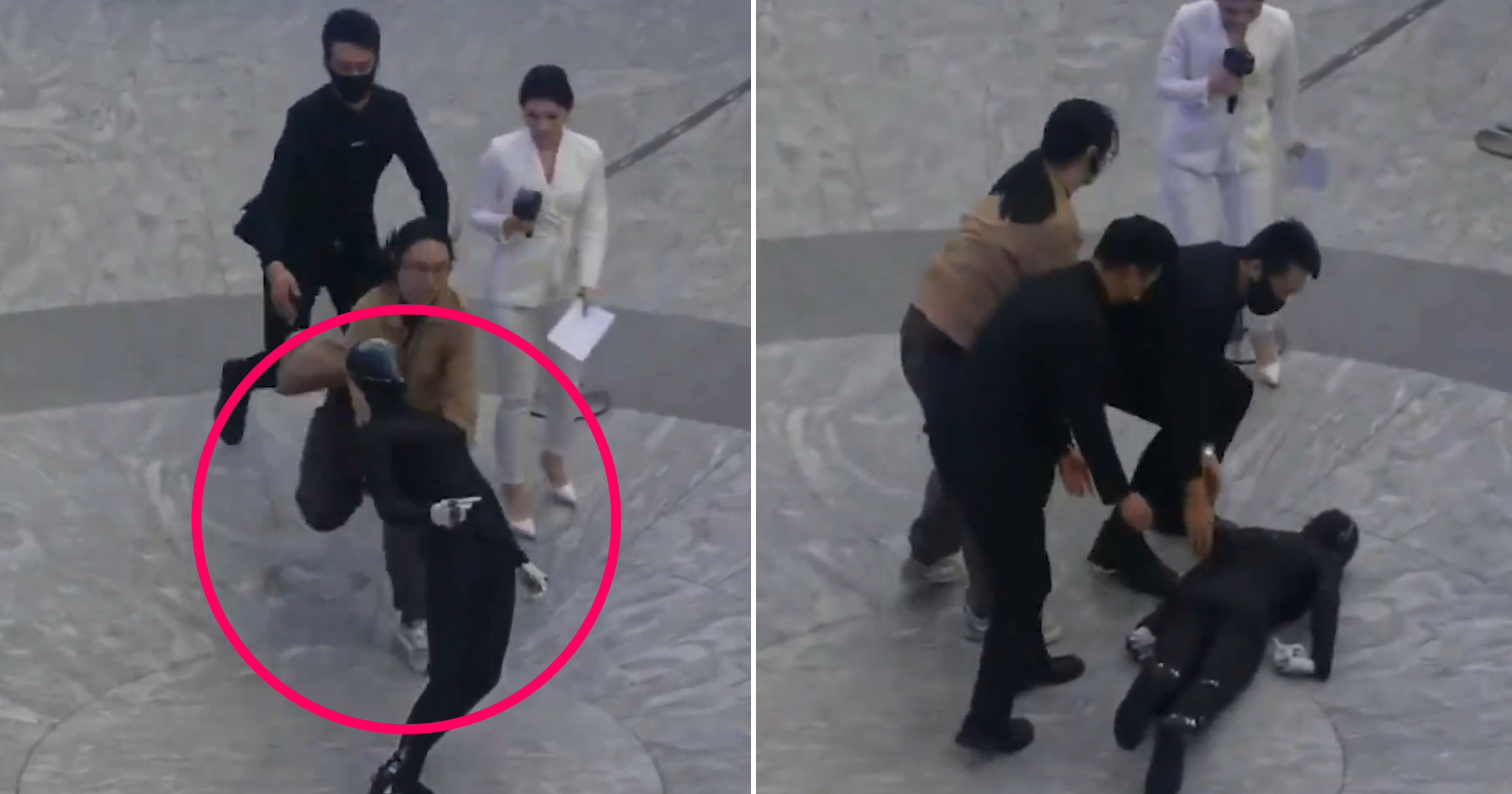
The Chinese automotive company XPeng faced unexpected challenges during a demonstration of its humanoid robot, known as Iron, at a shopping mall in Shenzhen on January 31, 2026. While the robot strutted across the stage with an impressive gait, it suddenly twisted and fell, faceplanting onto the marbled floor with a loud thud. Audience members captured the moment on video, leading to widespread reactions on social media.
As the footage circulated, many spectators found humor in the incident, with some chuckling as three individuals worked to remove the robot from view. The mishap drew attention to the challenges of creating bipedal robots that can maintain stability and control.
XPeng’s Response to the Incident
In light of the negative coverage, XPeng’s co-founder and CEO, He Xiaopeng, addressed the situation on the Chinese social media platform Weibo. He likened the robot’s fall to the learning process of toddlers, stating, “After a fall, they will stand firm; the next step is to begin running, and to keep running.”
Despite the setback, XPeng remains committed to its goal of initiating “large-scale mass production” of the Iron robot by the end of the year. Following the demonstration, the company made adjustments, strapping the robot to a frame to ensure stability during subsequent marketing events.
The Broader Context of Humanoid Robotics
XPeng is not alone in facing difficulties with bipedal robots. Other companies have experienced similar challenges. For instance, a viral video showed a human teleoperator losing control of the Tesla Optimus robot, causing it to collapse. Additionally, a Russian humanoid robot named AIdol fell while attempting to walk across a stage in a separate demonstration.
In contrast, some manufacturers have successfully developed resilient robots. The Unitree G1 has demonstrated remarkable balance, surviving various physical challenges, including drops and being pulled by a chain. Recently, a G1 robot trekked over 130,000 steps in extreme conditions to map out the Winter Olympics logo in Altay, northern China, where temperatures plummeted to -52 degrees Fahrenheit.
As the field of humanoid robotics continues to evolve, incidents like XPeng’s demonstration serve as reminders of the complexities involved in creating machines that can mimic human movement. The combination of entertainment and technological ambition at such showcases often highlights both the advancements and the hurdles that lie ahead in this innovative sector.