UPDATE: The Big Island is facing a troubling outlook as forecasts suggest a potentially drier-than-expected rainy season. Despite recent rainfall, officials warn that drought conditions may persist, impacting local communities.
Forecasters from the National Weather Service in Honolulu have indicated that the current weak La Niña conditions could limit rainfall across the island this winter. Tina Stall, hydrologist for the NWS, stated, “We do have weak La Niña conditions right now, and that’s forecast to continue through the winter and into the spring.”
October has seen Hilo International Airport record 8.4 inches of rain, approximately 80% of its average for the month. However, from May to September, the airport only measured 17.92 inches, or 41% of its average dry season rainfall. Such statistics highlight the ongoing drought affecting much of the island, with most regions classified under moderate drought or worse.
The situation is particularly dire in Honokaa, which received a mere 7.45 inches, just 25% of its normal rainfall during the dry season. While areas like Mountain View and Pahoa exceeded half their usual totals, many populated regions in East Hawaii remain critically dry.
Stall cautions that despite the recent rains, “they’re still under severe drought,” emphasizing that long-term stream flows are below normal. The 2025 dry season is now ranked as the third driest in the past three decades, following 2010 and 2007.
The lack of precipitation has also led to heightened wildfire risks. Between October 22 and 24, strong trade winds resulted in critical fire weather conditions, prompting multiple Red Flag Warnings across the island. Hawaii Fire Department Chief Kazuo Todd confirmed that firefighters are on high alert, noting, “When you go into a Red Flag period, we have an operating procedure.”
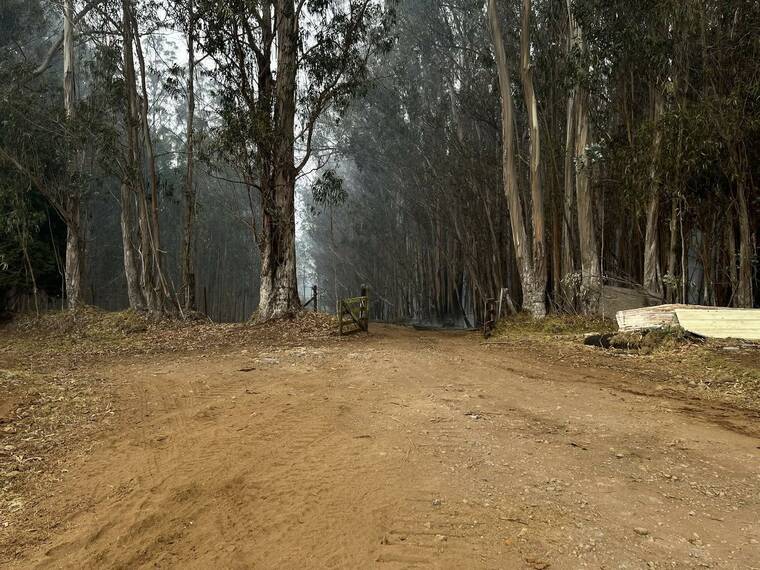
As the Hamakua fire continues to burn approximately 500 acres near Kaala Road, Todd expressed cautious optimism about the increase in rainfall. “We’ve seen some rain up in the Kaala fire region,” he noted, reflecting hopes for a wetter season ahead.
Meanwhile, the Kona and Kohala coastlines report above-average rainfall, particularly in the Kona coffee belt. However, all four rain gauges in this region recorded a sharp decline in October. The Climate Prediction Center has projected enhanced probabilities of above-normal rainfall through early spring, potentially alleviating drought conditions.
Stall emphasizes, “With them calling for above-normal rainfall, we can only hope that comes true.” As the community watches the skies, the urgency for rain remains critical for the Big Island.
Residents are encouraged to stay informed and prepared as the weather evolves. Further updates are expected as the winter season approaches, and the impact on local agriculture and fire conditions will be closely monitored.
For immediate updates and insights, readers are urged to follow local news and weather advisories.