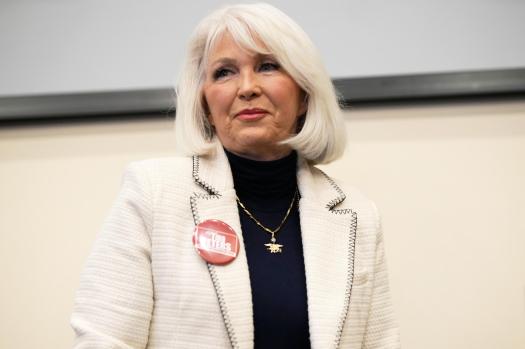
URGENT UPDATE: Colorado Governor Jared Polis is currently considering clemency for Tina Peters, the former Mesa County Clerk sentenced to nine years for illegally accessing voting equipment during the 2020 election. This decision, announced last week, has sparked intense debate over its potential implications for election integrity and the rule of law across the state and the nation.
Peters, aged 70, has become a controversial figure among those who claim the 2020 election was stolen. Her case has gained national attention, especially after Donald Trump publicly expressed his support for her, declaring a “full pardon” that has no legal standing. The pressure on Polis escalates as Trump has criticized him for not intervening on Peters’ behalf, even threatening state funding for essential services such as child care and disaster relief.
Governor Polis stated that Peters “got a sentence that was harsh,” and he is exploring the treatment of elderly inmates in Colorado’s prison system. However, critics argue that granting clemency would set a dangerous precedent, suggesting that lawlessness could be rewarded, ultimately undermining democracy and the integrity of elections.
In response to the growing tensions, the courts are already intervening to freeze Trump’s attempts to withhold crucial funding for Colorado’s vulnerable populations, indicating strong bipartisan support for maintaining essential services. This backdrop raises significant concerns regarding the implications of clemency for Peters and its potential to embolden similar actions by others in the future.
Peters has never shown remorse for her actions or acknowledged the legitimacy of the 2020 election, raising alarms about the message clemency would send. It could inspire further breaches of electoral integrity and deepen divisions within the state. Observers note that allowing Peters to escape punishment could indicate a troubling trend where political loyalty outweighs accountability.
Importantly, Peters is set for parole consideration in 2028, allowing the legal system to assess her case fairly. The parole board would likely take into account the governor’s humanitarian concerns at that time. Advocates for justice argue that clemency now would only reinforce the notion that breaking the law for political gain can go unpunished.
The urgency of this situation cannot be overstated. As the debate unfolds, the implications of Governor Polis’s decision will resonate far beyond Colorado. It is a pivotal moment that could redefine how similar cases are handled in the future, impacting the electoral landscape nationally.
As the situation develops, all eyes will be on Governor Polis and his final decision regarding Peters. The stakes are high, and the outcome will influence not only Colorado’s political climate but also the integrity of the electoral process across the United States.
This story is evolving, and further updates are expected as the governor weighs his options. Stay tuned for more critical developments on this pressing issue.