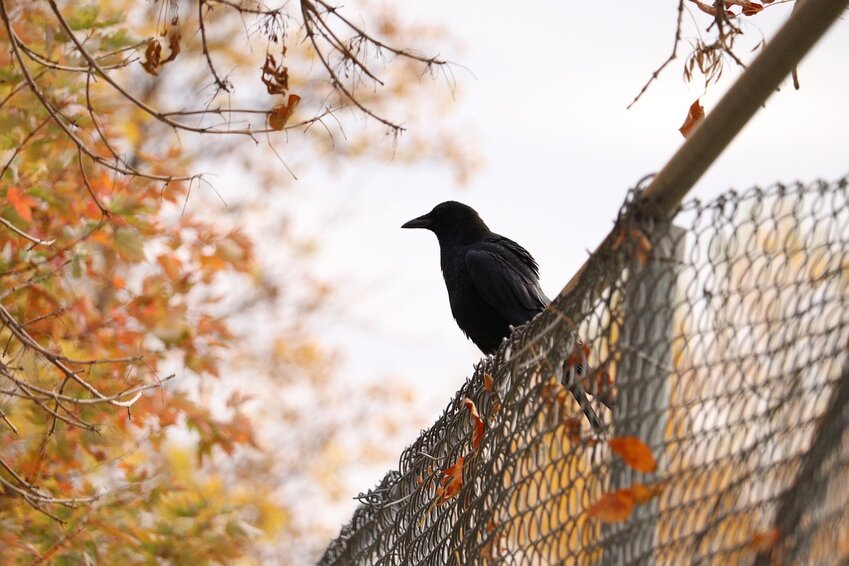
URGENT UPDATE: Homeowners in Washington State are grappling with unexpected lawn destruction as crows dig up their yards in search of a hidden menace: the invasive European chafer beetle larvae. This alarming development is reshaping how residents view these often-misunderstood birds.
Reports indicate that crows are not just wreaking havoc for sport; they are actually hunting for grubs that threaten to destroy lawns. Experts confirm that the European chafer larvae feast on turf roots, leading to unsightly clumps of dirt across formerly pristine lawns. “The crows are killing the invasive pest that’s really destroying the lawn,” explained John Marzluff, emeritus professor of wildlife science at the University of Washington.
Residents are advised to rethink their approach to lawn care as this ecological imbalance becomes increasingly apparent. “They’re pointing out an ecological imbalance that we wouldn’t know about otherwise,” Marzluff added. Meanwhile, other nocturnal pests like raccoons and skunks are also on the prowl for these invasive beetles, though their digging is less visible to homeowners.
WHY THIS MATTERS NOW: As the European chafer population surges, lawn-tenders must act quickly to protect their green spaces. Experts suggest that proper lawn watering can help mitigate the beetle invasion, as they lay eggs during the hottest summer months. “When the lawn is the most susceptible is also when the beetles are expanding their territory,” said Jim Kropf, director at Washington State University‘s Pierce County Extension.
Homeowners are encouraged to apply registered insecticides during spring or early summer for maximum effectiveness. Spraying in fall or winter months will not yield results. Additionally, promoting biodiversity in lawns can significantly reduce pest invasions. Marzluff recommends cultivating a diverse ecosystem, which can thwart pests that thrive on monocultures.
For those looking to diversify their lawns, King County offers a comprehensive online guide to native plants at green2.kingcounty.gov/gonative. This resource includes valuable tips for nurturing native species that can help protect against invasive pests.
Lastly, a crucial reminder: Do not feed wildlife, especially raccoons, as this can lead to aggressive behavior if food sources are cut off. Kropf warns, “If you feed, and then stop feeding raccoons, they can become very aggressive.”
As homeowners face the rising threat of the European chafer and its ecological consequences, it’s essential to stay informed about effective pest control measures. With the situation evolving rapidly, residents must act now to safeguard their lawns and maintain the beauty of their homes.