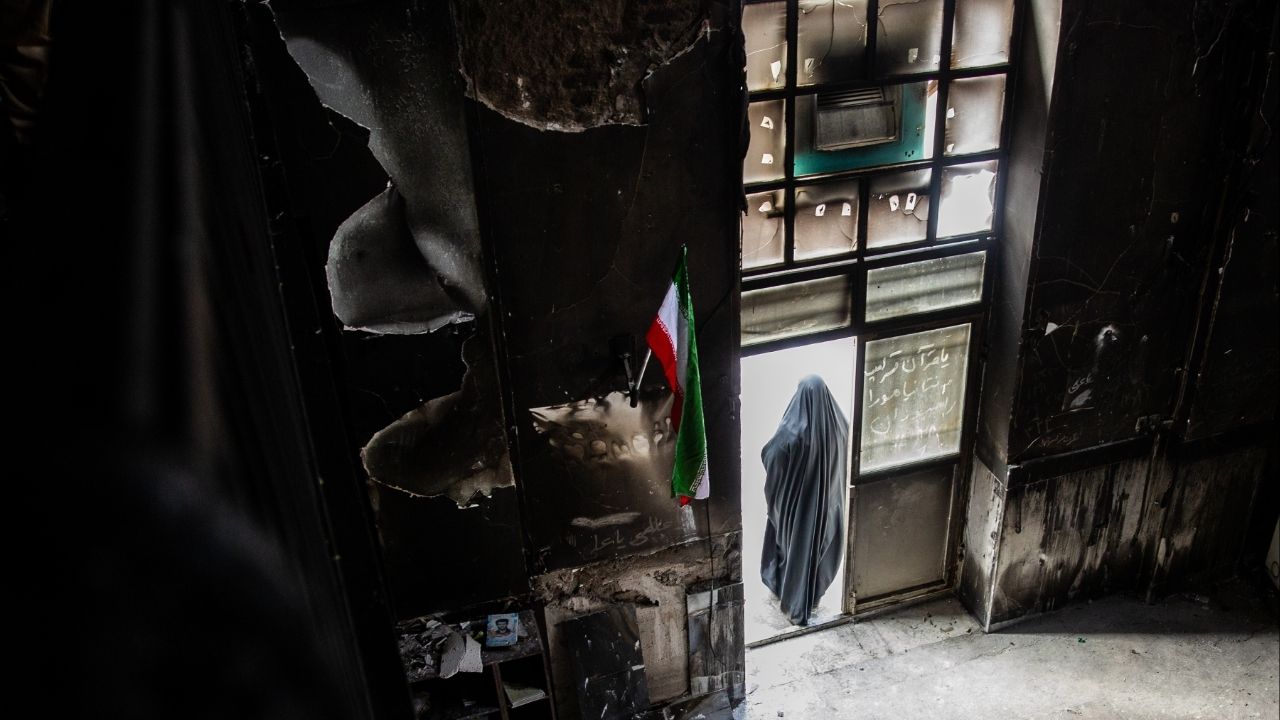
UPDATE: Iranians are staging defiant memorials today for those killed during the government’s violent crackdown on protests, marking the end of a traditional 40-day mourning period. Commemorations are underway amid a heavy security presence, as authorities rush to suppress anti-government sentiment across the country.
Reports indicate that security forces have intensified patrols in cities like Lesfijan and Abdanan, with videos showing armored vehicles and troops ready to intervene. These memorials, which honor the victims of the unrest from January 8 to January 10, could ignite a new wave of demonstrations against the regime.
Historically significant, the 40th-day commemorations have played a crucial role in Iran’s societal and political landscape, often serving as rallying points for dissent. This year’s events are particularly poignant as families transform traditional mourning rituals into vibrant displays of resistance, with loud chants against the clerical regime.
“We are grieving for the blood that was shed,” stated Ayatollah Ali Khamenei in a recent speech, labeling those killed during the protests as “martyrs.” However, many Iranians are pushing back against this narrative, using the memorials to express their anger and demand accountability from the government.
Security forces have reportedly tried to intimidate families from holding public memorials, highlighting the ongoing tension. Rights groups point to a staggering death toll, claiming more than 7,000 protesters have been killed, significantly higher than the official count of 3,000 cited by authorities.
Among the victims is Robina Aminian, a 23-year-old fashion student, who was shot during protests in Tehran. Her family has faced intimidation from authorities, including the prohibition of public memorials. According to her aunt, “Even if they shoot bullets, I will go for her 40th day.”
As the ceremonies unfold, signs of resistance are evident. Social media channels reveal that students at multiple universities are attempting to hold sit-ins, while reports from various cities show groups chanting anti-government slogans during the night. Videos depict brave individuals on rooftops, calling for the toppling of the supreme leader.
In Abdanan, protests erupted last night, with crowds chanting “death to Khamenei.” The government has responded with a heavy-handed approach, deploying security forces across the nation. Meanwhile, the U.S. military continues to display strength in the region, raising concerns about potential escalations.
Some families, like that of Mohammad Mahdi Ganj Danesh, a 17-year-old protester, are attempting to hold memorials despite restrictions. They rented a hall after being denied permission to use their local mosque, indicating a persistent spirit of resistance among the populace.
Memorials today are characterized by vibrant celebrations rather than the traditional somber tone. Families are seen dancing, singing, and playing music, marking a striking shift in how they honor their loved ones. “Their sadness is defiant,” said historian Arash Azizi, emphasizing the determination of Iranians to reclaim their national identity.
As the situation develops, the world watches closely. The outcome of these memorials could determine the future trajectory of dissent in Iran, as citizens continue to challenge the government’s authority in creative and courageous ways. Stay tuned for further updates as this story unfolds.