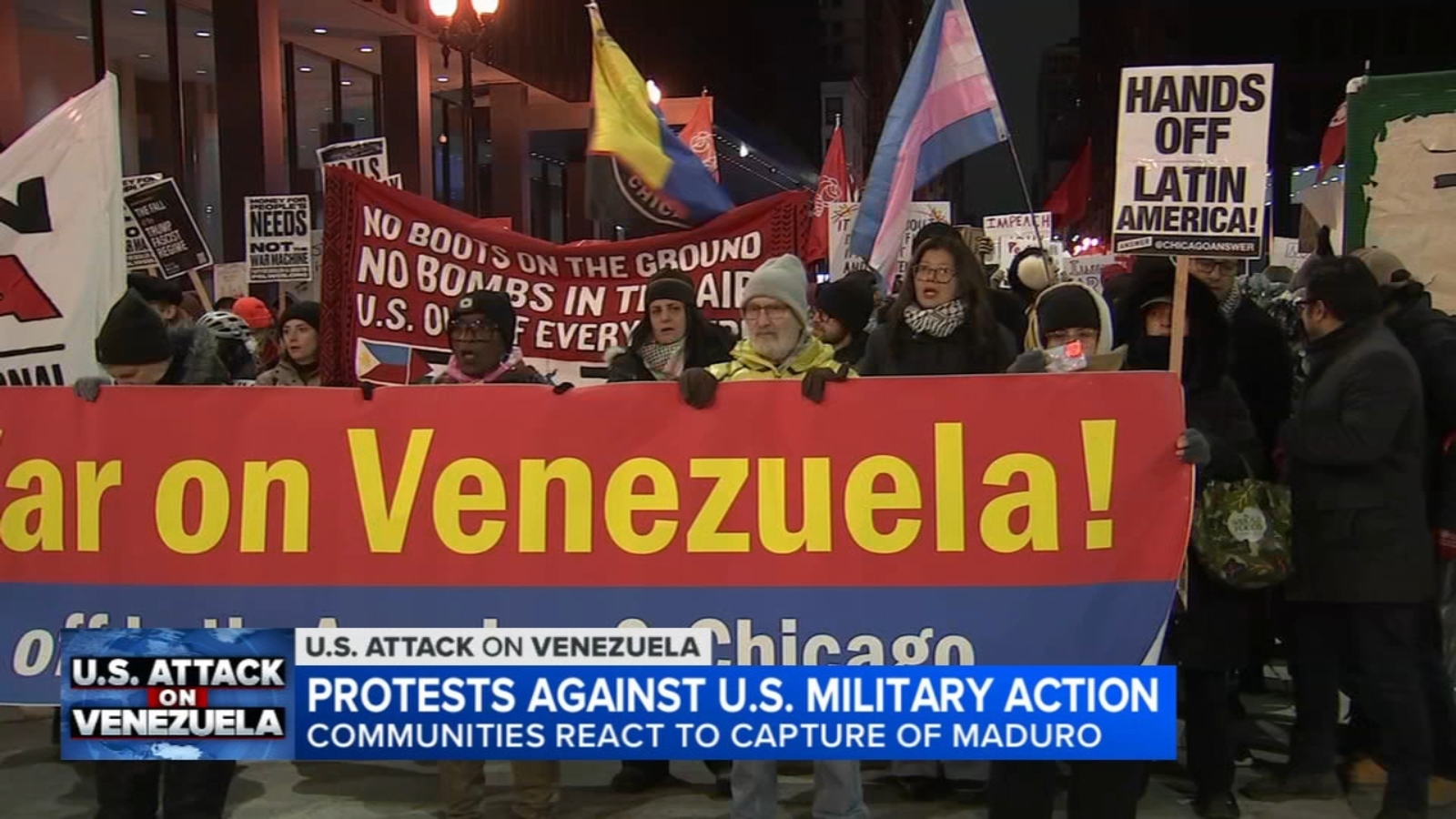
UPDATE: Protests are escalating in the Chicago area following the U.S. military’s strikes in Venezuela and the capture of President Nicolás Maduro. Demonstrators are expected to gather on Sunday, March 3, 2024, after a large turnout in downtown Chicago on Saturday, just hours after President Donald Trump announced the military action.
BREAKING: Crowds packed Federal Plaza in the Loop on Saturday, expressing outrage over the decision to launch what many are calling an unnecessary act of war. Protesters voiced their concerns about U.S. intervention in Venezuela, with some highlighting the need for the Trump administration to focus on critical issues at home instead.
Supporters of the strikes, particularly within the Venezuelan community, have expressed relief at the removal of the Maduro regime. However, serious questions arise regarding the operation’s execution, especially concerning the lack of congressional oversight. Critics point to the historical implications of U.S. military involvement in foreign conflicts, drawing parallels to past interventions.
As the situation unfolds, President Trump has stated that the U.S. will temporarily oversee Venezuela until a governmental transition occurs. Maduro is currently detained in a Brooklyn, New York facility, facing serious drug and weapons charges. In response, Venezuela’s vice president called for Maduro’s immediate release during a televised address.
Demonstrations are set to continue on Sunday afternoon, particularly in Chicago’s Lakeview neighborhood and in the north suburban area of Schaumburg. As tensions rise, many are closely watching these protests, which reflect deep divisions over U.S. foreign policy and its consequences on communities both locally and internationally.
The unfolding events have sparked significant debate over the morality and legality of the strikes, and how they align with U.S. values. With protests growing, the eyes of the nation are on Chicago as voices for and against the military action clash in the streets. The urgency of the situation compels a national conversation about the implications of such foreign interventions.
Stay tuned for updates on this developing story.