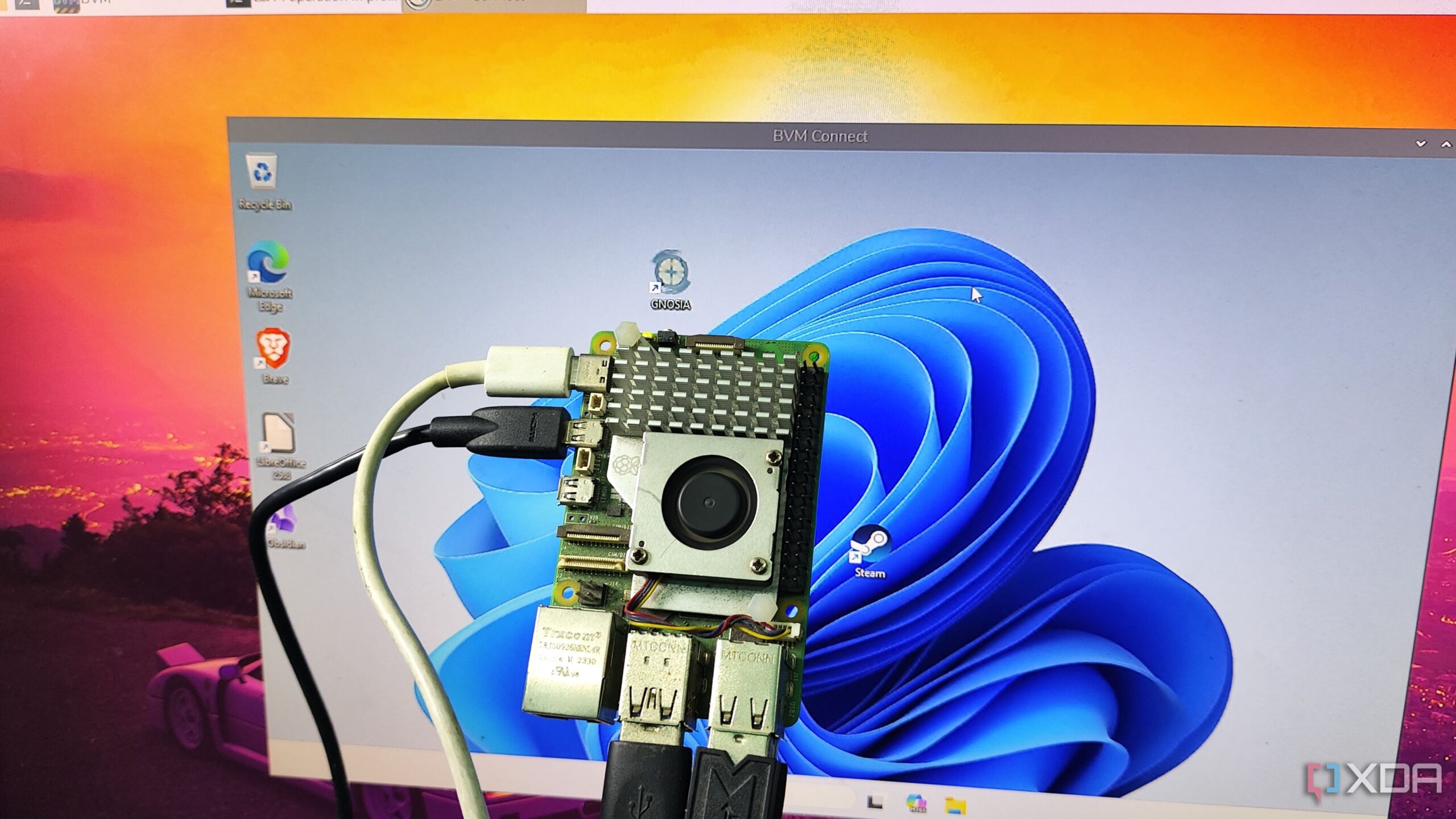
URGENT UPDATE: Users are reporting unexpected success in deploying virtual machines (VMs) on the Raspberry Pi, with many achieving impressive performance levels. This breakthrough comes as hobbyists and developers seek innovative ways to utilize the popular single-board computer for more demanding applications.
Latest tests on the Raspberry Pi 5 confirm that it can efficiently run two Linux VMs simultaneously, with the potential to manage up to four without significant performance degradation. This is a notable feat given the device’s limited resources, which typically struggle under heavy computational loads.
Just yesterday, a tech enthusiast shared their experience with the Canonical MicroCloud, which has been successfully installed on their Raspberry Pi. By leveraging the lightweight Ubuntu Server, they found that they could run multiple virtual machines and containers without encountering major issues. This is particularly exciting for developers who want to explore virtualization on an affordable platform.
“The efficiency of LXD makes deploying virtual machines quite plausible on a Raspberry Pi,” the user stated, highlighting the practical applications of this setup.
Moreover, the Raspberry Pi is now capable of running Windows 11 through the Botspot VM, an exciting development for those wanting to experiment with Microsoft’s flagship operating system on an SBC. Users can easily download the Botspot packages via Pi-Apps, making installation straightforward and accessible.
What does this mean for users? For developers seeking to run scripts or minor projects, this new capability offers a viable alternative to traditional x86 machines. However, users should be aware that performance can vary significantly based on the display settings; while 4K displays may lead to lag, switching to 1080p results in a smoother experience.
Despite these advancements, experts still recommend utilizing containers over VMs for light workloads, citing their lightweight nature and superior performance on devices like the Raspberry Pi. Technologies such as Kubernetes show impressive results when run on mixed clusters, further enhancing the Raspberry Pi’s utility in diverse environments.
What’s next? As the community continues to explore the capabilities of the Raspberry Pi, enthusiasts can anticipate further developments in virtualization and containerization technologies. This trend not only showcases the versatility of the Raspberry Pi but also emphasizes the importance of community-driven projects in advancing technology.
Stay tuned for more updates as users push the boundaries of what this compact device can achieve!