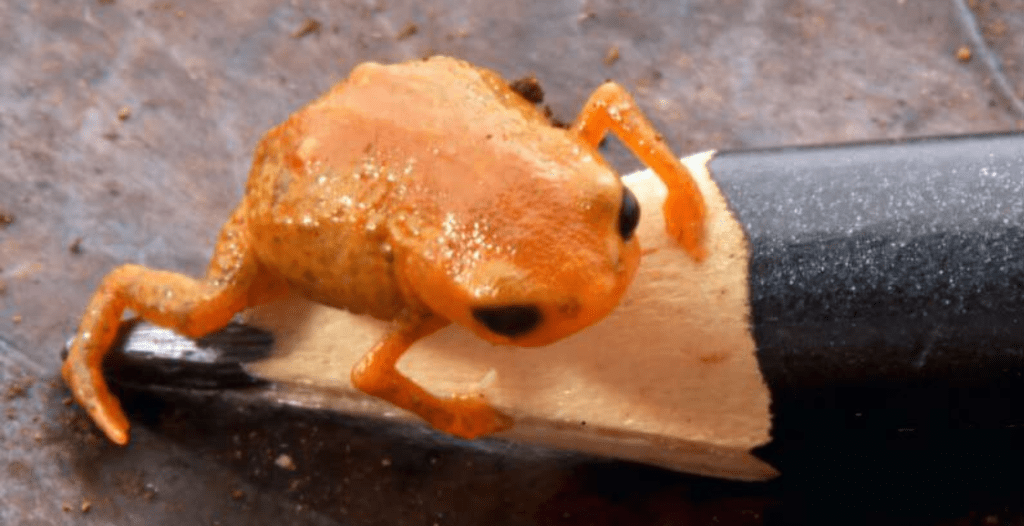
BREAKING NEWS: A new species of pumpkin toadlet has just been discovered in the mountains of southern Brazil, researchers confirm. The frog, measuring less than a Tic Tac, features a vibrant orange hue reminiscent of a traffic cone and lives among leaf litter in the Serra do Quiriri range of Santa Catarina.
This urgent finding underscores a significant moment in biodiversity research, as the tiny amphibian, now officially named Brachycephalus lulai, managed to evade formal description until now. Researchers have been combing these mountainous regions for the past seven years, attempting to catalog the various orange frog species inhabiting the area.
Using the males’ mating calls as a tracking method, scientists finally located this elusive toadlet. The females, known to be less vocal and more challenging to spot, were collected through a more random approach. Subsequent DNA sequencing and physical trait comparisons established that this was indeed a distinct species, separate from previously known populations.
The name Brachycephalus lulai pays homage to Brazilian President Luiz Inácio Lula da Silva, with hopes that this recognition will galvanize conservation efforts for the fragile Atlantic rainforest and its beleaguered amphibian inhabitants.
Published in the scientific journal PLOS One, the study reveals that B. lulai resides in a relatively intact forest area, categorizing it as “least concern” for now. However, this designation is precarious, as the surrounding ecosystems face severe threats from deforestation, tourism, and invasive species. Other amphibians in the region have experienced drastic population declines due to these ongoing environmental pressures.
Brazilian authorities are currently discussing the establishment of a federal conservation unit in the area, which would allow for the protection of these vital habitats without necessitating land buyouts. The fieldwork required to study these frogs is arduous, involving long hikes through dense vegetation with limited resources. Researchers stress that without continued exploration, many of these unique species may vanish unnoticed.
As the world grapples with biodiversity loss, this discovery serves as a poignant reminder of the urgent need for conservation efforts. The plight of amphibians, recognized as the most threatened group of vertebrates globally, heightens the stakes for species like the pumpkin toadlet.
Stay tuned for further updates as researchers continue to monitor the status of this newfound species and the broader implications for conservation in Brazil.