UPDATE: The Supreme Court is set to hear crucial arguments on Tuesday, November 7, 2023, regarding Hawaii’s controversial gun law that restricts carrying firearms onto private property without explicit owner consent. This case, known as Wolford v. Lopez, has significant implications for gun rights in the U.S., especially following the Supreme Court’s landmark 2022 Bruen ruling, which expanded Second Amendment protections.
This urgent legal battle centers on a Hawaii law intended to limit firearms in publicly accessible private spaces, such as retail stores. Gun rights advocates argue that this law effectively bans firearms in most public areas, violating constitutional rights. The law requires that concealed carry permit holders obtain explicit permission from property owners—either verbally or through signage—before bringing firearms onto such premises.
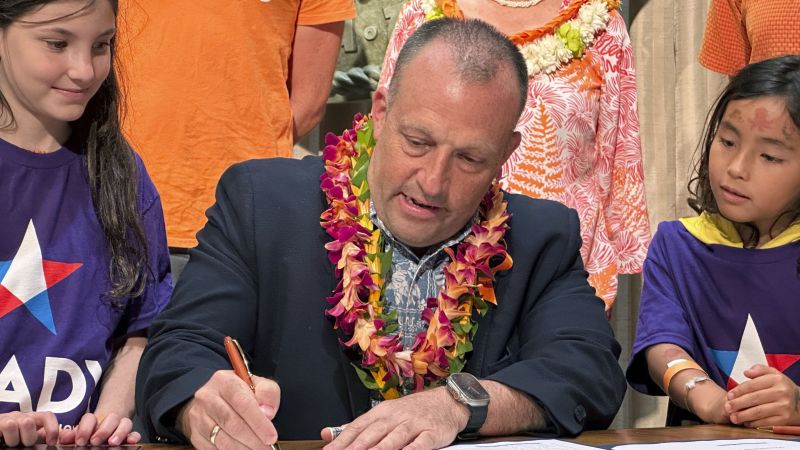
Gun control advocates, however, frame the issue as one of property rights, asserting that property owners should have the authority to dictate what occurs on their property. Douglas Letter, chief legal officer at the gun control group Brady, stated,
“Since our founding as a nation, private property rights have been foundational to American identity.”
The stakes are high as Hawaii’s law is currently held up for review by the Supreme Court after a lower trial court blocked it. An appeals court sided with the state, but opponents, including concealed carry permit holders and gun rights organizations, insist that Hawaii is exceeding the constitutional limits established by the Bruen decision. They contend that the law’s presumption of firearm prohibition in public spaces is unconstitutional, effectively making it nearly impossible to carry weapons in these environments.
Hawaii officials counter that their law complies with the Bruen ruling, which states that any gun restriction must have a historical basis. Attorney General Anne Lopez pointed out that laws restricting armed entry onto private property have existed since the founding of the United States. Lopez emphasized,
“Both at the time of the Founding and in the Reconstruction Era, numerous state laws prohibited armed entry onto private property without the owner’s express consent.”
The Supreme Court’s decision to take up this case signifies a pivotal moment in the ongoing national debate over gun rights and regulation. As four other states—California, New York, New Jersey, and Maryland—have similar laws, Hawaii’s case could set a precedent for how states balance property rights against the Second Amendment.
The Supreme Court’s ruling could reshape the landscape of gun ownership and public safety in America. As the nation awaits this critical decision, all eyes will be on how the justices interpret the interplay between individual rights and state regulations.
Stay tuned for updates as the arguments unfold in court on Tuesday. The implications of this case will resonate far beyond Hawaii, affecting gun laws nationwide.