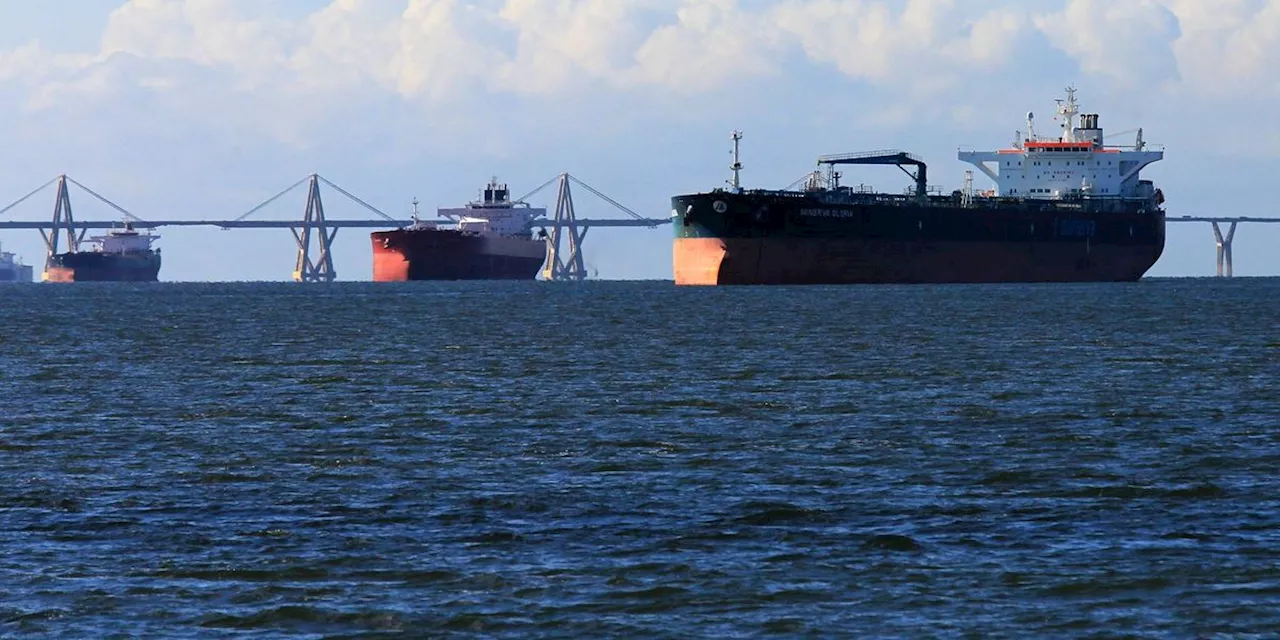
UPDATE: In a shocking announcement, President Donald Trump declared a “total and complete blockade” of oil tankers entering or leaving Venezuela on December 16, 2025. The declaration, made via his personal media platform, escalates tensions and raises critical questions regarding executive power and constitutional authority.
Trump asserted that Venezuela is “completely surrounded by the largest Armada ever assembled in the History of South America,” signaling a significant military escalation. This move is not merely a foreign policy strategy; it poses a direct challenge to the War Powers Resolution, which mandates that Congress must authorize military actions that could lead to hostilities.
Experts warn that this undeclared naval blockade, which has already begun operations, represents a dangerous breach of U.S. constitutional limits. According to Angel Gomez, a researcher specializing in the societal impact of government policies, this action signifies a perilous expansion of executive authority, undermining the legal frameworks designed to prevent unilateral military escalations.
The blockade’s implications are profound. Under Article I of the U.S. Constitution, only Congress has the authority to declare war or authorize actions that resemble war. The blockade, regardless of any armed resistance, qualifies as a use of force under both domestic and international law, fundamentally altering the parameters of U.S. foreign policy.
Trump’s justification for the blockade—that Venezuela has “stolen” American oil—is contested. The Venezuelan oil sector was nationalized in 1976, with foreign firms operating under negotiated terms. Historical context reveals that past disputes were resolved through arbitration, not military action. The U.S. has never resorted to blockades or military coercion to assert commercial claims in Latin America, making this approach unprecedented and destabilizing.
Legal experts emphasize that sanctions, which can regulate economic conduct, do not equate to the armed interception of foreign vessels. The transition from economic sanctions to a systematic maritime blockade represents a major escalation into armed coercion, which could set troubling precedents for future executive actions.
The potential fallout is significant. If a president can unilaterally enforce a naval blockade over economic grievances, the balance of power could shift dangerously towards autocracy. Such a precedent could allow future administrations to invoke military force based on private claims, undermining international norms and threatening global maritime order.
The situation is developing rapidly, and urgent action is required from Congress. The legislative branch must reassert its constitutional role by enforcing the War Powers Resolution and prohibiting unauthorized military actions. Experts urge a return to lawful mechanisms, including civil forfeiture and targeted sanctions, rather than coercive naval operations.
Diplomatic engagement must take precedence over military force in resolving disputes over Venezuela’s resource management. The U.S. has long positioned itself as a champion of a rule-based international order, which cannot be maintained if constitutional boundaries are ignored at home.
As the blockade unfolds, the implications for constitutional governance and international relations remain critical. If the executive can blockade without congressional approval, the Constitution risks becoming merely a suggestion, rather than a safeguard against the overreach of power. The stakes are high, and the call for congressional oversight and public scrutiny has never been more urgent.
Stay tuned for updates on this rapidly evolving story.