UPDATE: In a stunning announcement early Saturday, President Donald Trump confirmed that the United States has captured Venezuelan President Nicolas Maduro following a large-scale military operation. Trump declared, “We are going to run the country now,” indicating a significant shift in U.S. involvement in Venezuela.
The operation, which took place in the early hours of the morning, has drawn immediate global attention, raising crucial questions about the future leadership of Venezuela. Trump emphasized the need for a “safe, proper, and judicious transition,” suggesting that the U.S. will play an active role in the country’s governance until stability is achieved.
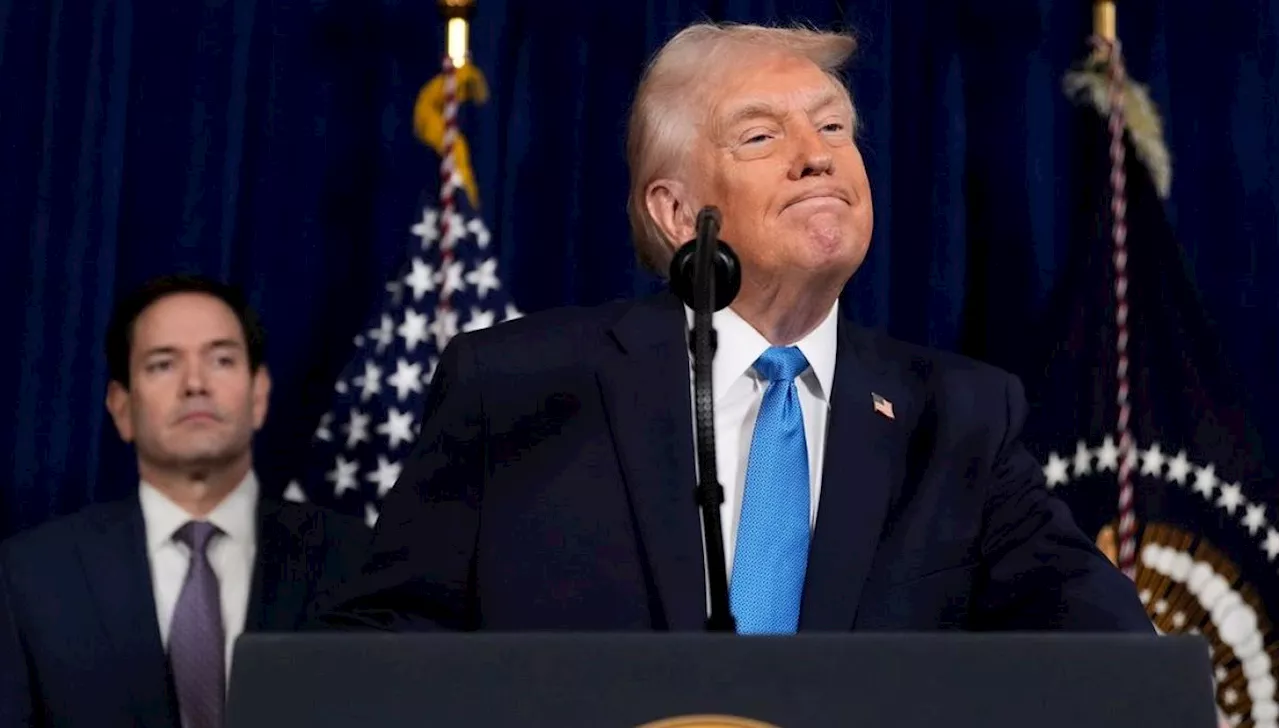
Speaking at a press briefing, Trump stated, “We’re going to run until such time as we can do a safe, proper, and judicious transition.” This statement has left many wondering about the specifics of U.S. involvement and the potential implications for Venezuelan sovereignty.
When pressed about how the U.S. plans to manage the situation, Trump responded, “It’s all being done right now. We’re designating people.” Behind him at the press conference were key officials, including Secretary of State Marco Rubio, War Secretary Pete Hegseth, CIA Director John Ratcliffe, and Joint Chiefs of Staff Chairman Dan Caine.
Rubio later clarified that the U.S. will not appoint officials or rewrite laws in Venezuela, but aims to steer the nation towards better governance. He stated, “We’re focused on no more drug trafficking, no more Iran/Hezbollah presence there, and no more using the oil industry to enrich adversaries.” This highlights the critical role of Venezuela’s oil industry in the geopolitical landscape.
Trump reiterated that the U.S. does not need Venezuelan oil but will not allow it to fall into the hands of adversaries like China, Russia, or Iran. He emphasized, “We’re not going to allow the Western Hemisphere to be a base of operation for competitors and rivals of the United States.”
The implications of this military intervention are profound. Analysts warn that a prolonged U.S. presence could lead to accusations of an overreach and nation-building, a scenario Trump has sought to avoid. The urgency is clear: achieving a peaceful transition is crucial to avoid escalating tensions in the region.
As the situation unfolds, the administration’s next steps will be closely watched. The American public and international observers are eager to see how Trump’s promises translate into action, and whether this operation will stabilize or destabilize Venezuela.
This developing story is likely to impact U.S.-Latin American relations significantly, and updates will be forthcoming as more details emerge from Washington and Caracas.
For further updates, stay tuned as we cover this evolving situation in real-time.