BREAKING NEWS: Archaeologists have unearthed a **1,400-year-old Zapotec tomb** in southern Mexico, a discovery being hailed as “the most significant archaeological find in the last decade.” The tomb, located in **San Pablo Huitzo**, **Oaxaca**, was built around the year **600 AD**, according to a statement from **Mexico’s National Institute of Anthropology and History (INAH)**.
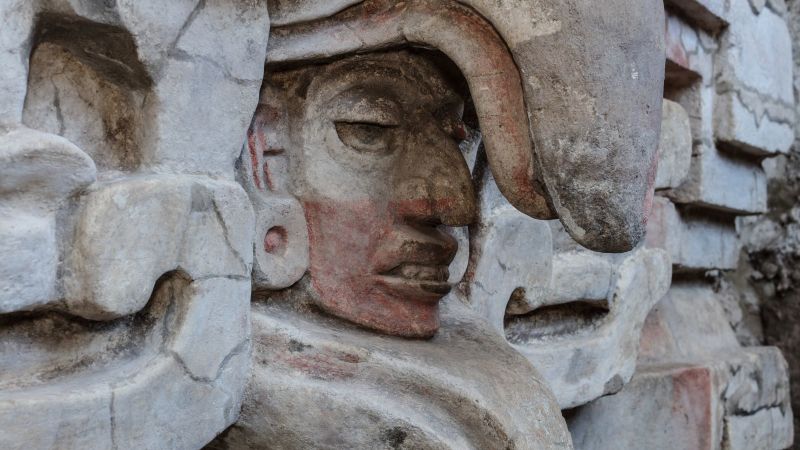
The tomb features stunning carvings, including a giant **owl sculpture** perched above the entrance, enhancing its cultural significance. Inside, a sculpture of a man’s head, possibly representing the deceased, is nestled within the owl’s beak. This striking detail highlights the Zapotec belief that owls symbolize both night and death, creating an emotional connection to the ancient culture still present among the **hundreds of thousands of Zapotec speakers** in Mexico today.
Among the tomb’s most remarkable artifacts are multicolored murals depicting symbols of power and death. At the threshold of the burial chamber, two human figures are carved holding various artifacts, likely serving as guardians of the tomb. The interior boasts an “extraordinary” mural in vibrant **ocher, white, green, red, and blue**, showcasing a procession of people carrying bags of **copal**, a tree resin used in ceremonial incense.
During a news conference last Friday, **Mexico’s President Claudia Sheinbaum** emphasized the tomb’s significance, stating, “It’s the most significant archaeological discovery of the last decade in Mexico due to the level of preservation and the information it provides.” **Claudia Curiel de Icaza**, Mexico’s culture secretary, echoed this sentiment, asserting that the tomb is an “exceptional discovery” for what it reveals about Zapotec culture, social organization, funerary rituals, and belief systems.
As the discovery unfolds, a **multidisciplinary team from INAH** is mobilizing to protect the site and conduct further research. They are focusing on stabilizing the murals, which are currently in a “fragile state” due to the effects of tree roots, insects, and rapid environmental changes.
This groundbreaking find not only provides insight into ancient civilizations but also connects modern Mexicans to their rich cultural heritage. The implications of this discovery are profound, as it opens new avenues for understanding the Zapotec civilization and its enduring legacy.
Stay tuned for more updates as INAH continues its critical work at this historic site. The world watches with bated breath as we uncover the secrets of the past, shaping our understanding of history and culture today.