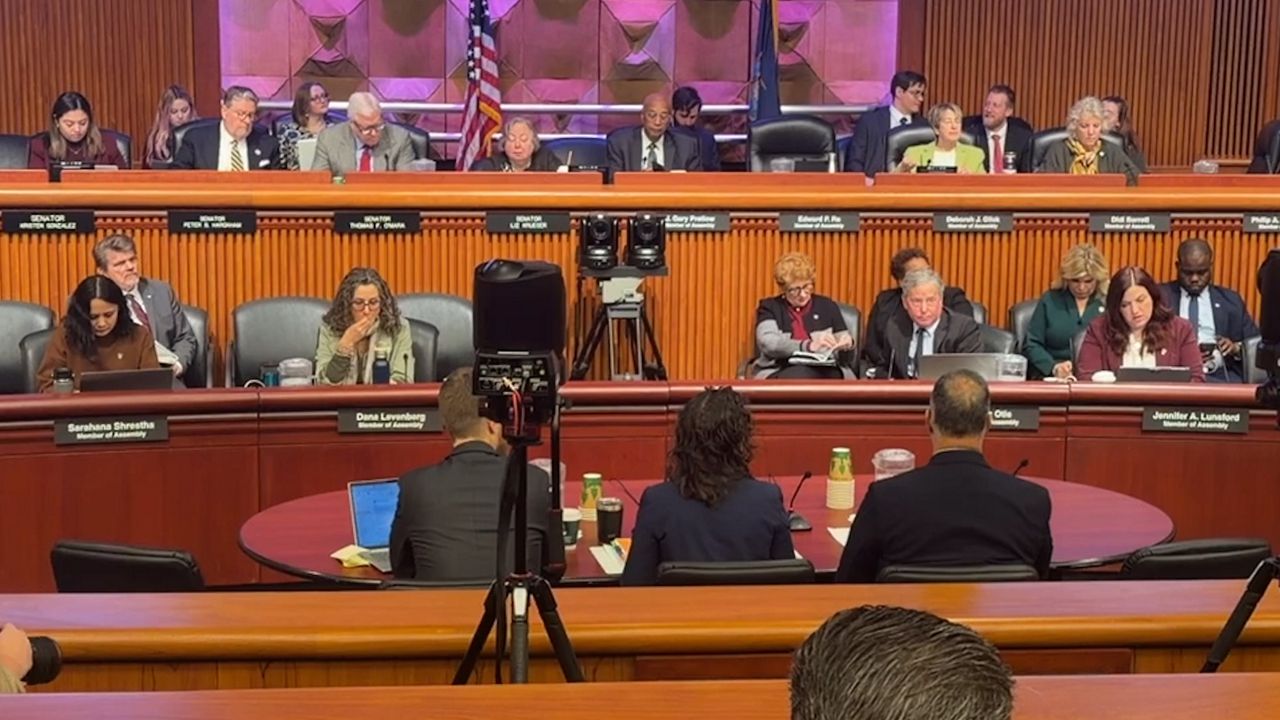
UPDATE: The future of New York’s climate law is in jeopardy as urgent questions arise during a budget hearing on energy held on January 17, 2024. The state Legislature’s discussions are now overshadowed by potential rollbacks to the Climate Leadership and Community Protection Act (CLCPA), sparking heated debates over energy policy and environmental commitment.
As the Legislature reviews Gov. Kathy Hochul’s executive budget proposal, the Coalition for Safe and Reliable Energy has petitioned the Public Service Commission to evaluate suspending or modifying the state’s Renewable Energy Program. This petition, filed earlier this month, seeks to exploit a provision in the CLCPA that allows for temporary modifications if deemed necessary for safe electric service.
The coalition, primarily composed of business interests, claims that the program may hinder service reliability and lead to increased service disconnections. With a 30-day public comment period now in effect, this push has gathered significant attention, shifting sentiment among climate advocates.
At the hearing, Rory M. Christian, chair and CEO of the Public Service Commission, remained tight-lipped about the petition, raising further concerns about the future of New York’s climate initiatives. State Sen. Pete Harckham pressed Amanda Lefton, commissioner of the New York State Department of Environmental Conservation, for clarity on the governor’s plans. While Lefton acknowledged the need to balance climate goals with energy reliability and affordability, she did not confirm any specifics regarding potential rollbacks.
“Yes or no, are we going to see efforts to roll back the CLCPA later in the budget discussions?” Harckham asked. Lefton responded, “The governor has made clear that she knows we need to continue to fight climate change… but I do not know the governor’s specific plans.”
The possibility of changes to the CLCPA has given hope to Republican lawmakers. State Sen. Mark Walczyk voiced skepticism about the effectiveness of the CLCPA, stating, “We’ve seen just a crack in her energy plan… This isn’t a good plan; it’s not feasible.”
With multiple opportunities for the governor to introduce amendments or negotiate policy proposals, the path forward remains uncertain. Last year, the budget process extended well past the April 1 deadline, highlighting the contentious nature of energy discussions in the state.
A focal point of the hearing was Hochul’s proposal to modify the state’s environmental quality review process to accelerate housing development. However, the proposal has faced criticism from various lawmakers, including State Sen. Rachel May, who argues that the governor’s approach is too broad.
“Our bill is much more targeted,” said May, stressing the need for specific environmental protections. “I’m concerned that environmental advocacy organizations won’t be as supportive, and I’m hopeful that we’ll be able to negotiate parts of our bill.”
As the budget discussions unfold, the implications for New York’s climate future are profound. Stakeholders across the spectrum are watching closely, as the decisions made in the coming weeks could reshape the state’s environmental landscape significantly.
Stay tuned for further updates as this situation develops. The urgency of these decisions emphasizes the critical intersection of energy policy and climate action in New York.