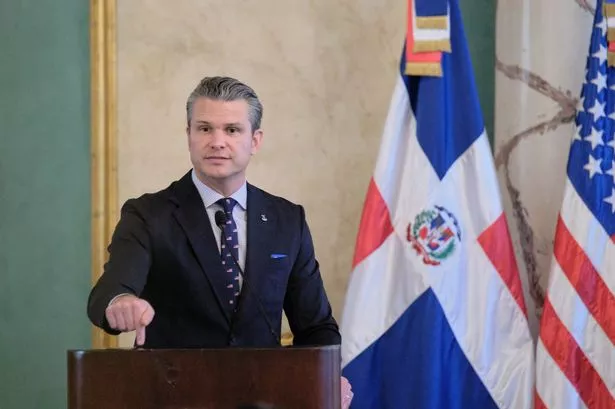
URGENT UPDATE: Controversial remarks from Defense Secretary Pete Hegseth have resurfaced following explosive reports about a verbal order he allegedly gave during a Sept. 2 Naval strike in the Caribbean Sea. The Washington Post revealed that Hegseth instructed military personnel to “kill everyone” connected to a suspected drug trafficking boat, igniting widespread condemnation and legal concerns.
In a speech to over 800 flag officers just months ago, Hegseth criticized what he termed the “stupid rules of engagement” that he claims hinder military operations. He stated, “We fight to win… no more politically correct and overbearing rules of engagement, just common sense, maximum lethality, and authority for war.” This rhetoric raises alarming questions, especially in light of recent actions that have reportedly resulted in at least 80 fatalities.
The fallout from the Sept. 2 incident is significant. Legal experts, including former military lawyer Todd Huntley, have argued that Hegseth’s directive could constitute a war crime. “An order to show no quarter would likely be classified as such,” Huntley noted, emphasizing that the absence of a declared war makes the killings unjustifiable. He pointed out that without an imminent threat to the U.S., targeting individuals on the suspected drug boats could be classified as “murder.”
The U.S. Navy’s Vice Admiral Frank Bradley, who oversaw the Joint Operational Command during the incident, defended the decision to carry out a second strike on survivors, claiming they remained legitimate targets. This justification is under scrutiny as lawmakers from both parties demand accountability regarding the strikes, which have drawn international attention and criticism.
The Trump administration has maintained that the U.S. is engaged in a “non-international armed conflict” against “designated terrorist organizations,” supported by opinions from the Justice Department’s Office of Legal Counsel. However, the Pentagon’s own assessments raise serious legal implications for these operations, suggesting possible violations of both U.S. federal law and international law regarding armed conflict.
Since the Sept. 2 strike, the U.S. has conducted at least 22 additional strikes on suspected drug smuggling activities, including one targeting a semisubmersible vessel. Each of these actions adds to the growing controversy surrounding Hegseth’s orders and the implications for military engagement protocols.
As the situation develops, observers are calling for greater transparency and accountability from military leadership. The impact of these events resonates far beyond the immediate context, questioning the ethical framework guiding U.S. military operations.
Stay tuned for the latest updates as this urgent story unfolds.