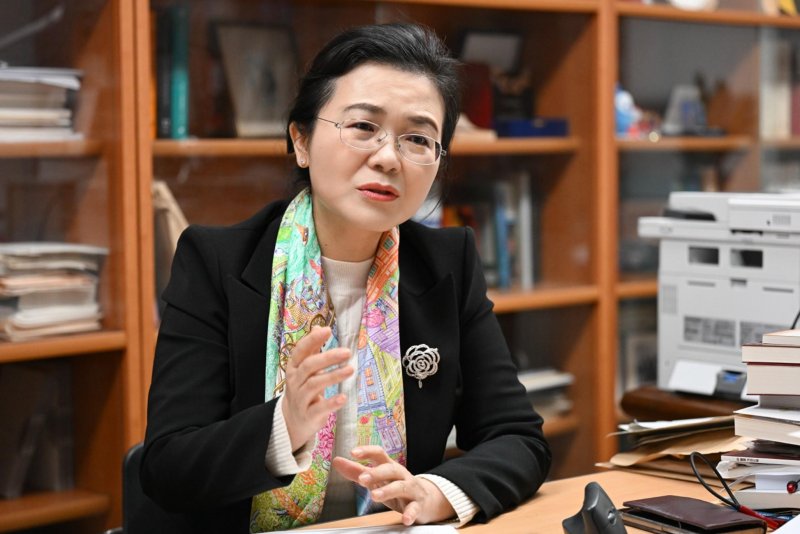
UPDATE: A prominent law professor at Korea University has urgently warned that a set of judicial reform bills proposed by South Korea’s ruling party could dangerously undermine judicial independence. In an interview conducted earlier today, Cha Jin-ah expressed serious concerns, stating, “unchecked power leads to dictatorship.”
The proposed reforms include expanding the number of Supreme Court justices and introducing a controversial court petition system. Cha, a constitutional law specialist and former advisor to the National Assembly’s constitutional revision panel, acknowledges that some reforms may be necessary but insists that the speed and breadth of these proposals raise red flags about their intent and potential for consolidating power.
The ruling party’s plans involve increasing the Supreme Court justices by up to 12, creating an appellate court, and establishing a special court for treason. Cha argues that such sweeping changes, especially the rapid processing of multiple bills, could threaten the very foundation of South Korea’s democracy.
In her remarks, Cha emphasized the need for caution regarding the proposed special court for treason, labeling it as unconstitutional. “Fair trials become meaningless, and the result is a predetermined tribunal,” she stated. She further criticized the introduction of a crime of “distorting the law,” comparing it to measures once used in Nazi Germany to target judges and prosecutors. “If adopted here, it will be exploited endlessly, dragging out cases,” she warned.
The professor’s comments come at a crucial moment, as public opinion could be the only force capable of halting what she describes as a legislative rampage. “Democracy does not operate only on election day. The people must control the power they entrust,” she stated, highlighting the importance of active civic engagement in the legislative process.
As the ruling party pushes forward with its agenda, the implications for South Korea’s judicial system and democratic integrity are profound. Observers are now closely monitoring how these developments will unfold, particularly in the face of potential public backlash.
Next Steps: The opposition must also step up, Cha urges, by presenting reasonable alternatives and effectively challenging attempts to undermine the separation of powers. The fate of these proposed reforms hangs in the balance, with the eyes of the nation—and the world—watching closely.
Stay tuned for more updates as this story develops.