The United States executed a significant military operation on September 29, 2023, targeting key military sites on Kharg Island, Iran’s largest oil export hub. In a statement released on Truth Social, President Donald Trump described the airstrikes as one of the most powerful bombing raids in the history of the Middle East, aimed at ensuring the safe passage of vessels through the strategically vital Strait of Hormuz. The president emphasized that while military targets were obliterated, he chose to spare the oil infrastructure, warning that any interference with maritime shipping could prompt a reassessment of this decision.
The airstrikes reportedly come in response to defiant remarks from Iran’s newly appointed supreme leader, Mojtaba Khamenei, who vowed to keep the Strait of Hormuz blocked. This statement was broadcasted on Iranian state television, reflecting Iran’s aggressive stance amid ongoing tensions in the region. Since the conflict escalated, more than a dozen ships have reportedly been attacked within the Persian Gulf, with the Islamic Revolutionary Guard Corps claiming responsibility for several incidents.
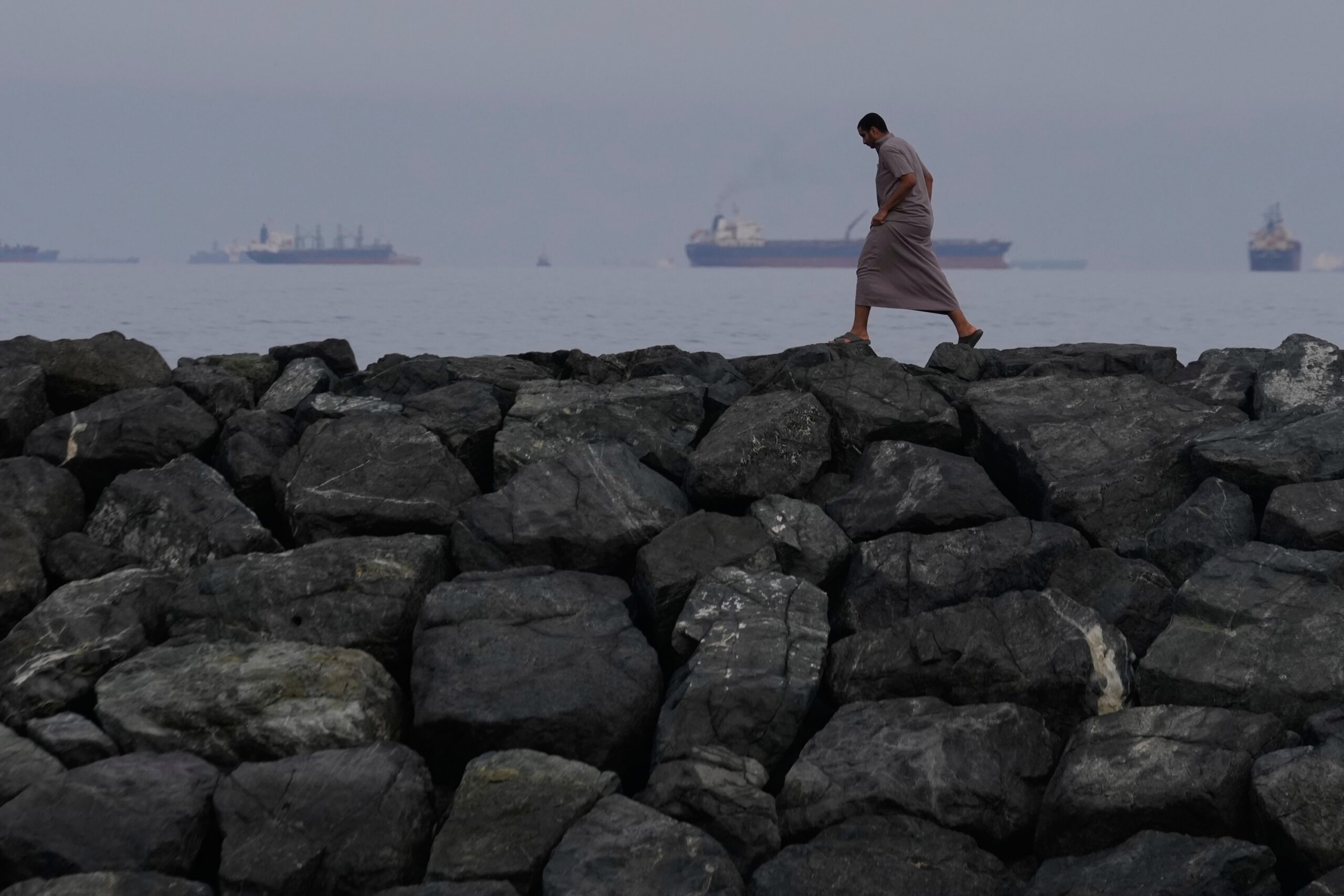
The Strait of Hormuz is crucial for global oil supply, with approximately 20% of the world’s petroleum liquids and liquefied natural gas passing through its waters. The current unrest has pushed Brent crude oil futures above $100 per barrel, a significant increase from about $70 before the onset of hostilities. Analysts warn that Iran’s tactics could destabilize shipping routes and escalate global oil prices.
Iran’s Asymmetric Warfare Strategy
Iran’s military strategy in the region includes asymmetric naval warfare, involving fast-attack boats, unmanned vessels, drones, and a variety of naval mines. Retired Navy Captain Bill Hamblet, editor-in-chief of the U.S. Naval Institute’s “Proceedings,” described the situation as a “multidimensional threat.” He pointed out the challenges posed by mines and small, agile vessels that can swiftly attack larger ships.
During the 1980s during the Iran-Iraq War, Iran utilized similar tactics, leading to significant clashes in the Strait of Hormuz, such as the infamous incident involving the guided-missile frigate USS Samuel B. Roberts. This past confrontation prompted a U.S. response known as Operation Praying Mantis, which targeted Iranian vessels and infrastructure.
According to a congressional report released in 2025, Iran possesses between 5,000 and 6,000 naval mines, including limpet mines, moored mines, and bottom mines. The implementation of these mines poses a significant threat to maritime traffic, complicating the efforts of international naval forces to secure safe passage.
U.S. Defense Briefing and Global Reactions
During a briefing at the Pentagon, Secretary of Defense Pete Hegseth stated that there is “no clear evidence” of new mines being placed in the Strait of Hormuz. He characterized Iran’s actions as desperate and emphasized the ongoing U.S. commitment to maintaining security in the region.
Analysts like Scarlett Suarez, a senior intelligence analyst at Dryad Global, highlighted the chaos that could ensue if Iran’s strategy continues unchecked. She noted that attacks on commercial vessels, regardless of their ownership, contribute to a climate of fear and uncertainty among shipping companies and global markets.
As the situation unfolds, the international community watches closely, aware that any escalation could have severe repercussions not only for regional stability but also for the global economy. The U.S.’s recent military actions signal a willingness to confront perceived threats to maritime security, but the long-term impacts of these strategies remain to be seen.