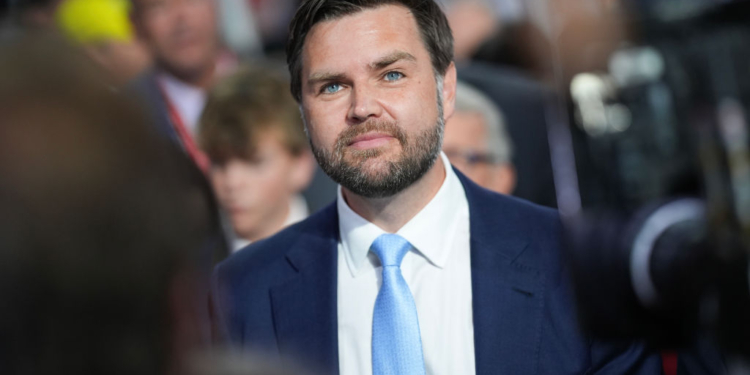
UPDATE: A new Yale Youth Poll reveals that if the presidential election were held tomorrow, Vice President JD Vance would be the Republican frontrunner, capturing 51% of the vote, while California Governor Gavin Newsom leads the Democratic side with 25% support. These developments come as part of a broader analysis indicating significant shifts in voter preferences ahead of the 2028 election.
The poll, conducted by Verasight from October 29 to November 11, 2025, surveyed 3,426 registered voters, including 1,706 individuals aged 18-34. This demographic is particularly crucial, as younger voters are increasingly shaping the political landscape. The margin of error for the overall sample stands at ±1.7 points.
In the Republican primary, Vance’s support dwarfs that of his nearest competitor. He leads Donald Trump Jr. by an astounding 43 points, with Trump Jr. at just 8%. Florida Governor Ron DeSantis trails significantly with a mere 6%. Interestingly, despite DeSantis’s lower polling numbers, 79% of respondents believe he would likely win against a Democrat in the 2028 general election. A similar sentiment is held for Vance, with 71% affirming his electability.
The poll also explored hypothetical scenarios involving former President Donald Trump, revealing that he would still command 50% support if he pursued a third term. Vance would garner just 19% in this scenario. Among younger voters, support for Trump dwindles, with only 20% of those aged 18-22 and 28% of those aged 23-29 expressing interest.
On the Democratic side, Newsom’s 25% support positions him ahead of notable figures like former Vice President Kamala Harris at 18%, Alexandria Ocasio-Cortez with 16%, and former Transportation Secretary Pete Buttigieg at 14%. The poll highlights a significant divide among Democratic candidates, where Ocasio-Cortez leads among voters under 35 with 32% support, while Newsom is favored by male voters and specific ethnic groups.
In a striking finding, 85% of Democrats view Newsom as the strongest candidate against a generic Republican in the general election, indicating a clear preference for his leadership.
As the political landscape continues to evolve, the implications of these polling results are profound. Political analysts and party strategists will be watching closely to see how these early indicators influence campaign strategies and voter engagement as we move closer to the 2028 election.
This poll underscores an urgent call for both parties to rally their bases and address the concerns of younger voters, who are increasingly pivotal in shaping future elections. The data collected provides a critical snapshot of voter sentiment that could redefine the trajectory of the upcoming presidential race.
Stay tuned for further updates as this story develops and as candidates gear up for the intense battle ahead.