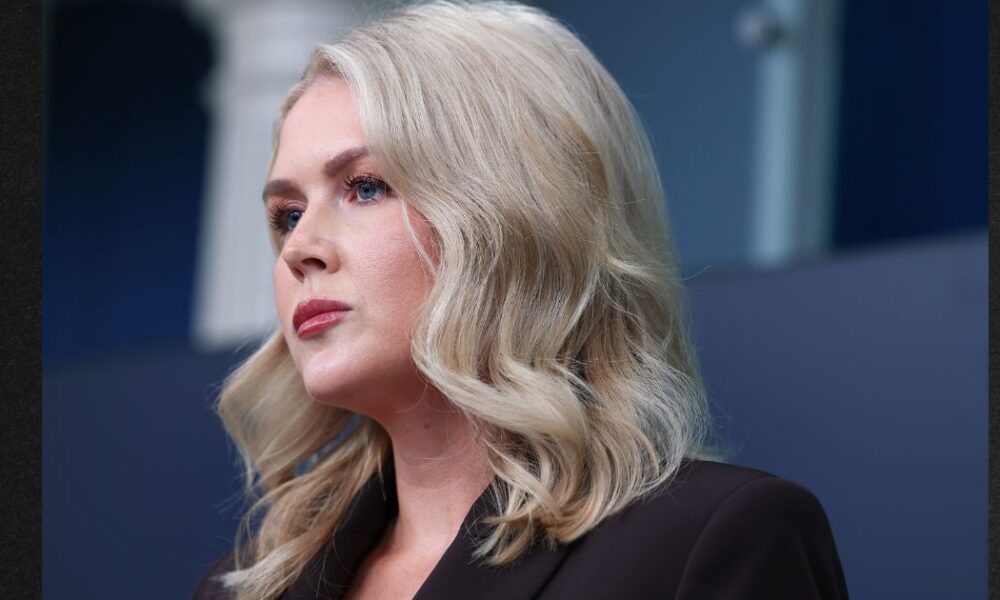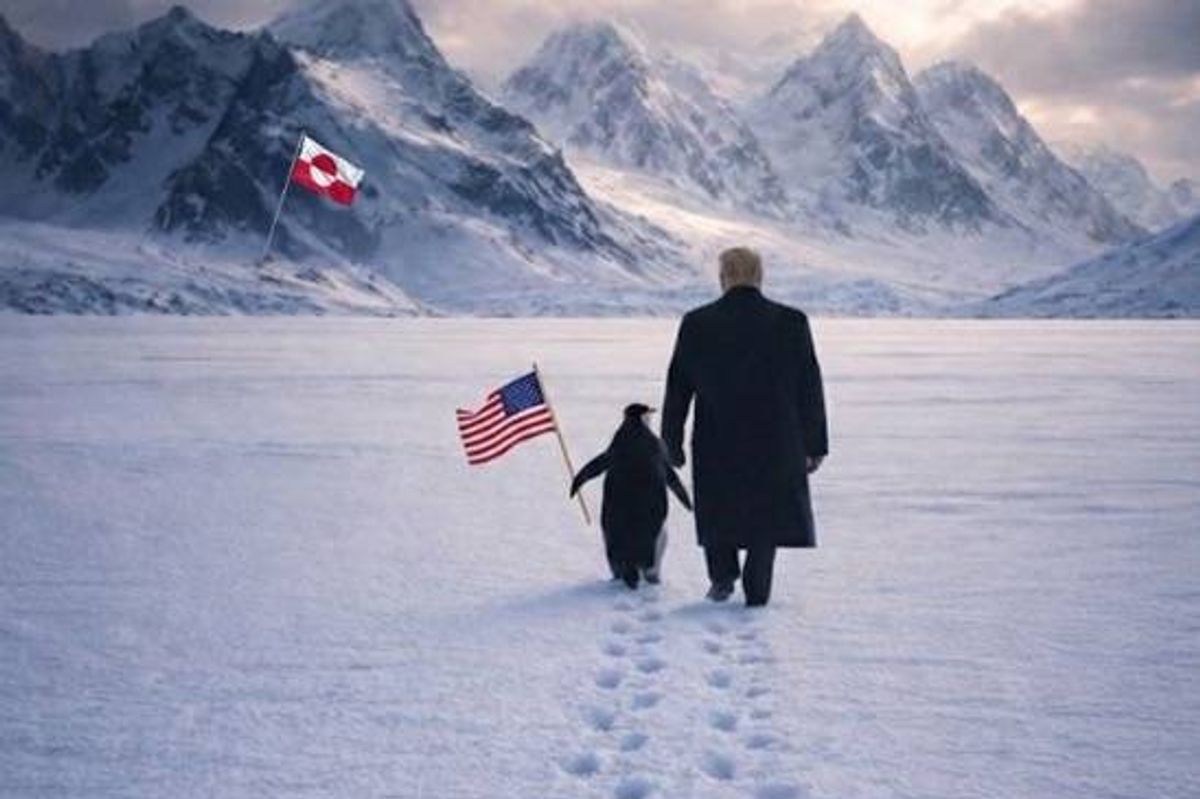
UPDATE: The White House ignited a firestorm of controversy on Friday after posting an AI-generated image of President Donald Trump holding hands with a penguin in a snowy Greenland landscape. This provocative post, shared by White House Communications Director Stephen Cheung, is drawing widespread criticism as it raises serious questions about both scientific accuracy and the administration’s messaging strategy.
As global tensions mount over Trump’s recent comments regarding Greenland, the image was perceived as an attempt to further provoke his critics. Trump has been vocal about his interest in acquiring the territory, which is a sovereign part of Denmark, suggesting this week that he has a “concept of a deal” involving the island. Despite backing down from military threats, the AI image signals that Trump’s aggressive rhetoric may continue to loom over NATO discussions.
Social media users were quick to point out that penguins do not inhabit Greenland, with one user bluntly stating, “There are no penguins in Greenland you morons.” The post not only sparked disbelief but also inspired a wave of AI-generated memes that ridiculed the administration’s lack of factual grounding.
“This is why Europeans continue to question whether education is illegal in the United States,”
another social media user remarked, reflecting a growing concern over the administration’s credibility.
Earlier this week at the World Economic Forum in Davos, Trump claimed he wants “including, right, title and ownership” of Greenland, further complicating diplomatic relations with NATO allies. While in Davos, he mentioned discussions with NATO Secretary General Mark Rutte and hinted at a potential deal framework that he called “forever” and “infinite.” However, specifics about the deal remain vague.
Trump’s remarks were met with strong rebukes from other NATO members, who firmly stated that Greenland is “not for sale.” The ongoing rhetoric from Trump has raised alarms within the alliance, which was established to counter Soviet influence during the Cold War.
Cheung’s communications strategy has frequently incorporated AI-generated images and videos that portray Trump in outlandish scenarios, from superhero depictions to controversial political statements, often blurring the lines between fact and fiction. The recent penguin image is just one of many attempts to create viral content that stirs public debate.
Critics continue to question the impact of such messaging on American credibility, especially as Trump’s administration faces mounting scrutiny over its approach to international relations. The AI-generated posts have been described as “performative hostility” and raise significant concerns about the administration’s grasp on factual information.
As public discourse intensifies, the implications of Trump’s comments and the White House’s social media strategies are likely to dominate headlines in the coming days. The urgency of these developments cannot be overstated, as they could reshape NATO dynamics and international relations.
For now, observers will be watching closely to see how Trump reconciles his controversial statements with the expectations of U.S. allies, particularly in light of his continued interest in Greenland.