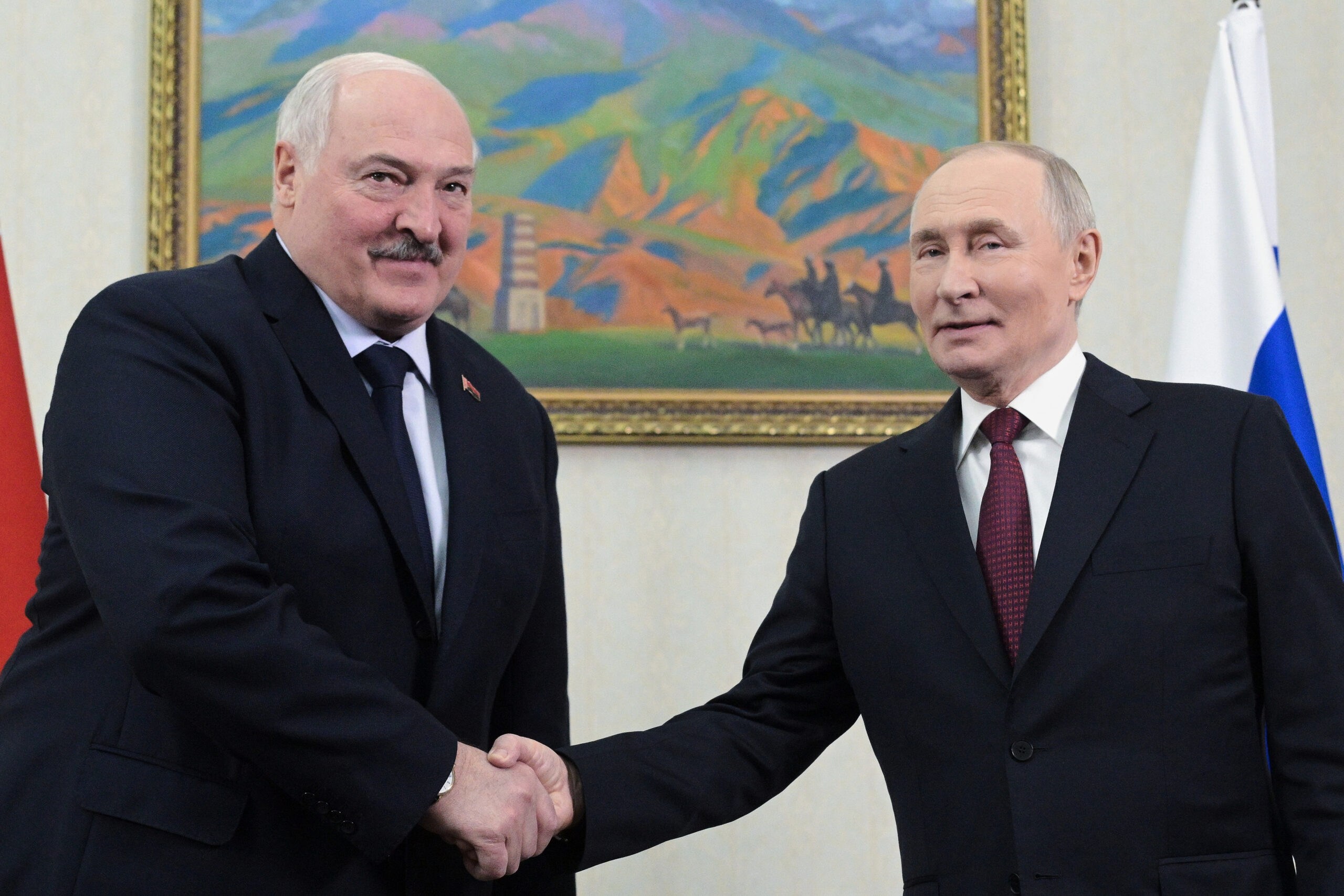
Belarusian President Alexander Lukashenko announced on Thursday that Russia has deployed its latest nuclear-capable missile system, the Oreshnik, to Belarus. This development comes as diplomatic efforts to resolve the ongoing conflict in Ukraine have reached a critical juncture. Lukashenko stated that the Oreshnik system, an intermediate-range ballistic missile, arrived in Belarus on Wednesday and is now entering combat duty.
Lukashenko did not specify the number of missiles deployed or provide further details about the system. Russian President Vladimir Putin confirmed that the Oreshnik would be operational this month during a meeting with senior military officials. He emphasized that Moscow aims to extend its territorial gains in Ukraine if its demands in peace negotiations are not met by Kyiv and its Western allies.
In light of the ongoing conflict, the deployment of the Oreshnik may exacerbate tensions. The United States has intensified diplomatic efforts to end the war, which began with Russia’s full-scale invasion of Ukraine in February 2022. However, Washington’s initiatives have encountered starkly opposing demands from both Russia and Ukraine.
Previously, Russia had stationed tactical nuclear weapons in Belarus, which borders Ukraine. Lukashenko indicated that Belarus may possess several dozen of these tactical warheads. The Oreshnik, which translates to “hazelnut tree” in Russian, was first tested in November 2024, targeting a factory in Ukraine. Putin has claimed that the missile is designed to evade interception, featuring multiple warheads that can strike at speeds up to Mach 10.
The Russian President has warned that the Oreshnik could be used against nations allied with Ukraine, particularly those allowing long-range strikes into Russian territory. Russian state media reported that the missile can reach an airbase in Poland in just 11 minutes and NATO headquarters in Brussels within 17 minutes. The missile’s warhead type—whether nuclear or conventional—cannot be determined before impact.
Intermediate-range missiles like the Oreshnik are capable of flying between 500 to 5,500 kilometers (310 to 3,400 miles) and were previously banned under a treaty abandoned by both Washington and Moscow in 2019. During a security pact signing in December 2024, Putin assured Lukashenko that although Russia would control the Oreshniks, Belarus would have the authority to select targets. He also noted that targeting closer to Belarus could allow for heavier payloads.
In 2024, the Kremlin revised its nuclear doctrine, stating that any conventional attack on Russia supported by a nuclear power would be regarded as a joint attack. This shift appears to lower the threshold for potential nuclear engagement and places Belarus under Russia’s nuclear umbrella.
Lukashenko has maintained a firm grip on power in Belarus for over three decades, facing international condemnation for human rights abuses and for allowing Russian military operations from his territory during the 2022 invasion of Ukraine. Despite his close ties to Moscow, Lukashenko has also sought to improve relations with the United States.
In a notable gesture, he released 123 political prisoners, including Nobel Peace Prize laureate Ales Bialiatski, as part of a deal that led to the lifting of U.S. sanctions on Belarus’s potash industry, a significant source of export revenue.
Belarusian opposition leader Sviatlana Tsikhanouskaya criticized the missile deployment, arguing that it deepens Belarus’s military and political reliance on Russia. She stated, “The deployment of Oreshnik turns Belarus into a target and militarizes the country, and we stand categorically against it. Putin is using Lukashenko as a tool for the Kremlin’s games.”
As the situation evolves, the implications of the Oreshnik missile deployment for regional stability and security remain a focal point of international concern.