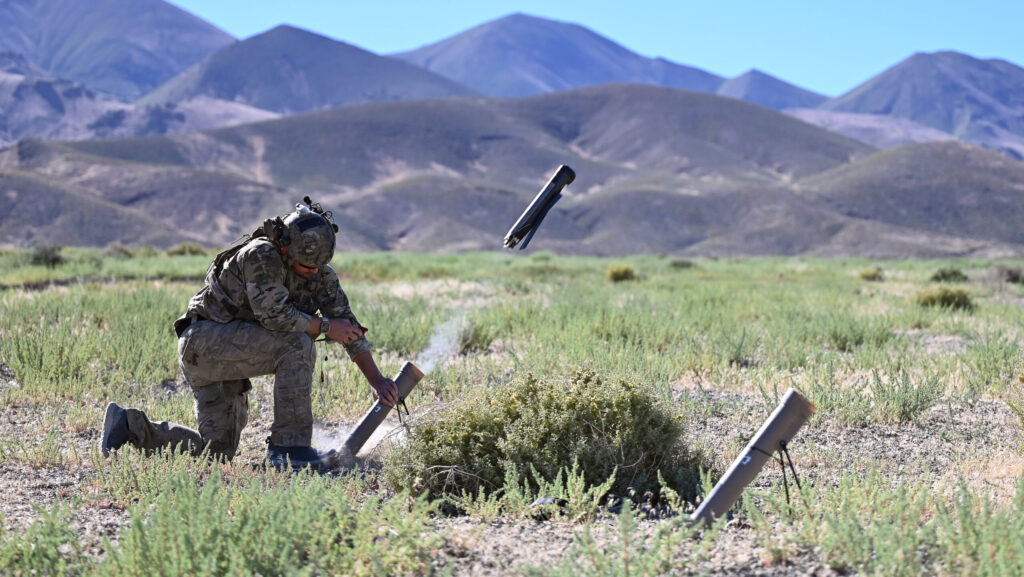
The Defense Autonomous Working Group (DAWG), the successor to the Biden-era drone initiative, is making significant strides in the development of larger and longer-ranged unmanned aerial systems (UAS). This transformation was confirmed by Adm. Sam Paparo and Emil Michael, the Chief Technology Officer at the Pentagon, who highlighted the group’s ongoing wargames and advancements in drone technology.
DAWG aims to enhance the capabilities of UAS to meet evolving defense requirements. The initiative focuses on developing sophisticated drones that can perform a variety of missions, including surveillance and attack operations. According to Adm. Paparo, this is essential for maintaining a strategic advantage in modern warfare, where drone technologies play a crucial role.
The group has already conducted several wargames to assess the operational effectiveness of these new systems. These exercises are designed to test the capabilities of larger drones in real-world scenarios, evaluating their performance in both defensive and offensive roles. The outcomes of these wargames will inform future designs and operational doctrines.
In addition to focusing on larger drones, DAWG is also exploring advancements in artificial intelligence and autonomous systems. The objective is to leverage cutting-edge technology to improve the decision-making processes of unmanned systems, enhancing their effectiveness in complex environments.
The Pentagon’s strategy reflects a broader shift in military operations, where drones are increasingly viewed as integral components of defense capabilities. This shift is driven by the need for versatile and cost-effective solutions in the face of evolving threats.
The ongoing efforts under DAWG underscore the U.S. military’s commitment to innovation in defense technology. By prioritizing the development of advanced UAS, the Pentagon aims to position itself as a leader in drone warfare, ensuring that its capabilities remain on the cutting edge.
As the initiative progresses, the implications for future military engagements could be substantial. With the potential for improved reconnaissance and strike capabilities, the evolution of the U.S. drone program may reshape the landscape of modern conflict.
In conclusion, the Defense Autonomous Working Group represents a critical step forward in the U.S. military’s approach to unmanned aerial systems. With ongoing wargames and a focus on larger, more capable drones, the initiative is set to redefine the role of drones in national defense. The outcomes of these developments will be closely monitored by military analysts and defense strategists worldwide as they signal a new era in aerial combat technology.