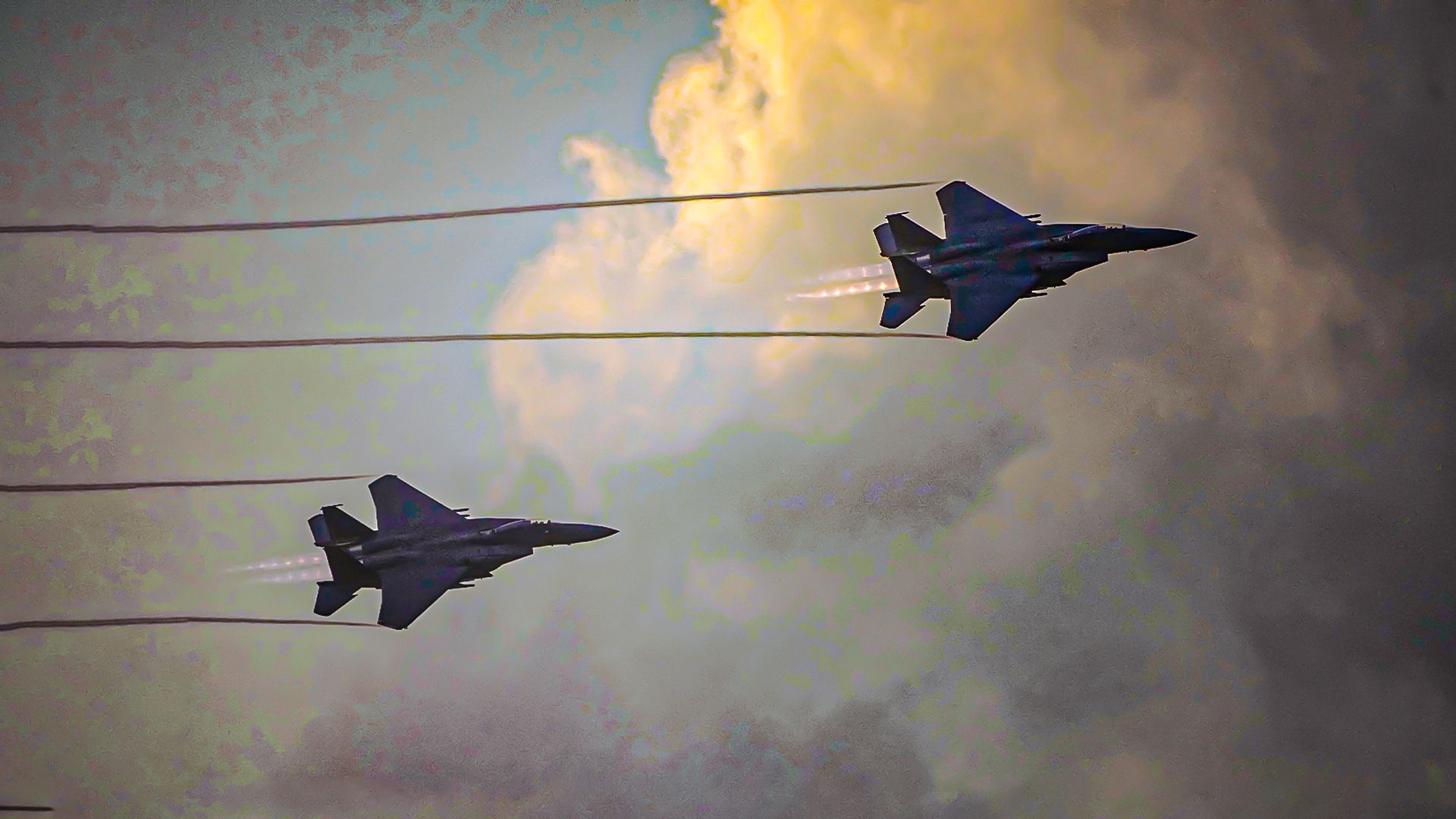
The skies over Santa Clara, California, were under tight security during Super Bowl LX on February 13, 2026, as F-15 Eagle fighter jets from the California Air National Guard’s 144th Fighter Wing patrolled the airspace. This annual event, known for its spectacular halftime shows and fireworks, also featured an extensive aerial security operation. Classified as a National Special Security Event, the Super Bowl mandated a comprehensive aviation safety and defense strategy involving military readiness and strict airspace restrictions.
Protective Measures in the Skies
Before the kickoff, the Federal Aviation Administration (FAA) established a Temporary Flight Restriction (TFR) zone extending approximately 30 miles above Levi’s Stadium, monitored by the North American Aerospace Defense Command (NORAD) and the FAA. Within this protected airspace, the 144th Fighter Wing’s F-15C Eagles were on standby, prepared to intercept any unauthorized aircraft or drones that entered the area without clearance.
The F-15 Eagle, known for its speed and advanced radar capabilities, is a key player in air defense. With a top speed of Mach 2.5, the aircraft is designed for rapid response and has a distinguished combat record, remaining undefeated in air-to-air engagements. Pilots from the 144th Fighter Wing, based at Fresno Air National Guard Base, engage in rigorous training to ensure they can react quickly to any aerial threats. NBC News reported that during preparations for the Super Bowl, pilots practiced simulated intercepts alongside the Civil Air Patrol, enhancing their readiness for game day.
Coordination and Training
The mission of air defense during the Super Bowl reflects a broader responsibility for the National Guard, which traditionally supports local emergencies but also plays a crucial role in national security. The 144th’s pilots and support staff undergo continuous training, focusing on alert procedures and intercept tactics. While the likelihood of an actual engagement during such a high-profile event is low, maintaining a state of readiness is essential.
The flyover, a significant highlight of the event, featured a unique collaboration between different military branches, showcasing two F-15C Eagles from the 144th Fighter Wing, two US Navy F/A-18E/F Super Hornets, two F-35C Lightning II fighters, and two B-1B Lancer bombers. This joint operation illustrates the interoperability and precision of the US armed forces, celebrating 250 years of military service while reinforcing airspace security.
The flyover’s choreography involved meticulous planning, requiring precise navigation and timing. The aircraft conducted multiple rehearsal flights in the days leading up to the event, coordinating closely with military and FAA officials to ensure a flawless performance. This public display not only highlighted military capabilities but also served as a deterrent to potential airspace violations.
The significance of having F-15s on alert during the Super Bowl extends beyond the spectacle. The presence of fighter jets provides a crucial safety measure, particularly in the wake of security concerns following the September 11 attacks. While many airspace incursions are unintentional, the swift response of the F-15s helps to manage any potential threats, ensuring the safety of the event and its attendees.
As aerial threats continue to evolve, so too will the strategies to secure high-profile events like the Super Bowl. Advances in radar technology, AI monitoring, and integrated command systems will enhance airspace protection. Nevertheless, the human element remains vital, with the pilots and crews from the 144th Fighter Wing serving as the final line of defense.
In summary, the operations surrounding Super Bowl LX exemplify the blend of tradition, modern technology, and military discipline necessary to secure one of the biggest events in the sporting calendar. The coordination between air defense units and their commitment to public safety underscores the importance of vigilance in protecting such high-profile gatherings.