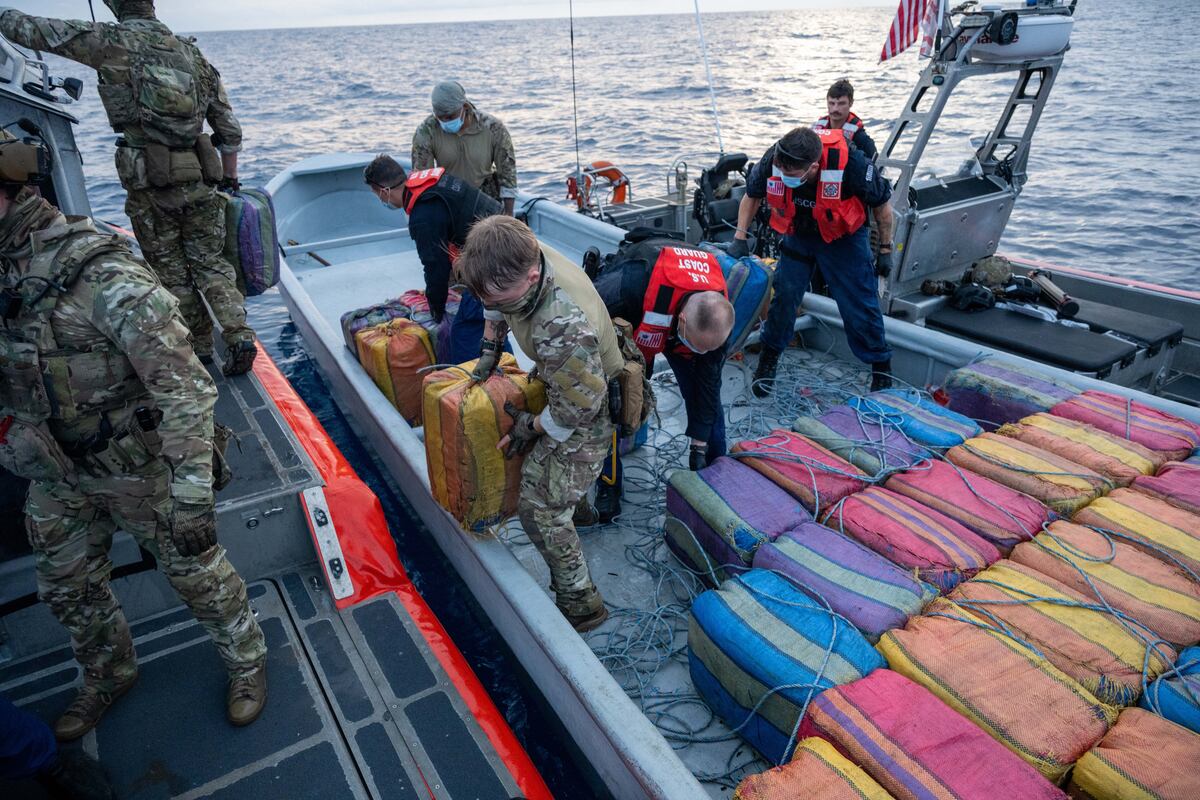
The U.S. Coast Guard has struggled to meet its drug interdiction goals for nearly a decade, primarily due to a significant shift in focus towards migrant interdiction, according to a report from the Government Accountability Office (GAO) released on March 12, 2024. Between 2015 and 2024, the service missed its drug interdiction targets and faced challenges with its migrant interdiction efforts, further complicating its operational effectiveness.
In the report, the GAO highlighted that the Coast Guard’s performance metrics for drug interdiction were not accurately reflecting its achievements. Despite redirecting resources to migrant interdiction, the Coast Guard still missed its migrant interdiction goals for six out of the ten years evaluated. This shift was driven by an unprecedented surge in maritime migration, with nearly 70,000 migrants attempting to reach the U.S. through the Caribbean Sea and Florida Straits between fiscal years 2022 and 2024.
Operational Challenges and Resource Allocation
The GAO identified several factors that contributed to the Coast Guard’s inability to effectively carry out its drug interdiction mission. The service experienced a decline in the operational availability of medium endurance cutters, which are crucial for drug enforcement. Equipment failures and delays in acquiring new vessels and aircraft further hampered efforts. Additionally, the Coast Guard was short by approximately 2,600 service members by the end of fiscal year 2024, despite meeting its recruitment goals for fiscal year 2024.
As the Coast Guard shifted its focus to address the surging migration crisis, it reallocated assets from drug interdiction to migrant interdiction missions. From August 2022 to September 2024, the Coast Guard deployed 80 cutters for Operation Vigilant Sentry, of which 38 were reassigned from other missions. Coast Guard officials classified migrant interdiction as a “life-saving mission,” which led to increased operational hours for aircraft and vessels dedicated to that purpose—up by 66% from fiscal years 2021 to 2023—while drug interdiction efforts saw a 62% decrease in operational hours during the same period.
The consequences were evident, as drug seizures halved from 218 in 2021 to 112 in 2023. Furthermore, the total amount of drugs seized dropped from 143,000 kilograms in 2021 to 110,000 kilograms in 2023.
Future Directions and Recommendations
In response to the identified deficiencies in performance measurement, Coast Guard officials stated that they have developed six new performance measures for drug interdiction as of July 2025. However, they are still in the early stages of creating new metrics for migrant interdiction. The GAO has recommended that the commandant of the Coast Guard assist in the development of these new measures, while the Secretary of Homeland Security should ensure that the Operation Vigilant Sentry task force enhances collaboration and information sharing with other federal agencies.
The report also pointed out that despite the redirection of resources, the Coast Guard only met its performance measure targets for migrant interdiction in fiscal years 2016, 2017, 2022, and 2023. This limited success was partly attributed to the increased efforts of other nations conducting their own migrant interdiction missions, which complicated the Coast Guard’s operations.
The GAO’s findings underscore the importance of effectively balancing resources and efforts between drug interdiction and migrant interdiction to ensure the Coast Guard can fulfill its dual mission of protecting U.S. borders while also addressing humanitarian crises at sea. The agency faces an urgent need to refine its operational strategies and improve its performance metrics to better reflect the complexities of its mission in a changing maritime environment.