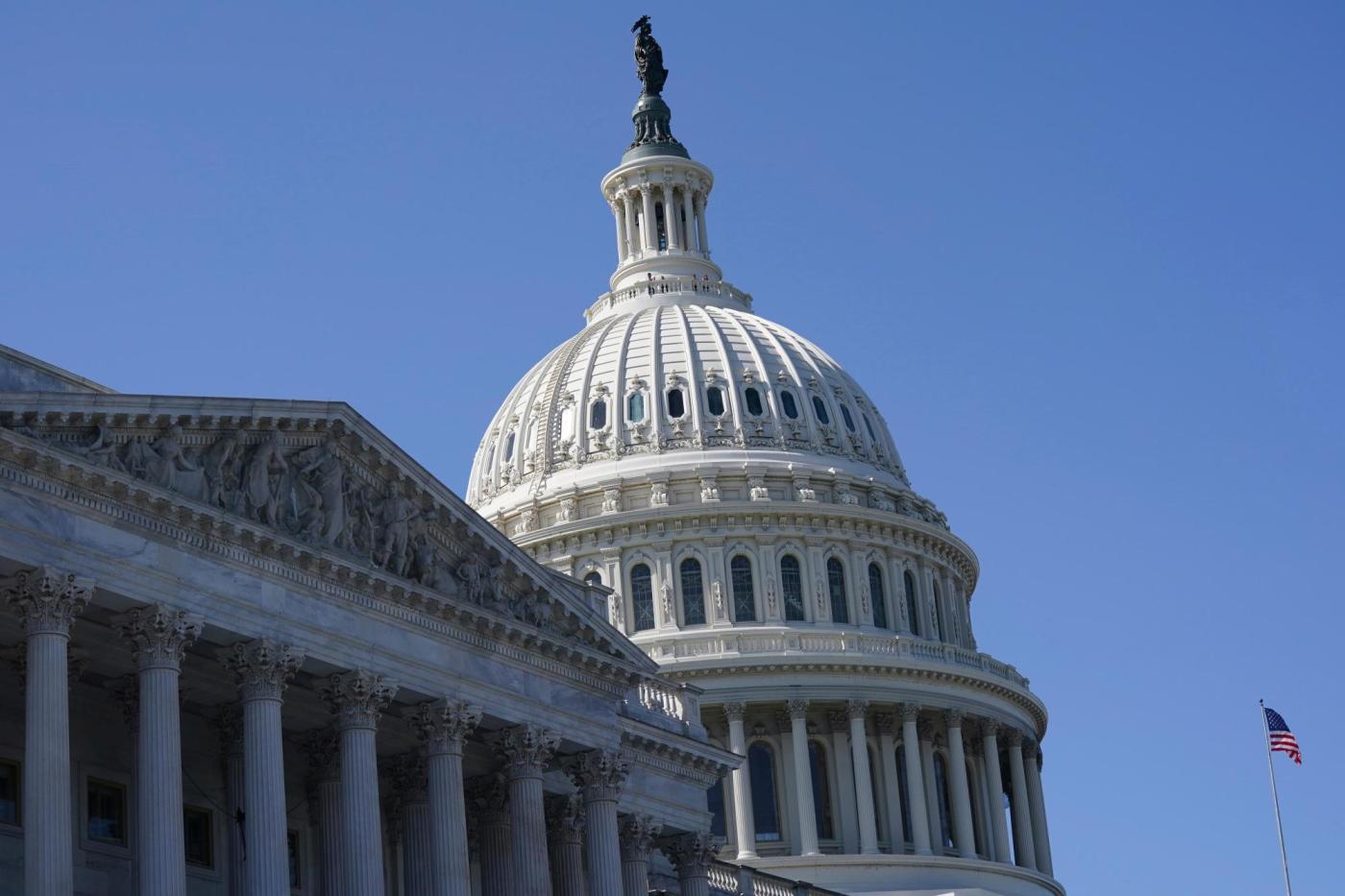
Political experts are expressing skepticism about Congress’s ability to enhance legislative activity as the 2026 midterm elections approach. A notable increase in executive orders, particularly from President Donald Trump, has overshadowed legislative efforts, leading many to question whether lawmakers will assert themselves before the elections.
In 2022 alone, President Trump issued 225 executive orders, surpassing the number he signed during his entire first term. Meanwhile, Congress has struggled to produce significant legislation, achieving a historic low in output during the first year of his presidency. According to a report from The Washington Post, only 38 bills were passed and signed into law by December 19, 2022. Although Trump signed six additional bills shortly thereafter, the total for the year remains at 44, a stark contrast to the 76 laws enacted during his first year in office, and 68 laws during Joe Biden’s first year.
Todd Belt, director of the political management program at George Washington University, noted that “politicians are risk-averse creatures.” This tendency is amplified during midterm election years, which historically see a decline in congressional productivity. Belt explained, “Nobody wants to do anything too provocative during an election year.”
Despite Republican control of the White House and both chambers of Congress, the slim margins in the House and Senate hinder substantial legislative progress. Casey Burgat, legislative affairs program director at George Washington University, indicated that differing priorities within the Republican Party complicate consensus on legislation. He suggested that this has allowed Trump to govern largely through executive actions.
Republican lawmakers face a challenging environment as they prepare for the upcoming midterms. According to Seth McKee, a politics professor at Oklahoma State University, the party’s signature legislation, the “One Big Beautiful Bill,” has not resonated positively with the public. “If you’re in a deep-red district, you can say, ‘Look, I support the president’s policies,’ and you’re fine,” he stated. “But if you’re in a more centrist district, it becomes difficult to communicate effectively with voters.”
Democrats, who currently hold no significant power in Washington, could leverage the narrative of a “do-nothing Congress” in their campaigns for the midterms. Burgat acknowledged that while this strategy has been historically effective, it may not be sufficient to galvanize voter turnout. “The broader sentiments about the economy and public perceptions of Trump will be more influential,” he added.
Historically, the party of the sitting president has faced losses in House seats during midterm elections, with eight out of ten such elections resulting in losses over the past 40 years. In the 2018 midterms, Trump’s Republicans lost 40 House seats. As the upcoming elections approach, the Cook Political Report has identified 17 of 435 House seats as toss-ups, with only two Senate seats in a similar category.
While experts acknowledge the challenges facing Democrats, they also highlight the potential for a shift in control of the House. The Senate, though more favorable to Republicans, may also be competitive in the upcoming election cycle.
Notably, the current Congress has leaned towards omnibus legislation, wherein multiple policy priorities are consolidated into single bills. Charles Hunt, a politics professor at Boise State University, suggests that this approach could obscure the perception of congressional inactivity. He remarked that while the current Congress has faced challenges, some recent actions indicate a desire to reassert legislative power, particularly on issues like stock trading among members of Congress.
Despite the overall low legislative output in 2025, Belt anticipates that Congress will remain largely inactive in 2026, focusing primarily on budget matters. He noted potential exceptions, such as legislative efforts related to Obamacare subsidies, which may prompt lawmakers to address pressing public concerns as court decisions impact Trump’s executive power.
As the political landscape evolves leading up to the midterm elections, Congress’s performance and public sentiment towards leadership will play critical roles in shaping the outcomes.