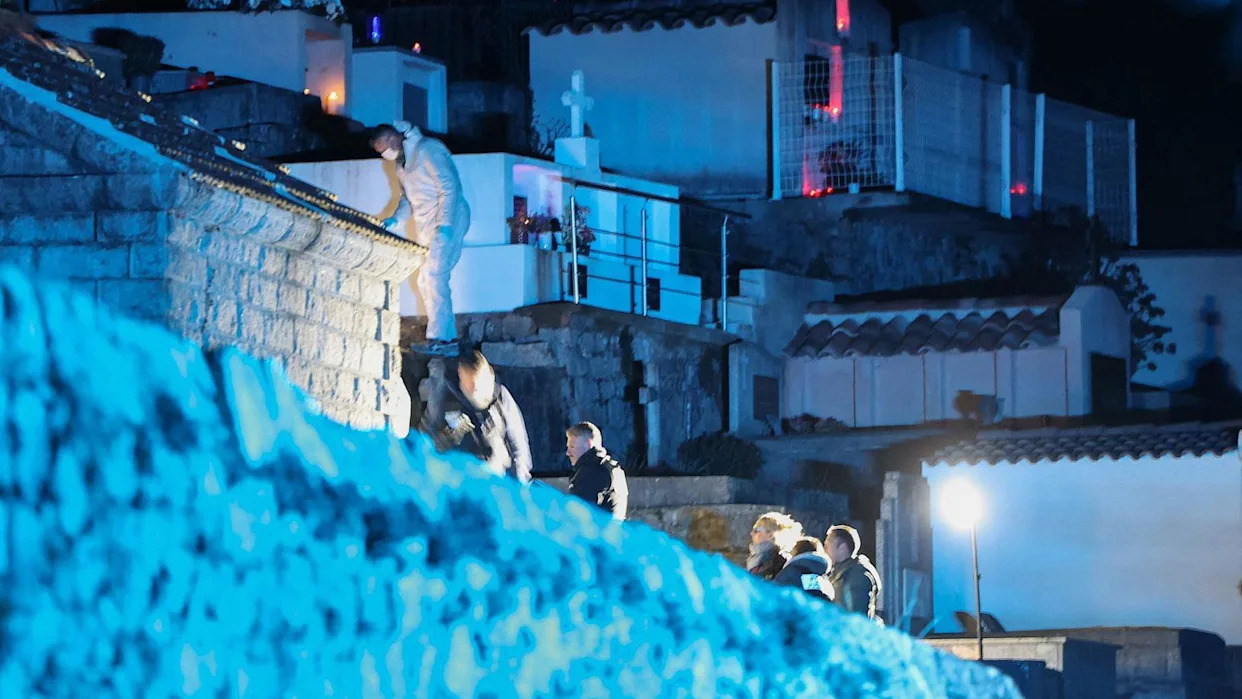
A shocking incident unfolded in the small village of Vero, Corsica, where former nationalist leader Alain Orsoni, aged 71, was fatally shot during his mother’s funeral on July 1, 2024. Orsoni had returned from exile in Nicaragua to pay his respects, but as mourners gathered, a gunman fired from nearby scrubland, killing him instantly. This tragic event has reignited discussions about the rising violence on the island, which has witnessed 35 murders in the past three years, contributing to one of the highest murder rates in France.
The funeral service for Orsoni took place in Ajaccio, where a significant police presence was noted, reflecting the heightened tensions following the shooting. Close friend Jo Peraldi, who had a long history with Corsican nationalism, expressed disbelief at the circumstances surrounding Orsoni’s death. He stated, “A cemetery is sacred in Corsica, just like a church. Never have I witnessed someone murdered while accompanying their mother to their final resting place,” during an interview with Corsican radio.
Orsoni’s assassination has been described as a “tipping point” by his cousin, Christian Leca. He emphasized the gravity of the situation, stating, “People don’t kill in cemeteries; it’s intolerable,” as reported by Le Monde. The nature of violence on the island has evolved over recent years, according to Thierry Dominici, an expert on Corsican nationalism at the University of Bordeaux. He noted that armed groups, which once fought for autonomy, have since transitioned to organized crime, with the French state focusing on separatist activities while overlooking these criminal enterprises.
Investigations Underway and Societal Impact
The investigation into Orsoni’s murder is being led by judges in Paris who specialize in organized crime, in collaboration with the regional prosecutor’s office in Marseille. Gilles Simeoni, president of Corsica’s regional authority, remarked that Orsoni’s killing adds to the “mafia pressure” on Corsican society. He described Orsoni as a significant figure in contemporary Corsican nationalism, both publicly and privately.
The Orsoni family is well-known on the island, with a history intertwined with nationalism and violence. Alain’s past includes imprisonment for bomb attacks aimed at pressuring the French government to grant Corsica greater autonomy. Over the years, the nationalist movement has fractured, leading some factions to engage in violent criminal activities, including money laundering, drug trafficking, and extortion.
While Orsoni’s brother, Guy Orsoni, was killed by a rival clan in 1983, Alain’s son is currently incarcerated for drug trafficking and attempted murder. Having narrowly escaped several assassination attempts, Alain Orsoni fled to Central America, eventually returning to Corsica to oversee the local football club AC Ajaccio. His tenure saw the club promoted to Ligue 1, although he was often guarded, wearing a bullet-proof vest and traveling in an armored vehicle.
Calls for Change Amid Rising Violence
In the wake of Orsoni’s death, Cardinal François Bustillo, the bishop of Ajaccio, has made a heartfelt plea for an end to violence on the island. He urged Corsicans to reject the cycle of retribution, stating that they must not allow the island to succumb to its darker tendencies.
Experts, including criminologist Alain Bauer, have labeled Orsoni’s assassination as a predictable outcome of the longstanding vendettas that plague Corsica. Bauer asserted, “It was just a question of when, not if,” emphasizing that the circumstances of the killing were shocking. He warned of potential revenge killings, noting that the primary victims of such violence are the people of Corsica.
As discussions about Orsoni’s legacy and the implications of his assassination unfold, the island grapples with a complex tapestry of history, nationalism, and organized crime. The path forward remains uncertain, but the calls for change echo loudly in the wake of this tragic event.