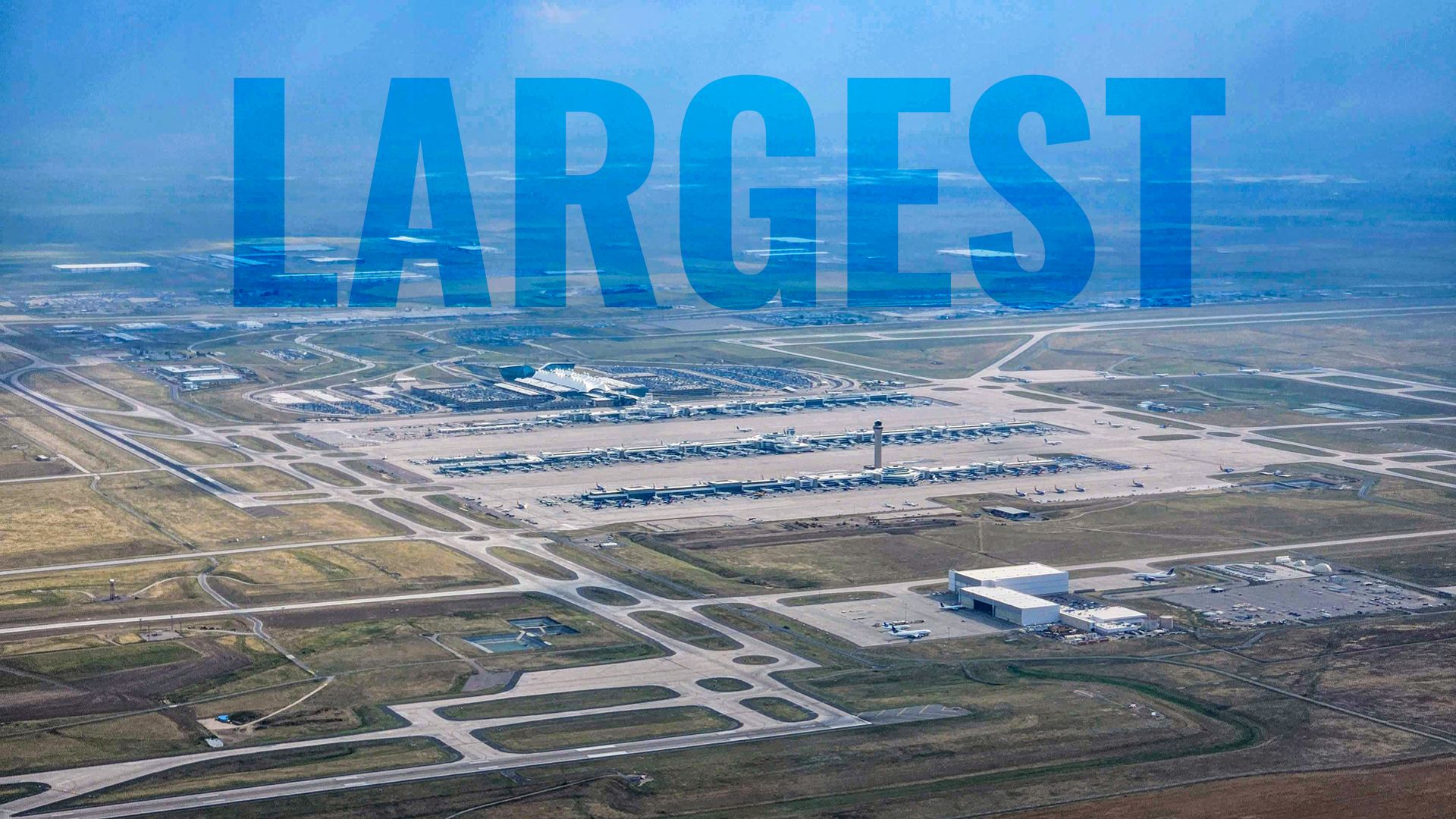
The United States boasts a diverse range of airports, both large and small, with several of the world’s biggest airports by land area situated within its borders. This article highlights the ten largest airports in the U.S. based on their land size, providing insights into their capacity and operational capabilities. While many of these airports rank among the busiest in the nation, their size does not always correlate with passenger traffic, as some handle more flights than others.
Detroit Metropolitan Wayne County Airport
At 7.3 square miles (19 square kilometers), Detroit Metropolitan Wayne County Airport (DTW) ranks as the largest airport in Michigan and the tenth largest in the country. It serves as a significant hub for Delta Air Lines and Spirit Airlines, and has previously operated as a hub for Northwest Airlines. DTW features six runways, with the longest measuring 12,003 feet (3,659 meters).
The airport hosts two passenger terminals that together comprise four concourses and 150 gates. The Edward H. McNamara Terminal is the more modern of the two, housing three concourses with 121 gates. Notably, Concourse A is the second-longest airport concourse in the world.
John F. Kennedy International Airport
Covering 8 square miles (21 square kilometers), John F. Kennedy International Airport (JFK) is New York’s largest airport. It has become the primary international gateway to the United States, servicing a substantial number of international flights. JFK features four runways, including the impressive 14,511-foot (4,423-meter) Runway 13R/31L, one of the longest in the nation.
The airport currently operates five terminals with a total of 130 gates, making it a vital hub for American Airlines, Delta Air Lines, and JetBlue. In addition to passenger services, JFK has a robust cargo operation supported by Atlas Air and Kalitta Air.
San Francisco International Airport
As the largest airport in California, San Francisco International Airport (SFO) spans 8.1 square miles (21.07 square kilometers). It serves as a major hub for United Airlines and is a key entry point to the U.S. from Asia. SFO features four intersecting runways and is known for its efficient operational capabilities, despite facing weather-related restrictions.
The airport comprises four terminals with a total of 121 gates, offering a range of services for passengers and general aviation. The main maintenance facility for United Airlines is also located at SFO, catering to both United and other airlines.
Chicago O’Hare International Airport
Spanning 11.9 square miles (30.9 square kilometers), Chicago O’Hare International Airport (ORD) is among the busiest airports globally and the most connected airport in the U.S. It serves as a hub for American Airlines and United Airlines, featuring eight runways, the most of any airport worldwide.
O’Hare is equipped with four terminals that accommodate 216 gates, offering extensive connectivity for domestic and international flights. The airport’s design allows for efficient traffic flow, ensuring timely departures and arrivals.
Salt Lake City International Airport
Covering 11.96 square miles (31 square kilometers), Salt Lake City International Airport (SLC) is the largest airport in Utah and a primary hub for Delta Air Lines. The airport features four runways, three of which are primarily used for commercial operations.
SLC has a single terminal with two concourses currently in operation, housing a total of 83 gates. An expansion plan is underway to add 11 more gates by late 2026, reflecting the airport’s growth and demand.
George Bush Intercontinental Airport
Situated on 15.4 square miles (40 square kilometers) of land, George Bush Intercontinental Airport (IAH) in Houston serves as a major hub for United Airlines. It is the second-busiest airport in Texas, featuring five runways.
IAH includes five terminals with a combined total of 121 gates. Its strategic location supports extensive international routes, particularly to Latin America.
Washington Dulles International Airport
Washington Dulles International Airport (IAD) spans 20 square miles (52 square kilometers) and serves as a secondary transatlantic hub for United Airlines. The airport features four runways, with plans for a fifth, and comprises two parallel midfield concourses housing a total of 139 gates.
Despite its size, Dulles often competes with the smaller Ronald Reagan Washington National Airport for passenger preference, primarily due to its proximity to downtown Washington, D.C.
Orlando International Airport
Covering 20.8 square miles (54 square kilometers), Orlando International Airport (MCO) is the busiest airport in Florida and a key entry point for tourists. It features four parallel runways and serves as a base for several budget airlines, although it does not have a large hub for major legacy carriers.
The airport’s terminals include multiple concourses, collectively providing 120 gates. Despite its status as a major tourist destination, MCO primarily caters to leisure travelers.
Dallas/Fort Worth International Airport
At 26.6 square miles (69 square kilometers), Dallas/Fort Worth International Airport (DFW) is the largest airport in Texas and ranks as the second-busiest airport globally by passenger numbers. It serves as the primary hub for American Airlines and features seven runways.
DFW is home to six terminals, accommodating a total of 193 gates. The airport’s vastness is underscored by its own zip code, and it handles a diverse range of international flights.
Denver International Airport
As the largest airport in the United States, Denver International Airport (DEN) spans an impressive 52 square miles (135 square kilometers). It is home to a significant hub for United Airlines, which has expanded its operations in recent years.
DEN features six runways arranged in a unique pinwheel pattern that enhances efficiency and reduces ground time. The airport’s main terminal, the Jeppesen Terminal, houses three concourses with a total of 169 gates, making it a critical hub for both domestic and international travel.
These ten airports represent not only the largest by land area in the U.S. but also play vital roles in the country’s transportation network, facilitating millions of passengers and tons of cargo each year.