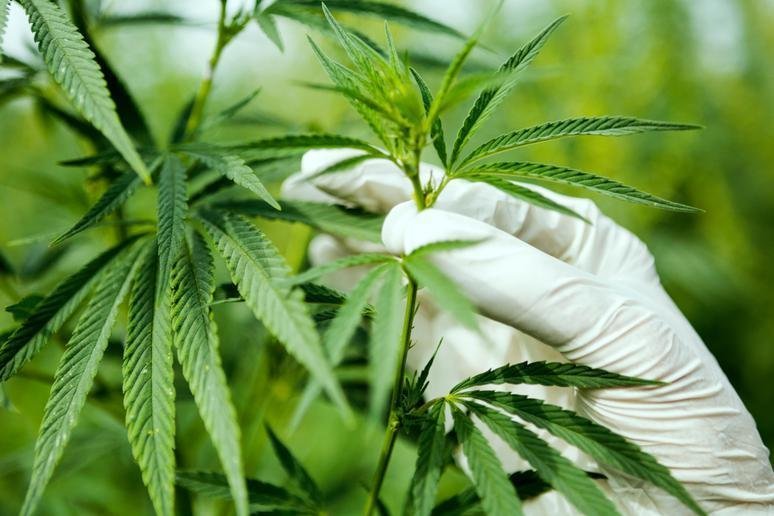
Attorney General James Uthmeier and two prominent business organizations are urging the Florida Supreme Court to reject a proposed constitutional amendment that would legalize recreational marijuana use in Florida. Their argument centers on claims that the proposal is misleading and conflicts with federal law. The case is pivotal as the court prepares to decide whether the amendment meets legal criteria for inclusion on the November ballot.
The political committee Smart & Safe Florida sponsors the amendment, which aims to permit adults aged 21 and older to use recreational marijuana. In addition to seeking approval from the Supreme Court, the committee must gather at least 880,062 valid petition signatures by February 1, 2026. The court’s review will not assess the merits of the amendment itself but will evaluate the clarity of its language and whether it addresses multiple subjects improperly.
Uthmeier’s office characterized the proposed amendment as “fatally flawed.” The brief submitted by the attorney general states, “It misleads voters in a way designed to garner greater approval, is flatly invalid under the federal Constitution, and violates the single-subject requirement.” Uthmeier, who previously served as chief of staff under former Governor Ron DeSantis, along with the Florida Chamber of Commerce and Associated Industries of Florida, were significant opponents of a similar amendment proposed in 2024, which failed to secure the necessary 60 percent voter approval for passage.
In response, Smart & Safe Florida defended its proposal, asserting that the Supreme Court previously dismissed nearly identical arguments in 2024. The committee noted, “We followed the Court’s guidance, and we anticipate they will again follow Florida law and approve the current ballot language.” They highlighted that over 5.9 million voters supported the measure in 2024, with more than a million Floridians signing petitions for the current amendment.
Central to the dispute is the interpretation of where marijuana consumption would be restricted. The proposed ballot summary states that smoking and vaping marijuana would be prohibited “in public.” However, opponents argue that the detailed text indicates a broader ban on smoking and vaping in “any public place.” This definition includes parks, beaches, roads, sidewalks, schools, arenas, and government buildings. Critics contend that the summary may mislead voters into believing that a vote in favor would entirely eliminate the presence of marijuana or its odor in public spaces.
Uthmeier’s office argues that the wording could mislead parents into thinking their children would be protected from marijuana smoking in various public settings, including hotels and restaurants, when the amendment does not provide such safeguards.
In addition to the concerns raised about the clarity of the amendment, the briefs filed by Uthmeier and the business groups also emphasize that marijuana remains illegal under federal law. They reference the Supremacy Clause of the U.S. Constitution, which suggests that federal law would take precedence over any state constitutional amendment permitting recreational marijuana use. “Federal law criminalizes the acquisition, cultivation, processing, transportation, and sale of marijuana,” stated the Chamber of Commerce’s brief, which was supported by the Florida Legal Foundation and former state appellate Judge Frank Shepherd.
The Supreme Court had previously addressed potential conflicts with federal law before allowing the 2024 amendment to proceed to voters. The court’s ruling indicated that for a challenge based on constitutional conflict to succeed, it would need to find that the law was unconstitutional in all its applications.
Smart & Safe Florida faces a deadline of January 12, 2026 for filing arguments with the Supreme Court. The committee’s current status indicates that it has collected over 1 million signatures, although the Florida Division of Elections reports that only 675,307 valid signatures have been verified. Last week, Smart & Safe Florida filed a lawsuit in Leon County circuit court, alleging that state elections officials improperly invalidated approximately 72,000 signatures.
As the Supreme Court deliberates, the outcome will significantly influence the future of marijuana legalization efforts in Florida and could set a precedent for similar proposals across the country.