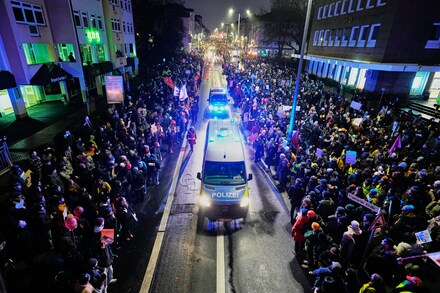
In a recent address commemorating the anniversary of Kristallnacht, Frank-Walter Steinmeier, the President of Germany, proposed banning the far-right Alternative for Germany (AfD) party as a measure to combat the growing threat of right-wing extremism. This suggestion comes amidst rising concerns about the party’s influence and its nationalist, anti-immigrant rhetoric.
The Kristallnacht pogrom, which took place on November 9, 1938, saw widespread violence against Jewish communities across Germany and Austria, marking a dark chapter in history. By invoking this historical event, Steinmeier emphasized the need for vigilance against extremist ideologies that threaten democracy and social cohesion.
Many German politicians and civic leaders are rallying behind the idea of a ban on the AfD. They argue that the party’s platform undermines democratic values and fosters division within society. The AfD has gained significant traction in recent years, securing approximately 10.3 million votes in the 2021 federal elections, a clear indication of its growing support among the electorate.
Steinmeier’s remarks reflect a broader sentiment within Germany regarding the need to address the resurgence of far-right ideologies. The President highlighted the importance of not only remembering the past but also taking proactive steps to ensure that history does not repeat itself. His call for action resonated with many who fear that the normalization of extremist views could lead to further social unrest.
Political Landscape and Public Sentiment
The political landscape in Germany has been shifting, with the AfD positioning itself as a leading voice against immigration and the European Union’s policies. Its growing popularity has sparked debate about the limits of political expression and the responsibility of the government to protect its citizens from harmful ideologies.
Public sentiment regarding a potential ban is mixed. Supporters of the ban argue that it is essential to curtail extremist rhetoric, while opponents express concerns about freedom of speech and the implications of such a move on the democratic process. Critics of the AfD insist that the party’s platform contradicts the principles of equality and inclusion that are foundational to German society.
Legal experts note that banning a political party in Germany is a complex process, rooted in the country’s post-World War II constitution. The Federal Constitutional Court would need to determine whether the AfD’s activities pose a threat to the democratic order. This legal scrutiny underscores the challenges of addressing extremism while upholding constitutional rights.
Looking Ahead
As Germany reflects on its past and grapples with contemporary challenges, the discussion surrounding the AfD continues to evolve. The government’s response to the rising tide of extremism will play a crucial role in shaping the future of German democracy.
The conversation surrounding a ban on the AfD is likely to intensify in the coming months, particularly as Germany approaches key elections. Observers will be watching closely to see how leaders balance the need for security and the protection of democratic values in a society that is increasingly divided.
In a time when many nations face similar challenges, Germany’s response may offer important lessons for other countries grappling with the rise of far-right movements and the complexities of maintaining a democratic society.