The ongoing Israel-Hamas conflict has raised significant questions regarding the armament of Israel Defense Forces (IDF) reservists during operational deployments. As the war, which began on October 7, 2023, stretches on, logistical complexities and economic pressures have begun to affect the ability to adequately equip reservists. Reports indicate that while there was an initial push to improve conditions, challenges persist in ensuring all reservists are properly armed.
The long duration of the conflict has created a strain on IDF resources, leading to concerns that reservists may not be receiving the necessary equipment. Initially, many reservists were deployed without sufficient arms, causing delays in their armament as the situation evolved. By early 2024, the IDF made strides to enhance the quality and quantity of gear provided to reservist officers, yet recent developments suggest that issues have resurfaced.
Current Equipment Shortages and Quality Concerns
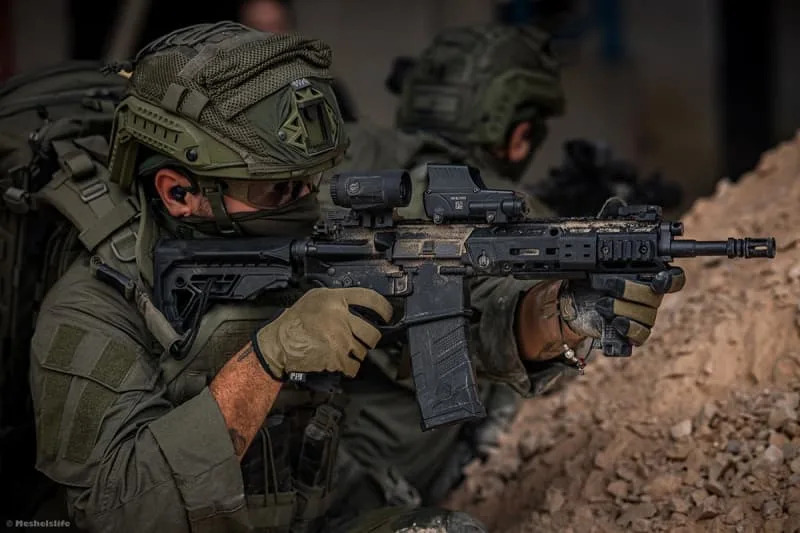
According to the Jerusalem Post, certain reservist units are currently facing shortages of M4 rifles, particularly the sharpshooter variants. Many reservists have expressed dissatisfaction with the performance of the Arad rifles they have been issued. A notable concern is that since the conflict escalated, there has not been an update to the night vision equipment for sharpshooters, who continue to rely on the outdated Akila 4 system.
The IDF Spokesperson’s Office has acknowledged these issues, stating that multiple processes are in motion to address the armament of reservists. The IDF has indicated that it has secured tens of thousands of M4 rifles for both active duty and reservist soldiers, and is also procuring Arad rifles for specific units. However, the distribution of these weapons is not uniform, with those engaged in operations in Gaza receiving priority.
Reservists performing guard duties away from the front lines may face delays in receiving the latest weaponry. This uneven distribution raises questions about the overall preparedness of reservist units, particularly as they navigate the complexities of the ongoing conflict.
Impacts of Economic Conditions on Armament
The economic fallout from the prolonged war has further complicated the situation. The financial burden of sustaining military operations has begun to affect budgets allocated for reservist equipment. The IDF recognizes that the extended duration of combat operations has overwhelmed logistical capabilities, leading to further delays in equipping some units.
In a recent announcement, the Defense Ministry revealed plans to distribute thousands of Arad rifles to local border-village volunteer security teams. This move, intended to bolster local defense capabilities, has sparked frustration among some reservists who feel under-equipped. They argue that the same rifles being provided to civilian security forces are inferior to the M4s being issued to other parts of the IDF.
The transition away from the Tavor rifle, which had been a staple of the IDF for years, has also created confusion among reservists. The shift to the M4 is based on assessments of cost-effectiveness, ease of repair, and availability. Nevertheless, some units find themselves with the Arad rifles due to shortages of M4s or Tavors, leading to perceptions that they are receiving lesser-quality equipment.
The question of whether IDF reservists are adequately armed remains complex and multifaceted. Some units are well-equipped, while others face ongoing shortages. The situation is fluid, with many reservists caught in a cycle where equipment availability fluctuates based on economic conditions and operational demands. As the conflict continues, the IDF faces the challenge of balancing resource allocation while addressing the immediate needs of its reservists.