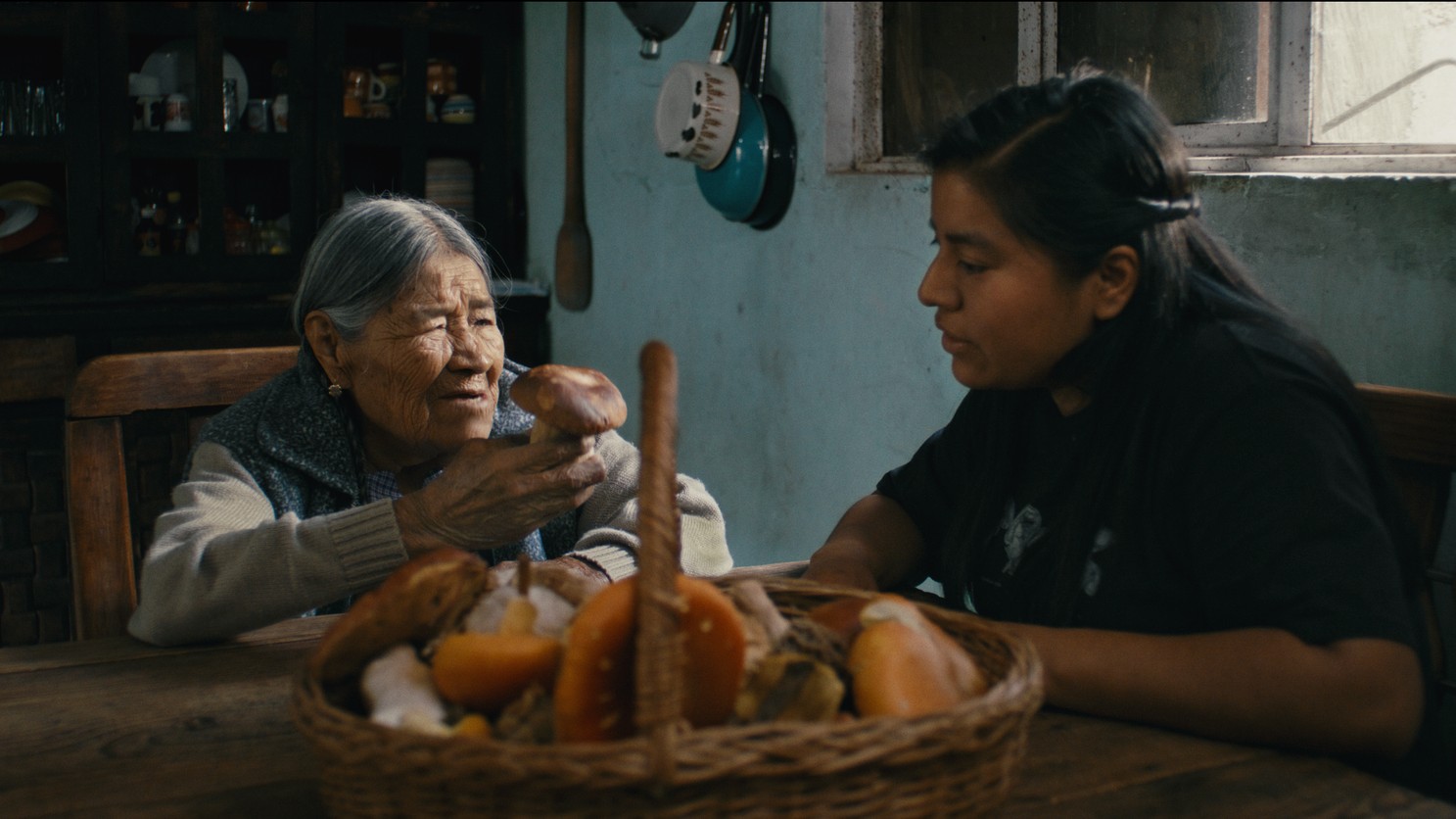
The feature documentary Daughters of the Forest, directed by Otilia Portillo Padua, will premiere at the Copenhagen International Documentary Film Festival (CPH:DOX) on March 13, 2024. The film follows two indigenous mycologists, Eliseete and Julieta, who navigate the intersection of modern science and traditional ecological knowledge as they explore the vast world of fungi in Mexico’s forests.
In this atmospheric documentary, produced by Oscura Producciones and Sandbox Films, the filmmakers aim to weave together narratives from both the past and the present. Focusing on the relationship between humans and fungi, the film seeks to illustrate the importance of ecological coexistence in a world increasingly threatened by deforestation and climate change.
The film’s synopsis describes it as “a story of entanglements: between humans and mushrooms; the visible and the invisible, generational knowledge and modern science.” The documentary balances elements of science fiction with deep-rooted indigenous practices, inviting viewers to reconsider their perceptions of the natural world.
The premiere at CPH:DOX will place the film in the DOX:Award main competition, followed by its North American debut at South by Southwest (SXSW) in Austin, Texas, later that same day. The film has garnered attention not only for its thematic depth but also for its visual artistry, featuring cinematography by Martín Boege, music by Hannah Peel, and sound design by Javier Umpierrez.
In her director’s statement, Portillo Padua articulates her motivation: “Mushroom foragers often say the mushroom finds you. In my case, mushrooms found me just as I was searching for ways to counteract the apocalyptic narratives of the present.” She references the overwhelming challenges the world faces today, including genocide, mass extinctions, and climate emergencies, which often resemble dystopian fiction. By listening to fungi, she hopes to highlight potential pathways to renewal amid decay.
Portillo Padua describes her film as a “cinema of interdisciplinary alliances,” collaborating with foragers, indigenous communities, and scientists. The film draws inspiration from Ursula K. Le Guin‘s book, The Carrier Bag Theory of Fiction, which redefines technology as a cultural carrier. Portillo Padua emphasizes that the film invites audiences to embark on an unexpected journey, encouraging them to engage with the world differently.
Producer Paula Arroio echoes this sentiment, stating that the film uses “a mycelial lens” to guide viewers through a narrative of collaboration between humans and non-humans. This approach aims to illuminate the interdependence of all life forms and challenge conventional storytelling.
Co-producer Elena Fortes, founder of Fiascocrafts, highlights the film’s commitment to presenting a female perspective. She contrasts the image of a woman nurturing the earth with traditional narratives that often depict violence and domination. “At its heart stands a woman carrying a basket, scattering spores and knowledge—a bastion of resistance and renewal,” Fortes explains.
According to Caitlin Mae Burke, executive producer and head of production at Sandbox Films, the film aligns with their mission of “expanding perspectives.” She notes that it embraces diverse forms of knowledge, combining academic insights with generational wisdom to deepen understanding of our natural environment.
The film promises to be a captivating sensory experience, as Mia Maestro points out, blending evocative visuals and meticulously crafted soundscapes. “Otilia has crafted a film of rare artistry—mysterious as the Funga kingdom itself,” she remarks.
As audiences prepare to explore the intriguing world of fungi through this unique lens, Daughters of the Forest stands ready to provoke thought and inspire dialogue about the complex relationships between humans and the natural world. For those curious about this cinematic journey, an exclusive trailer is available for viewing.