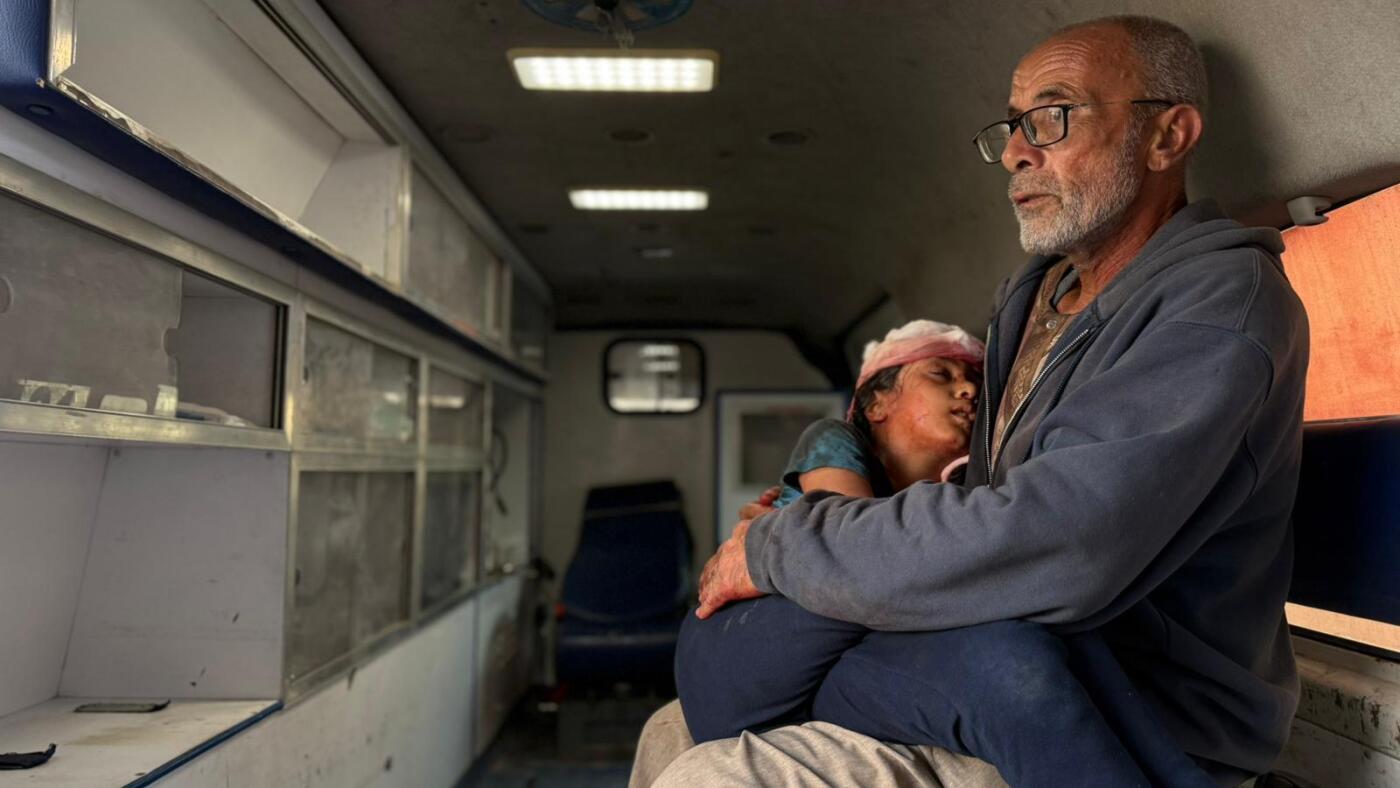
When Bayan Al-Ankah, a 10-year-old girl, was reportedly shot and killed by the Israeli military in a displaced persons camp in Gaza last week, her death added to the rising toll of Palestinians during a ceasefire between Hamas and Israel. The ongoing conflict has led to several hundred fatalities, raising concerns among mediators from Qatar and Egypt about the fragility of the truce due to near-daily Israeli operations.
The future of the U.S.-backed ceasefire hinges on two essential actions: the deployment of an international force in Gaza and the disarmament of Hamas. Despite discussions among key nations, significant disagreements remain about the logistics and implementation of these steps. The United States aims to have international forces operational in Gaza by early 2026, but this timeline faces considerable obstacles.
A recently obtained U.S. State Department document outlines the previous administration’s vision, suggesting that international troops would support efforts to “demilitarize Gaza” and dismantle what it describes as “terrorist infrastructure.” However, many countries have expressed reservations about committing troops to confront Hamas directly. The U.N. Security Council has mandated international forces in Gaza until the end of 2027, yet the specific role of these troops remains undefined.
This week, the U.S. convened representatives from multiple countries in Doha to discuss the formation of the International Stabilization Force (ISF). This meeting was primarily for planning purposes, and no formal troop commitments were made. Countries such as Italy, Egypt, Indonesia, Azerbaijan, and Turkey are among those considered for troop contributions.
Further complicating the situation, Turkey’s Foreign Minister Hakan Fidan indicated that Turkey could take a leading role in the deployment of troops, but emphasized that military personnel should function as peacekeepers rather than engage in disarming Hamas. “We shouldn’t expect from the ISF work that has not been completed by Israeli security forces,” he stated during the Doha Forum.
Egyptian officials echo similar sentiments, asserting that their involvement would be contingent upon a peacekeeping mandate rather than a mandate to enforce peace. Badr Abdelatty, Egypt’s Foreign Minister, urged the rapid deployment of monitors to ensure compliance with the ceasefire, citing daily violations by Israel.
Amid these discussions, Israeli Prime Minister Benjamin Netanyahu has expressed skepticism regarding the effectiveness of an international force. He suggested that such a force may not be able to achieve the primary goal of disarming Hamas, stating, “Our friends in America want to try and establish a multinational force to do the job. I told them … please, be my guest.”
In addition to these military considerations, the humanitarian situation in Gaza remains dire. Mediators Qatar and Egypt have reported that Israel is not allowing the quantity or type of aid agreed upon in the ceasefire deal, even as humanitarian organizations report that many families in Gaza are still struggling to find adequate food and medical supplies. According to the U.N., nearly a quarter of families in Gaza are still limited to just one meal a day, and essential medicines are scarce.
The repercussions of the conflict extend beyond immediate violence. Since the onset of hostilities, Israeli airstrikes have devastated Gaza, destroying or damaging more than 90% of homes, according to the U.N. The death toll has exceeded 70,000 Palestinians, as reported by Gaza’s Health Ministry, with conditions worsening for the remaining population.
As discussions continue around international troop deployment and disarmament, Bassem Naim, a senior Hamas negotiator, indicated that the group is open to disarmament under specific conditions. He stated that Hamas would consider laying down arms if a serious political process leading to a Palestinian state is initiated. “Disarmament or decommissioning of weapons have to be connected to a serious political track,” Naim asserted.
The prospect of an international force has garnered mixed reactions within Hamas. While some leaders express a willingness to accept the ISF as a peacekeeping entity, they insist that any troop presence should not occur within Palestinian population centers. Hossam Badran, another senior Hamas figure, emphasized the need for clarity from negotiators regarding disarmament specifics before engaging in discussions.
As the humanitarian crisis escalates, the path forward remains uncertain. The ongoing conflict and the challenges surrounding the ceasefire negotiations pose significant obstacles to the peace process. The international community continues to watch closely as the situation develops, with the hope that a viable resolution can be reached.