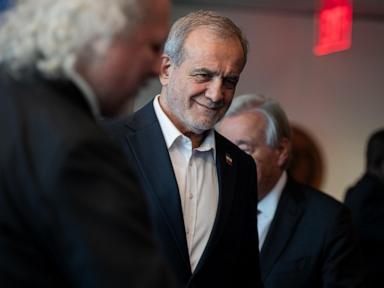
TEHRAN, Iran — Iranian President Masoud Pezeshkian issued a stern warning on Tuesday, stating that any military aggression against Iran would be met with a harsh response. This declaration follows comments made by U.S. President Donald Trump, who warned that military strikes could be considered if Iran attempts to renew its nuclear program.
Pezeshkian conveyed his message via the social media platform X, emphasizing that the Islamic Republic of Iran would respond decisively to what he termed “cruel aggression.” He did not provide specific details about the potential nature of Iran’s response. His remarks came shortly after Trump hinted at military action during a meeting with Israeli Prime Minister Benjamin Netanyahu at Trump’s Mar-a-Lago estate in Florida.
Trump’s Warning During Discussions with Netanyahu
During a press conference following their discussions, Trump remarked, “Now I hear that Iran is trying to build up again. And if they are, we’re going to have to knock them down. We’ll knock them down. We’ll knock the hell out of them. But hopefully that’s not happening.” The leaders were reportedly addressing the potential for renewed military action against Iran, which follows a recent period of heightened conflict.
In June, a 12-day air campaign resulted in the deaths of nearly 1,100 Iranians, including senior military commanders and scientists. In retaliation, Iranian missile strikes claimed the lives of 28 individuals in Israel. Trump hinted that he might consider further U.S. strikes against Iran if evidence of nuclear program advancements is confirmed, stating, “If it’s confirmed, they know the consequences, and the consequences will be very powerful, maybe more powerful than the last time.”
Escalating Tensions and Nuclear Concerns
Pezeshkian noted that tensions between Iran and its adversaries have escalated significantly. He stated, “We are in a full-scale war with the U.S., Israel, and Europe; they don’t want our country to remain stable.” Despite these challenges, Iran has maintained that it is not enriching uranium at any facility, aiming to signal a willingness for potential negotiations regarding its nuclear program.
According to assessments from U.S. intelligence agencies and the International Atomic Energy Agency (IAEA), Iran last had an organized nuclear weapons program in 2003. Nevertheless, Iran has enriched uranium up to 60%, a level that is technically close to the weapons-grade threshold of 90%.
The ongoing rhetoric between the U.S. and Iran highlights the fragile nature of international relations in the region, as both sides navigate complex political landscapes amid fears of military escalation.