The death of Iran’s Supreme Leader, Ayatollah Ali Khamenei, has been confirmed following military strikes by the United States and Israel, marking a significant escalation in the ongoing conflict that erupted on Saturday. Khamenei, who had led the Islamic Republic since 1989, played a pivotal role in consolidating political and religious authority, steering Iran into decades of tension with both the U.S. and Israel.
The announcement of Khamenei’s death late Saturday has created a power vacuum within Iran’s political and military hierarchy, as several senior commanders were also lost during the strikes. This situation has raised concerns about potential retaliation and further instability within the region. No immediate successor has been named, adding to the uncertainty surrounding Iran’s leadership.
Military Strikes and Civilian Impact
The strikes, part of a coordinated U.S.-Israeli campaign, have led to ongoing battles characterized by both offensive and counter-offensive actions. Explosions were reported throughout Tehran on Sunday, with Israeli forces stating they were conducting “non-stop strikes” against military and regime targets. In response, Iran has executed missile and drone attacks on Israeli cities and U.S. military installations across the Middle East.
The humanitarian toll continues to rise. Reports from various human rights organizations and Iranian officials indicate numerous civilian casualties, with scores of deaths and hundreds injured across multiple provinces. A ballistic missile strike aimed at central Israel resulted in at least nine fatalities and over 20 injuries, including children. Iranian authorities have also reported that more than 100 children were killed in a U.S.- and Israel-linked airstrike that struck a girls’ elementary school in Minab, an incident condemned by the United Nations as a “war crime.”
The U.S. Central Command (CENTCOM) reported that three U.S. service members have been killed, highlighting the American military’s involvement in this escalating conflict. As of 09:30 am ET on March 1, 2026, five service members have sustained serious injuries, with additional personnel affected by minor injuries due to shrapnel and concussions.
Regional and Global Repercussions
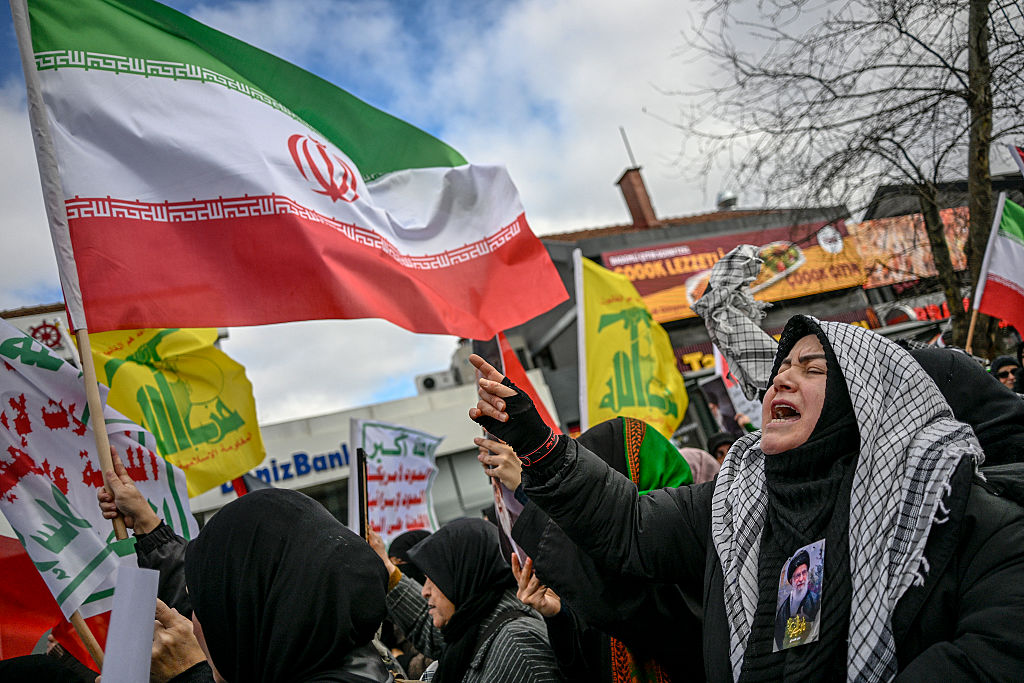
The violence has not been contained within Iran’s borders. Pro-Iran demonstrations erupted outside the U.S. consulate in Karachi, Pakistan, resulting in the deaths of at least nine individuals. This incident reflects the broader regional tensions that have been exacerbated by the ongoing conflict.
Airspace across the Middle East remains heavily disrupted, and global leaders express alarm over the potential for a wider war. Countries in the Gulf and Europe have raised concerns regarding the instability that could arise from these recent events. The conflict follows initial debates in the U.S. Congress regarding the necessity of formal authorization for military action under U.S. war powers, amidst a politically charged atmosphere.
The situation remains fluid, with developments occurring rapidly. As countries assess the implications of these events, the international community grapples with the consequences of a conflict that continues to escalate.