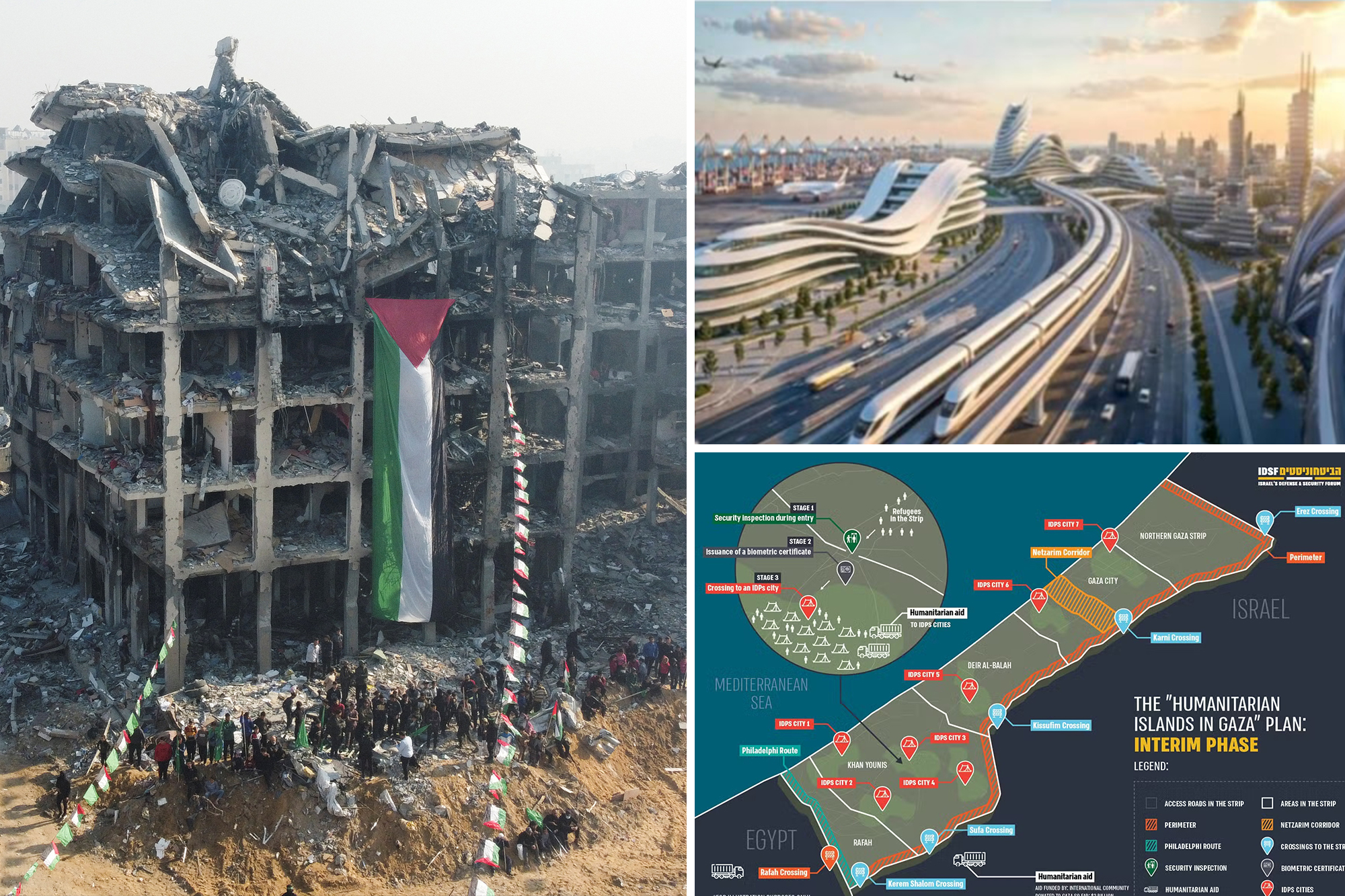
The Trump administration has revealed an ambitious proposal to transform Gaza into a modern international hub, named “Project Sunrise,” with an estimated cost of $112 billion. This comprehensive ten-year development plan aims to rebuild the war-torn region into a futuristic destination, featuring luxury hotels, a high-speed rail system, and advanced technology integrated into everyday governance.
Drafted by Jared Kushner, former President Donald Trump’s son-in-law, and Steve Witkoff, the US special envoy, the plan is currently being presented to potential investor countries through a detailed 32-slide PowerPoint presentation. According to the Wall Street Journal, the proposal envisions a vibrant metropolis on the Mediterranean coastline, evolving from the destruction wrought by recent conflicts.
“Gaza’s destruction has been profound, but we believe what lies ahead is not just restoration — it’s a chance to develop a gateway of prosperity in the Middle East with state-of-the-art infrastructure, urban design, and technology,” states the executive summary of the presentation. The total projected cost will be divided over the decade, with the US committing to provide $60 billion in grants and financial guarantees.
Details of the Proposal
The plan outlines a vision of Gaza as a “smart city,” incorporating technology-driven governance and services. It includes establishing a “Chief Digital Office” and an innovation lab to set standards and guide policymaking in the region. While the proposal highlights the need for advanced infrastructure, it does not specify which countries or companies are expected to invest in the rebuilding efforts.
Although the proposal lays out distinct phases of construction, it falls short of addressing the housing needs of the approximately 2 million Palestinians who would be displaced during the construction process. The aftermath of the war has left Gaza with an estimated 68 million tons of rubble, resulting from extensive airstrikes that devastated urban areas.
US officials familiar with the plan express skepticism about its implementation, particularly due to the condition that Hamas must agree to disarm for the project to proceed. The complexities of the political landscape in the region raise doubts about the feasibility of such an extensive initiative.
Diplomatic Engagements
In parallel to these developments, Witkoff recently held discussions in Miami with high-level delegations from Egypt, Turkey, and Qatar. These conversations focused on the second phase of the cease-fire plan for Gaza, indicating ongoing diplomatic efforts to stabilize the region.
The comprehensive nature of Project Sunrise reflects an ambitious vision for Gaza’s future, aiming to transform the area from a site of conflict to a model of modern urban development. As the proposal garners attention, its success will depend on numerous factors, including international support and regional cooperation.