In a significant display of frustration, Palestinian citizens of Israel are calling on their government to take decisive action against the surge in organized crime that is ravaging their communities. The catalyst for this movement was the alarming experience of **Ali Zbeedat**, a shopkeeper from **Sakhnin**, who received a threatening message that left him with no choice but to close his businesses. This incident reflects a broader crisis affecting Palestinian towns across Israel, where crime has become increasingly pervasive.
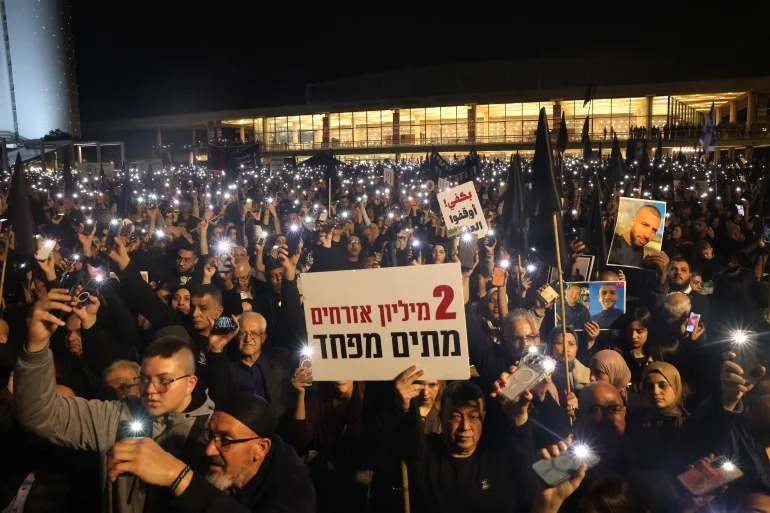
Zbeedat’s ordeal began when gunmen targeted his family businesses multiple times. The latest attack occurred just a week before he decided to shutter his stores, following a chilling message that warned of violence if demands were not met. His decision to close his businesses resonated deeply within the community, prompting a wave of similar actions as residents expressed their outrage over the rampant criminality. As protests erupted in Sakhnin, the movement quickly gained momentum, culminating in demonstrations across **Tel Aviv** and **Jerusalem** where tens of thousands rallied against the violence that has gripped their communities.
The situation has drawn attention from various sectors of Israeli society. According to **Aida Touma-Suleiman**, a member of the Israeli parliament representing the left-wing **Hadash-Ta’al** faction, the statistics around violence are staggering. In **2025**, **252 Palestinians** were murdered in Israel, a figure that underscores the pervasive fear and anger felt by residents. “It doesn’t tell you about the thousands of people unable to live a normal life or forced to pay nearly all their income for protection,” she stated, emphasizing the dire conditions that have led to this crisis.
Systemic Neglect and Poverty
Palestinian citizens comprise approximately **21 percent** of Israel’s population, primarily descendants of those who remained following the **Nakba** in **1948**. Many of these individuals live in isolation, facing systemic neglect from the government. Observers like **Hassan Jabareen**, founder of the Arab rights organization **Adalah**, describe a landscape where the state is virtually absent. The lack of police presence in Palestinian communities exacerbates the situation, leading to a rise in organized crime.
Poverty is rampant, with about **38 percent** of Palestinian households falling below the poverty line. Data from **Israel’s National Insurance Institute** reveals that many Palestinians struggle to make ends meet, with half reporting that their income does not cover their expenses. The economic downturn has been aggravated by restrictions on access to the occupied **West Bank**, following the escalation of violence in **Gaza** in **2023**. Employment rates among Palestinians have plummeted, with only **54 percent** of men and **36 percent** of women holding jobs as of **2024**.
The Rise of Organized Crime
These socio-economic conditions have created fertile ground for organized crime to flourish. Touma-Suleiman noted that the absence of police stations in Palestinian areas has allowed criminal networks to thrive, as individuals who have migrated to cities for work return with knowledge that facilitates the establishment of these networks. The situation is further complicated by the presence of families who have collaborated with the Israeli government, which has led to a breakdown in community cohesion.
The scope of organized crime in these neighborhoods is alarming. Gangs operate with impunity, often described as comparable to the Italian mafia in terms of their reach and influence. They control local economies through intimidation and violence, confident that law enforcement, led by figures like **Itamar Ben-Gvir**, the Minister of National Security, will not intervene. Ben-Gvir’s controversial history regarding anti-Palestinian sentiments raises concerns about the efficacy and impartiality of law enforcement in these communities.
As protests continue to grow, demonstrators are voicing their demands for safety and justice. Slogans such as “Enough violence and murder” and “Arab Lives Matter” highlight the frustration felt by many. Even **Israeli President Isaac Herzog** has acknowledged the need to address the violence, indicating a shift in the political landscape regarding this pressing issue.
The situation remains precarious for many Palestinian families, particularly children, who live under the constant threat of violence. Jabareen poignantly contrasted the experiences of children in Jewish Israeli towns with those in Palestinian areas, emphasizing the stark differences in safety and security.
As the demand for government action intensifies, it remains to be seen how the Israeli leadership will respond to the urgent calls for intervention in the escalating crisis of organized crime affecting Palestinian citizens. The long-term implications of this situation could shape the future of communities across Israel, where the need for safety and justice is becoming increasingly critical.