In spring 2024, the production team of the film Rental Family faced an unexpected challenge while preparing to shoot a scene in a Tokyo apartment building. The owner of the location withdrew permission after a neighbor raised concerns about potential disturbances. While such cancellations could lead to legal disputes in the United States, in Japan, it is common for location agreements to be less rigid, and last-minute changes are often accepted as part of the culture. Producer Julia Lebedev noted, “They’re not willing to jeopardize the sense of community and the individual responsibility for each other.”
This cultural nuance initially perplexed Lebedev and her partner Eddie Vaisman, but they adapted to it. Vaisman stated, “There was always a backup to the backup. ‘In case this happens, we can do this, and in case that happens, we can do that.’” Their meticulous contingency planning ultimately proved effective. The film, which features Brendan Fraser as a struggling American actor who takes on various roles for clients during pivotal moments in their lives, received strong critical acclaim during its premiere at the Toronto International Film Festival in September, ahead of its theatrical release on November 21, 2024.
The journey to create Rental Family began in 2019 when Lebedev and Vaisman first engaged with Japanese director and co-writer Hikari. After securing backing from Searchlight Pictures in 2023, they navigated numerous time-consuming discussions with their Japanese counterparts. Conversations often extended beyond their scheduled hour as translators worked to convey the subtleties of cultural differences, such as the less formal nature of location agreements in Japan.
After five years of planning, the team commenced a 50-day shoot in Tokyo, operating in a city so vast that traversing from one end to the other could take up to three hours. This reality meant they typically filmed at only one location each day, allowing the cast to work without the pressure of tight schedules. Lebedev remarked, “It ended up being a really nice way to make the film because the actors weren’t rushed.”
In Hollywood, the adage “time is money” frequently dictates production schedules. In stark contrast, the ethos of Rental Family embraced a slower pace, which was evident in the production process. When entering a location in Japan, it is customary for everyone, from the lead actors to the crew, to remove their shoes. “It creates a real slowdown, but it is not even a question that we would damage the location or insult the location owners by wearing our shoes inside,” Lebedev explained. Vaisman added, “Oscar-winning actor to key grip, producer to director, everyone takes off their shoes.”
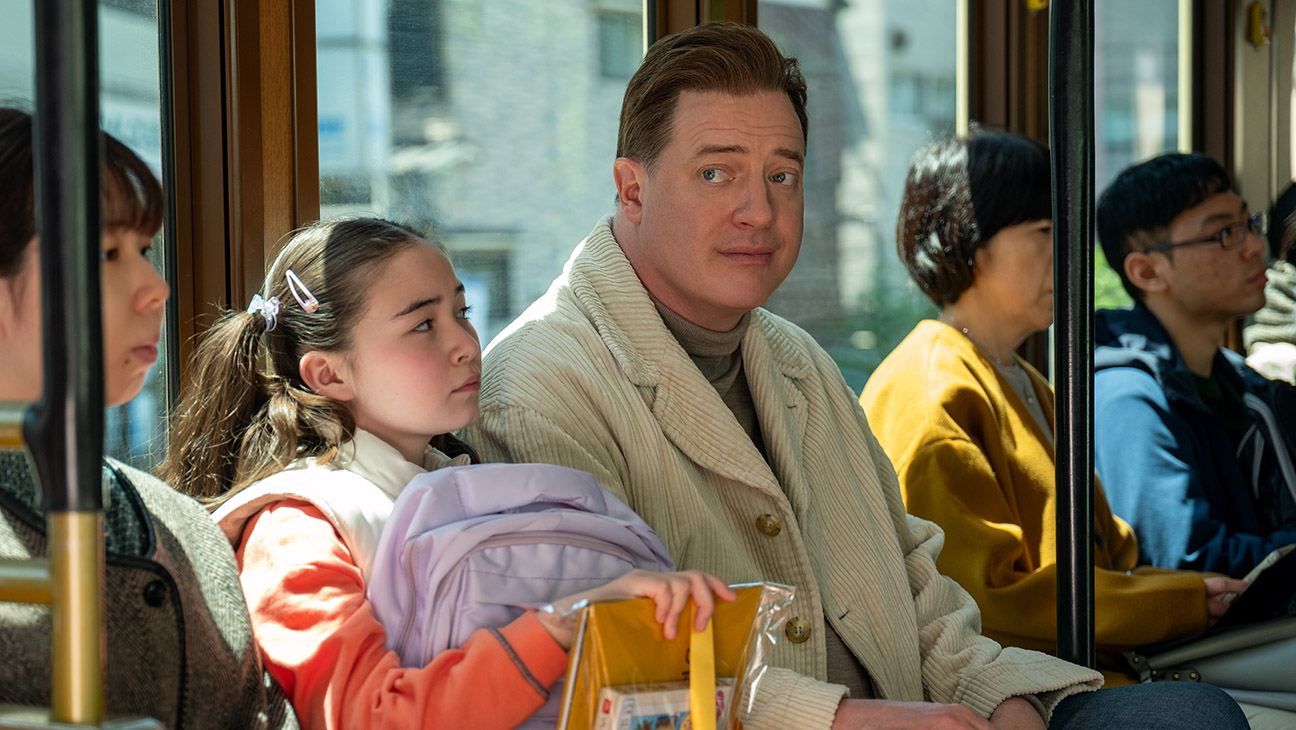
A significant relationship in the film develops between Fraser’s character, Philip, and a young girl, Mia, portrayed by Shannon Gorman. Mia’s mother hires Philip to act as her daughter’s absent father. The film’s climax features a poignant reunion set against the backdrop of Tokyo’s legendary cherry blossoms, a scene that presented logistical challenges. The production team employed an app to track the cherry blossoms’ bloom, but the timing proved unpredictable, with its predictions off by as much as 15 days. Vaisman noted, “So you can imagine the type of chaos that caused during production.”
Beyond the film’s artistic challenges, the crew’s experiences in Tokyo highlighted cultural practices that left a lasting impression. After meals, every crew member took responsibility for their waste, disposing of leftover food into compost bins and stacking containers neatly. “It’s one trash bag for a hundred people. Everyone takes the time, regardless of their position in the crew, to handle their own garbage,” Lebedev observed. This simple yet powerful act reflected a broader cultural commitment to community and environmental responsibility.
As Julia Lebedev and Eddie Vaisman prepare for their next project, a film featuring George Clooney and Annette Bening titled Love, their experiences in Japan have indelibly shaped their approach to filmmaking. They have gained a deeper appreciation for the cultural values that influence how films are made and the importance of community in the creative process.