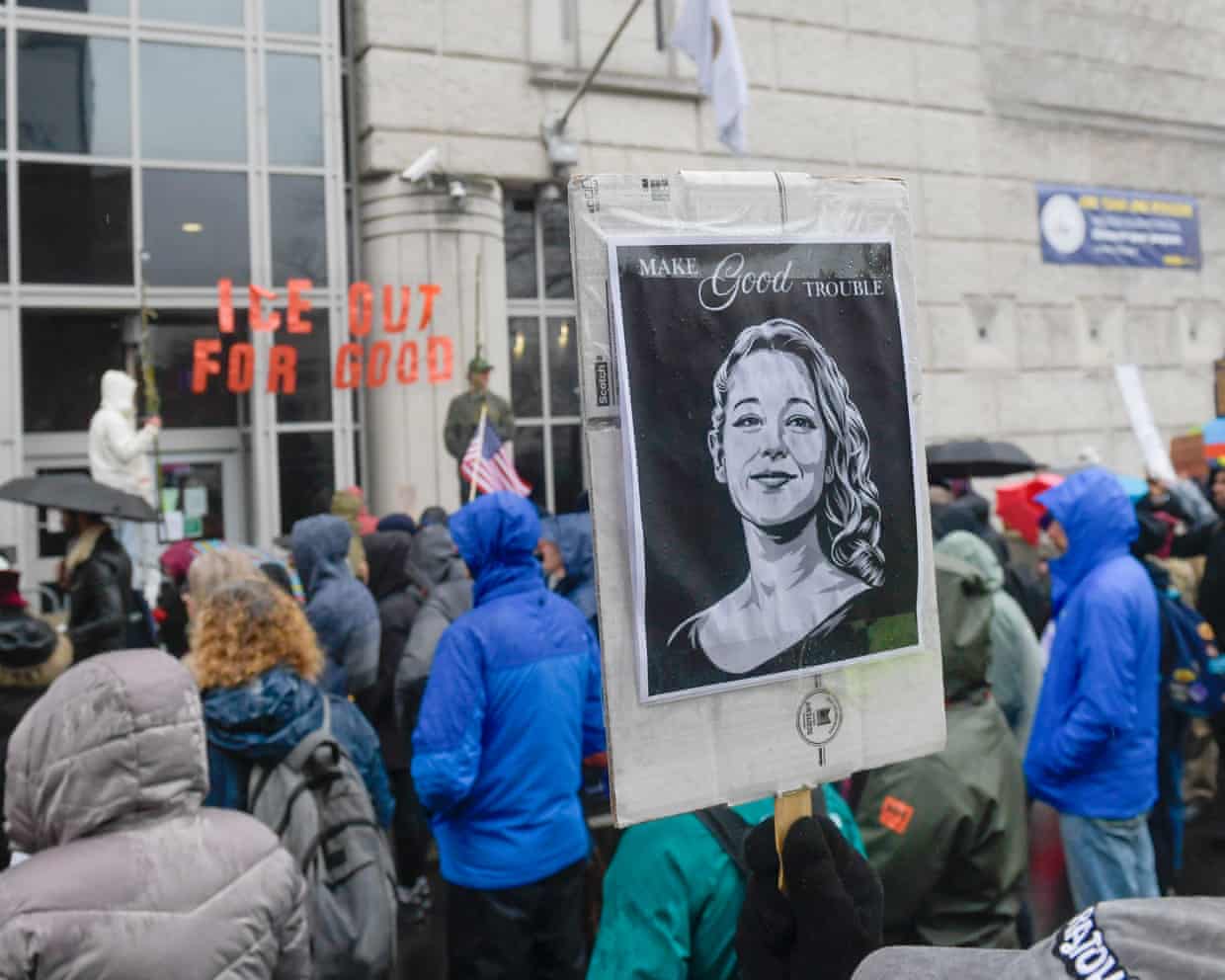
Hundreds of demonstrators took to the streets across the United States over the weekend to protest against the actions of the U.S. Immigration and Customs Enforcement (ICE) following the shooting of **Renee Nicole Good**. Protests occurred in various cities, including **Philadelphia**, **Minneapolis**, and **Hartford**, with participants demanding an end to ICE’s presence in their communities and criticizing the current administration’s foreign policies.
In Philadelphia, two distinct protests marched from City Hall to the federal detention center on Saturday. The morning event, organized by the No Kings Coalition, attracted a predominantly older, white crowd, while a more racially diverse group led the afternoon protest organized by the local chapter of the **Democratic Socialists of America** (DSA). Both groups united under a common goal: to call for an end to ICE operations and to denounce **Donald Trump**’s policies in Venezuela.
Deborah Rose Hinchey, co-chair of the Philadelphia DSA, stated, “From Venezuela to Minneapolis, all we’re seeing is a regime that is scrambling, willing to kill its own citizens, willing to kill foreign citizens, to maintain its power.” This sentiment echoed the frustrations of many demonstrators who are increasingly alarmed by ICE’s actions and the administration’s foreign interventions.
The protests were part of a larger **ICE Out for Good** weekend of action, which included more than a thousand planned events nationwide. These demonstrations followed three incidents involving ICE shootings, including Good’s death in Minneapolis earlier in the week. Local and national organizations, including the **American Civil Liberties Union** (ACLU), helped mobilize this wave of activism.
Across the country, mixed responses emerged from law enforcement. In Minneapolis, local police arrested 30 protesters over property damage during related demonstrations. Meanwhile, in Philadelphia, police maintained a relatively restrained presence, allowing the protests to proceed without major incidents.
In Minneapolis, demonstrators chanted “Fuck ICE, ICE out!” and called Good’s name as they gathered in large numbers. Earlier that day, U.S. Representatives **Ilhan Omar**, **Kelly Morrison**, and **Angie Craig** attempted to enter an ICE facility but reported being unlawfully denied access. This incident highlighted rising tensions between authorities and protesters nationwide.
Rick Krajewski, a state representative from Pennsylvania, spoke passionately at the Philadelphia protest, asserting that the current administration’s actions constitute “murder and illegal war crimes.” As protests unfolded, vehicles believed to be operated by ICE agents reportedly drove into crowds in Hartford, resulting in multiple arrests and investigations into the incidents.
Among the participants in Philadelphia was Anna, a history teacher who felt compelled to join the march after her students expressed concerns over Good’s killing. “Most of my students are Black, and they’ve already experienced violence from the system and from police,” she noted. Ellen, a long-time protester against ICE, reflected on the agency’s long history of targeting and harassing individuals in the community.
Mary and Cara, two women who attended the morning protest, voiced their outrage over the escalating violence linked to ICE since Trump’s administration began. “I’m Jewish, I’ve been studying the Holocaust since before I can remember, and this is how this happens,” Mary stated, drawing parallels between historical atrocities and current events.
The protesters also raised concerns about the allocation of government funds, questioning why substantial resources are directed towards immigration enforcement when basic needs such as housing and healthcare remain unmet. Francesca, a member of the DSA’s national political committee, highlighted the growing discontent among citizens grappling with economic hardships while government spending on war and enforcement continues.
As events unfolded across the country, organizers believed that the dissonance between government priorities and the needs of everyday Americans would fuel ongoing protests. Hinchey remarked, “The more the American public sees exactly what this totalitarian dictatorship and regime is doing, the more we’re going to see days like today or yesterday, with thousands and thousands of people in the street, in pouring rain.”
The protests served as a powerful reminder of the growing unrest surrounding immigration policies and the actions of government agencies like ICE. As these demonstrations continue, the call for reform and accountability remains at the forefront of public discourse.