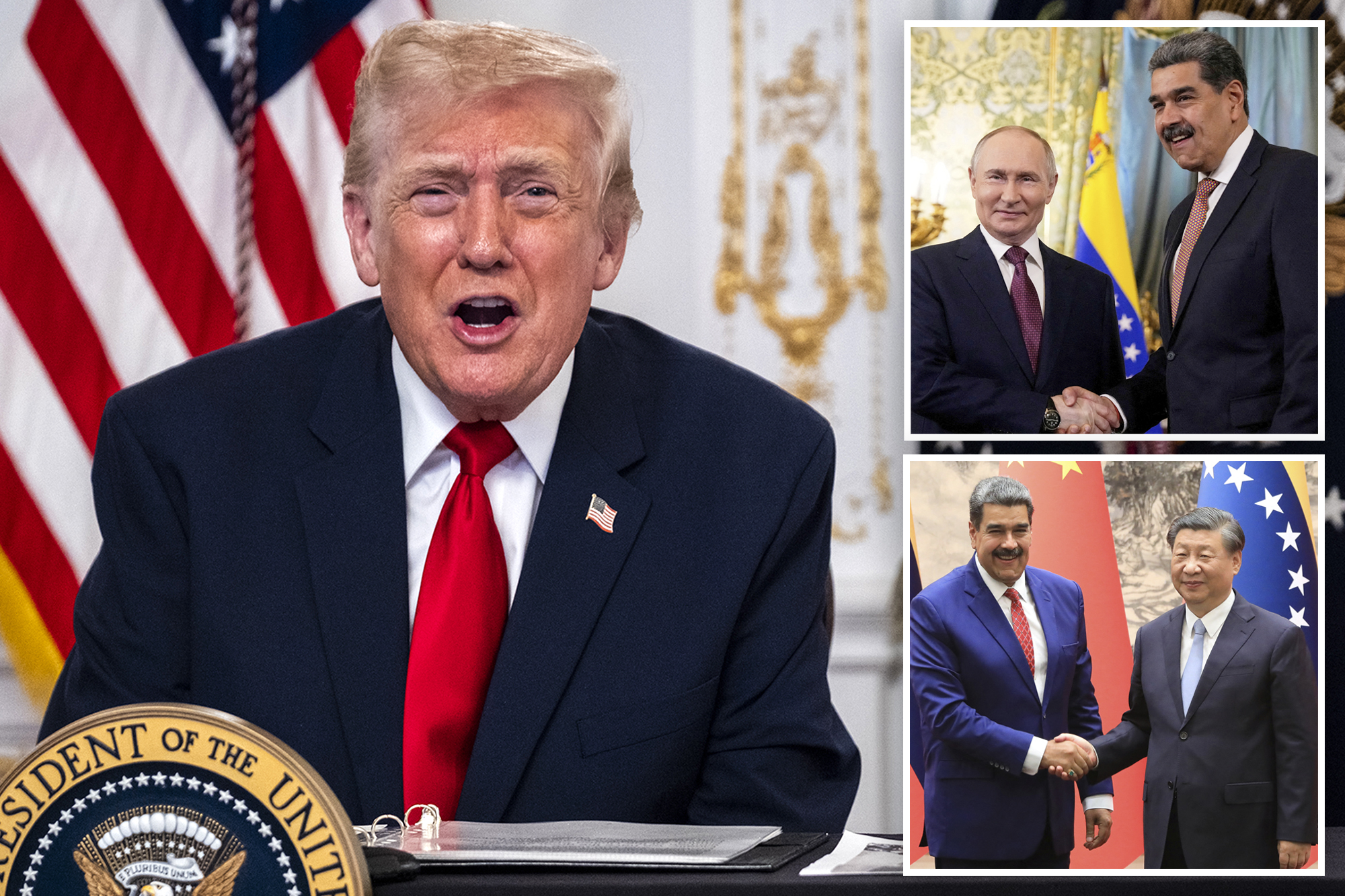
Venezuelan President Nicolás Maduro is experiencing a significant decline in support from his long-time allies, Russia and China, as pressure from the United States escalates. With President Donald Trump increasing military posturing against Caracas, both nations have distanced themselves from providing the usual military and financial assistance that Venezuela has relied upon in previous years.
Historically, Russia and China have been key supporters of Venezuela, supplying military equipment, financial aid, and military training in response to perceived American aggression. However, both countries face their own economic and military challenges, prompting a shift in their engagement with Venezuela. In 2018, Russia showcased its support by deploying two nuclear-capable bombers to the country as a show of force. Yet, as the war in Ukraine approaches its fourth year, Russia’s assistance appears to have diminished significantly. According to Vladimir Rouvinski, an international relations professor at Icesi University, “These are small gestures that are not going to be sufficient if the US moves to deadly force on Venezuela.”
Rouvinski highlighted that Russia’s recent aid to Venezuela consists of just two oil tankers intended to assist with crude oil exports to China. This limited support contrasts sharply with the vast military and economic alliances built during the tenure of Maduro’s predecessor, Hugo Chavez. Chavez used Venezuela’s extensive oil and mineral resources to secure over $30 billion in loans and deals with China, Russia, Cuba, and Iran, aimed at bolstering the nation’s infrastructure.
The relationship between these nations has strained further since Maduro assumed the presidency in 2013, particularly following a decline in oil production and increased civil unrest. The United States imposed sanctions on Venezuela’s oil industry in 2019, complicating the myriad agreements that had formed the backbone of Venezuela’s economic alliances.
As the situation develops, China stands to lose significantly if Maduro’s government collapses. The Stockholm International Peace Research Institute estimates that Beijing has invested more than $30 billion in arms to Caracas since 2000. This substantial financial commitment underscores the stakes involved for China, which has maintained a strategic interest in Venezuela as part of its broader regional ambitions.
The current geopolitical landscape resembles earlier tensions observed during the 12-day conflict involving Iran over the summer, where both Russia and China offered limited support to Tehran amid American and Israeli military actions. Recently, Maduro reached out to both Russian President Vladimir Putin and Chinese President Xi Jinping for assistance, particularly as the US began to mobilize forces in the Caribbean. According to documents obtained by the Washington Post, Maduro requested defensive radars, aircraft repairs, and even missiles from Russia, while seeking an “expanded military cooperation” with China to counter the perceived escalation from the US.
The withdrawal of support from Russia and China not only highlights the precarious situation facing Venezuela but also reflects the broader implications of shifting global alliances. As Maduro’s government navigates these challenges, the future of Venezuela’s international relations remains uncertain, raising questions about the country’s capacity to sustain its sovereignty amid increasing external pressures.