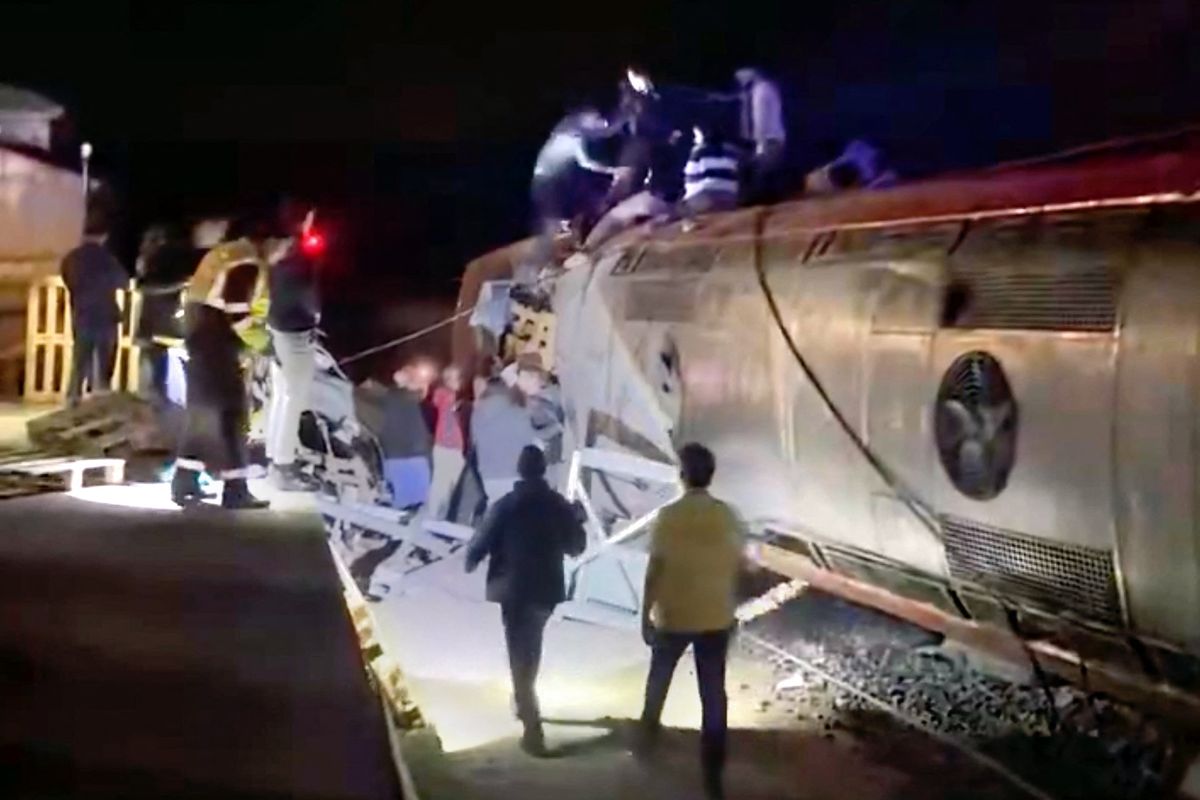
At least 39 people have died and many others have been injured after two high-speed trains collided near Cordoba, Spain, on the evening of March 31, 2024. The crash occurred at approximately 19:45 local time when the rear section of a train traveling from Malaga to Madrid derailed and struck an oncoming service from Madrid to Huelva, as confirmed by Spanish police and rail operator Adif.
Rescue operations are ongoing, with officials reporting that around 75 passengers were taken to the hospital, including 15 individuals in serious condition. Most of the injured are being treated in Cordoba, located about 390 kilometres south of Madrid. The Spanish Red Cross has set up a help centre in the nearby town of Adamuz to support emergency services and provide assistance to families seeking information about their loved ones.
Witnesses described harrowing scenes as passengers attempted to escape the wreckage. Journalists, including Salvador Jiménez from RTVE, reported that many used emergency hammers to break windows and flee the damaged carriages. Jiménez recounted, “There was a moment when it felt like an earthquake and the train had indeed derailed.”
Investigation Underway
The cause of the collision remains unclear, with Spain’s Transport Minister, Óscar Puente, calling the incident “a truly strange” occurrence, given that it happened on a renovated section of track. He noted that the derailed train was less than four years old and operated by the private company Iryo. The other train, which sustained significant damage, was managed by Renfe, Spain’s public rail operator.
According to Puente, the rear section of the first train derailed and collided with the front of the second train, leading to the first two carriages of the Renfe train being knocked off the track and down a four-metre (approximately 13-foot) slope. Authorities are currently assessing the damage and have suspended train services between Madrid and other cities in Andalusia as the investigation begins.
When questioned about the duration of the investigation, Puente indicated that it could take around a month to determine the full circumstances surrounding the tragedy.
Spain’s Rail Network and Safety Record
Spain boasts the largest high-speed rail network in Europe, with over 3,100 kilometres (approximately 1,900 miles) of track dedicated to trains traveling at speeds exceeding 250 kilometres per hour (about 155 miles per hour). The network is known for being both widely used and affordable, with Renfe reporting over 25 million passengers traveling on its high-speed trains in 2024.
Historically, Spain’s rail system has maintained a strong safety record. The deadliest train crash in the country’s recent history occurred in 2013, when a train derailed in the northwest, resulting in the deaths of 80 people. Investigations revealed the train was traveling at 179 kilometres per hour (about 111 miles per hour) in an area with a speed limit of 80 kilometres per hour (approximately 50 miles per hour).
As Spain grapples with this devastating incident, the focus will be on uncovering the factors that led to this collision and ensuring the safety of its extensive rail network in the future.