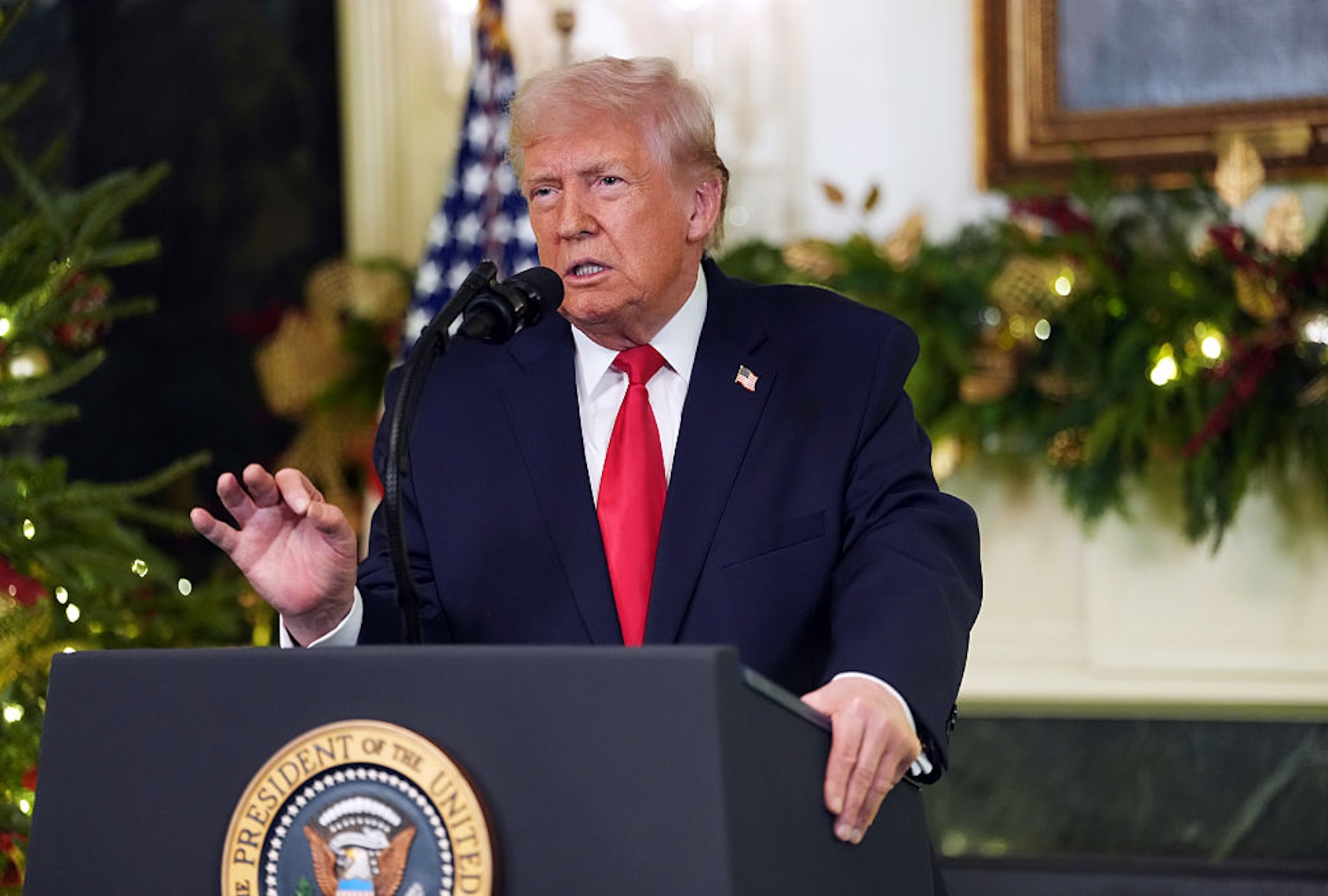
Former President Donald Trump delivered a contentious primetime address from the White House on March 8, 2026, aiming to reshape the economic narrative ahead of the upcoming midterm elections. In an 18-minute speech, he emphasized what he described as the successes of the Trump economy while simultaneously attacking the current administration’s handling of economic issues.
During his address, Trump claimed, “One year ago our country was dead. We were absolutely dead,” asserting that the nation has since rebounded to become “the hottest country anywhere in the world.” These statements came amid ongoing criticism of his administration’s approach to inflation and economic recovery.
Despite Trump’s assertions, many of his economic claims do not align with current data. He stated that “inflation is stopped” and prices are falling, yet recent consumer price index figures suggest otherwise. The inflation rate peaked at 9.1% in 2022, and while it has since decreased to approximately 2.5%, many Americans still feel the effects of rising costs, particularly in essential goods.
Trump’s speech reflects a broader misstep in understanding voter sentiment, which has been heavily influenced by inflationary pressures. This disconnect was also evident during the 2024 election, where both Joe Biden and Kamala Harris underestimated the impact of inflation on voters’ perceptions. In the wake of the Covid-19 pandemic, rising prices and supply chain issues have left many Americans feeling financially strained.
While the Biden administration has been credited with achieving a “soft landing” for the economy, quickly reducing inflation without plunging into recession, the public’s experience of economic hardship persists. An analysis by The Economist highlighted this sentiment, with a cover story declaring the American economy “The Envy of the World.” Yet, many voters remain skeptical.
Trump’s rhetoric suggests a strategy of deflection, as he laid blame for economic woes on Democrats and Biden. He portrayed his administration as having inherited an economy on the verge of collapse, claiming that only his leadership has salvaged it. However, evidence indicates that key economic indicators, such as unemployment, are worsening, with recent reports showing a rise to 4.6%, the highest since the peak of 2022.
As Trump continues to assert that his tariffs have been beneficial, recent statistics indicate that small businesses are struggling under the weight of these policies. Reports suggest that large corporations are depleting their inventories, raising concerns about future supply shortages and further economic stagnation.
Compounding these challenges, Trump faces a growing discontent among his voter base. Approval ratings reflect a decline in confidence regarding his economic management, with the latest Reuters/Ipsos poll showing a drop from 36% to 33% in economic approval. Meanwhile, disapproval has surged to 58%.
In the wake of his address, Trump’s strategy appears to hinge on projecting optimism and a return to economic prosperity, despite evidence to the contrary. His claims of a forthcoming “golden age” have not resonated with voters concerned about affordability, as demonstrated by shifts in voting patterns during recent elections in New Jersey and Virginia.
Susie Wiles, the White House chief of staff, has indicated that Trump will be active on the campaign trail, promoting his economic policies. JD Vance, the Vice President, has joined this effort, echoing Trump’s positive assessments. Vance claimed that the administration’s handling of the economy is sound and suggested that blame for current challenges lies elsewhere, particularly with undocumented immigrants.
Despite these assurances, the trajectory of the economy remains uncertain, and many Republican lawmakers may grow concerned that continued public narratives from Trump and his administration could hinder their electoral prospects in the upcoming midterms.
As Trump seeks to regain control over the economic narrative, the effectiveness of his message remains to be seen. The administration’s challenge will be to address the realities faced by American voters while simultaneously countering negative perceptions ahead of the crucial electoral period.