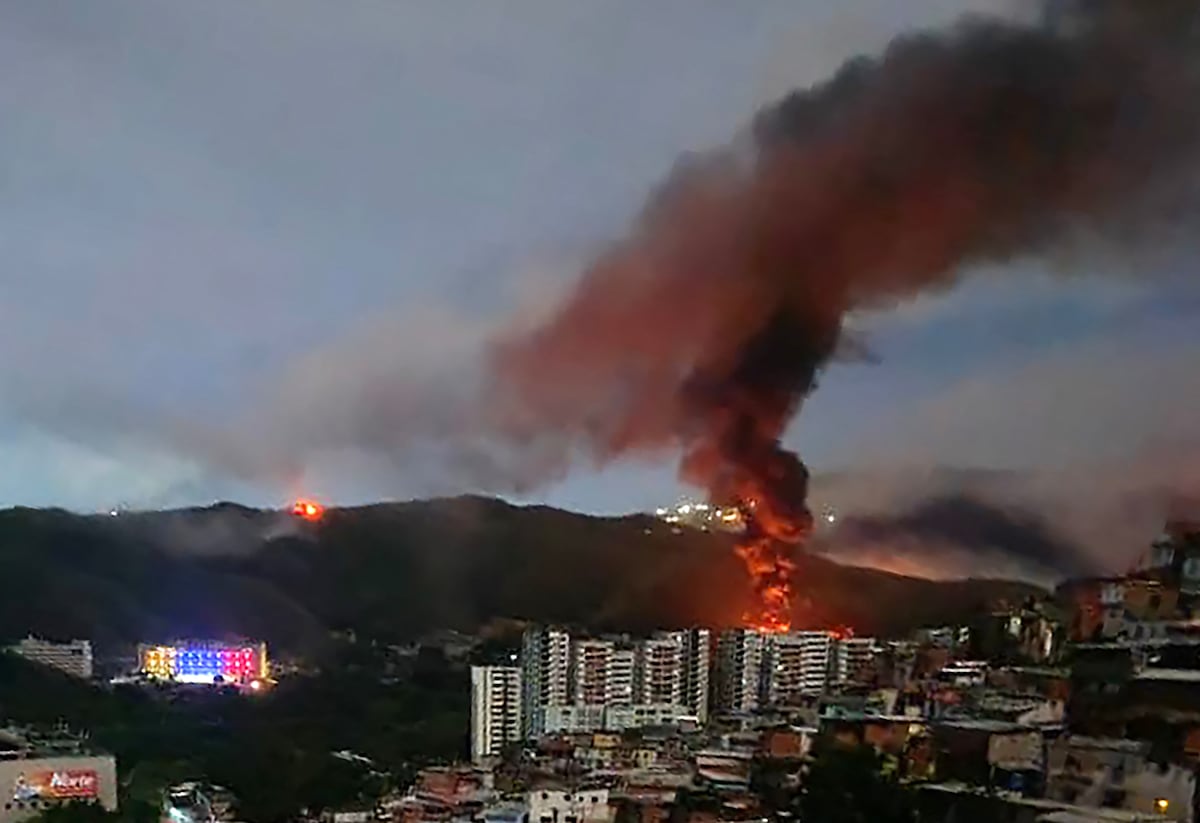
The U.S. military successfully executed a high-stakes operation over the weekend, capturing Venezuelan leader Nicolás Maduro and his wife, Cilia Flores, from their Caracas residence. The operation, known as Operation Absolute Resolve, involved more than 150 aircraft and was tightly coordinated to capitalize on a brief weather window. President Donald Trump and General Dan Caine, chairman of the Joint Chiefs of Staff, confirmed the details of the mission, which unfolded in less than five hours from authorization to extraction.
The operation marked a significant departure from previous regime-change efforts, which often relied on large troop deployments. Defense expert Carlton Haelig described the approach as “surgical,” emphasizing its precision and the extensive intelligence preparation that preceded it. “This was surgical,” Haelig stated, noting that the operation maintained a relatively large scale in terms of tactical support.
Planning for the mission commenced months earlier, focusing intensely on tracking Maduro’s movements, routines, and even personal details such as his dietary habits. General Caine credited the collaboration of multiple intelligence agencies including the Central Intelligence Agency (CIA), the National Security Agency (NSA), and the National Geospatial-Intelligence Agency (NGA) for the operation’s success, although specific contributions were not disclosed.
Intelligence expert Adam Taichi Kraft highlighted the continuous nature of intelligence collection, stating, “You cannot hide; we are in a zero-privacy world.” This ongoing surveillance, whether through physical observation or digital tracking, plays a critical role in the operational planning of such missions. Haelig added that understanding the defensive capabilities of potential adversaries is crucial for ensuring the safety of the operation.
While the U.S. Army’s elite Delta Force reportedly practiced for the extraction using a model of Maduro’s compound, confirmation of the specific units involved remains undisclosed. Operations of this scale inherently carry risks, including unexpected changes in air defense and potential threats along the route. Despite these concerns, the operation proceeded once favorable weather conditions were confirmed.
The go-ahead for the mission was issued at 10:46 p.m. Eastern Standard Time on January 2. Caine explained that helicopters carrying the extraction team, including law enforcement personnel, flew low over the water to avoid detection. The force was protected by a range of aircraft, including fighter jets and surveillance planes.
Shortly after midnight, the helicopters arrived at Maduro’s compound, where a firefight ensued. Reports indicate that one aircraft sustained minor damage but remained operational. Trump described the operation as a rapid engagement, stating that Maduro was “bum-rushed” in a heavily fortified residence.
By 3:29 a.m., the extraction team had successfully left the compound with Maduro and his wife, now facing federal criminal charges in New York. Defense Secretary Pete Hegseth later revealed that nearly 200 Americans were present in Caracas during the operation, although it remains unclear whether these individuals were military personnel or other support staff.
The Pentagon declined to comment on the involvement of special operations forces, citing operational security. Nevertheless, speculation exists regarding the participation of the 160th Special Operations Aviation Regiment, known for their expertise in conducting low-altitude missions. This unit often collaborates with Delta Force and Seal Team Six on sensitive operations.
Kraft emphasized the high caliber of personnel selected for such missions, noting that they are rigorously trained and prepared for various contingencies. “These guys are so well-rehearsed and so mature,” he remarked, highlighting the importance of extensive training and preparation.
As the world watches the developments surrounding Maduro’s capture, the implications of this operation on U.S.-Venezuela relations and international diplomacy remain to be seen.