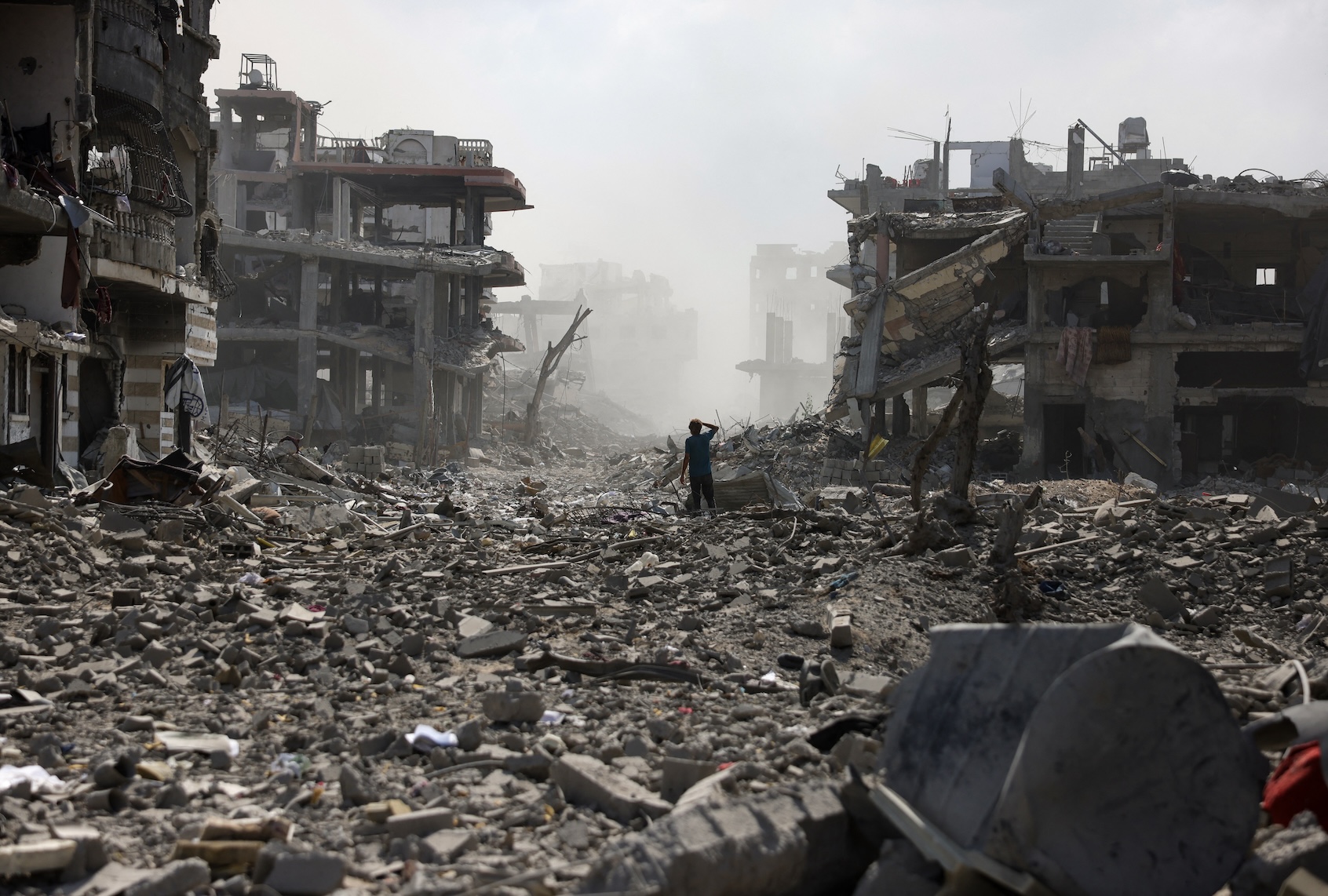
Recent events in the ongoing Gaza conflict have reignited discussions about U.S. foreign policy, particularly regarding its longstanding support for Israel. On March 24, 2025, an Israeli airstrike resulted in the deaths of at least two Palestinians, marking yet another breach of a ceasefire agreement established in October 2025. Since the ceasefire, the reported death toll among Palestinians has exceeded 600, not including those who have died from starvation or disease due to Israel’s continued partial blockade.
The Israel-Palestine conflict, although less prominent in U.S. media coverage in recent months, remains a contentious political issue influencing voter attitudes and cultural perceptions across the nation. According to polling and analysis, including a confidential Democratic Party report on the impact of the Gaza issue on Kamala Harris’ 2024 campaign, the significant civilian casualties in Gaza have prompted a reevaluation of the U.S.-Israel relationship.
Atrocity and Moral Judgment
Bruce Robbins, a professor at Columbia University, has extensively explored the concept of “atrocity” in the context of moral judgment. In his recent discussions, Robbins elaborated on how the tension between national duty and universal morality can lead to a moral scandal when atrocities occur. Reflecting on his father’s role as a bomber pilot in World War II, Robbins noted the complexities of viewing mass killings of noncombatants as atrocities, particularly when such actions are framed within the context of a ‘just war.’
Robbins pointed to the bombings of Hiroshima and Nagasaki as pivotal moments in the recognition of mass violence. He articulated that while some viewed these bombings as necessary wartime actions, others, like physicist Albert Einstein, recognized them as profound atrocities. This historical reflection raises significant questions about contemporary perceptions of violence and accountability.
In the current context of the Gaza conflict, Robbins suggests that the U.S. response to civilian deaths has sparked a new moral paradigm, especially among younger generations. Social media has played a crucial role in disseminating images and reports of violence in real-time, bypassing traditional news gatekeepers and shaping public opinion more directly.
Shifting Perspectives in American Society
The political dynamics surrounding the Gaza conflict reveal a notable shift in how different segments of American society perceive and respond to violence. Robbins identified a growing awareness among certain groups, particularly younger individuals and progressive Jewish communities, who view the actions taken by Israel as significant moral failings. This shift has led to increased activism and calls for accountability, such as the Boycott, Divestment and Sanctions (BDS) movement.
Many students and activists are now questioning the ethical implications of U.S. military support for Israel, particularly in light of companies like Lockheed Martin, which provide military hardware used in the conflict. Robbins pointed out that students at Columbia University have protested against board members with ties to such companies, reflecting a deeper engagement with global issues and a demand for moral accountability.
Robbins noted that the recognition of atrocities is not solely limited to the Israeli-Palestinian conflict. He highlighted ongoing atrocities in places like Sudan and Iran, emphasizing that the moral outrage is often more pronounced when the U.S. is seen as complicit in these actions. This complicity can lead to a sense of direct responsibility among American citizens, fostering a more urgent call for change.
The current landscape illustrates that the traditional narratives around national identity and moral justification are being challenged. As younger generations engage more critically with global affairs, their perspectives on foreign policy and military involvement are shifting, potentially altering the future trajectory of U.S. international relations.
As the conflict in Gaza continues, the ramifications of these evolving perceptions will likely influence U.S. political discourse, voting patterns, and the broader understanding of moral responsibility in the face of violence. The recognition of atrocities, both historical and contemporary, remains a vital part of this ongoing conversation.