The British military actively pursued the acquisition of extraterrestrial technology during the 1990s, as revealed in recently unsealed documents. These files, originating from the UK’s Defence Intelligence Staff—now known as Defence Intelligence—indicate that intelligence officers believed innovations from unidentified aerial phenomena (UAP) could enhance national defense capabilities. This initiative was prompted by a series of reported sightings over Belgium from November 1989 to April 1990.
Internal memos from March 1997 highlight the military’s concerns regarding UAPs. One memo stated, “Logic would indicate that if significant numbers are reporting seeing strange objects in the sky then there may be a basis in fact. It could be argued that UAPs pose a potential threat to the defence of the realm since we have no idea what they are.” The documents reflect a serious investigation into the potential threat posed by these phenomena, particularly following numerous accounts of “large, silent, low-flying black triangles” exhibiting propulsion capabilities beyond known technology.
Investigating Unidentified Aerial Phenomena
The reports contained in the files detail the military’s interest in the technological advancements suggested by UAP sightings. One report noted that “UAPs do not appear to use conventional reaction propulsion.” Observations from Belgian sightings indicated that these objects could hover for extended periods and accelerate to supersonic speeds, outpacing F-16 fighter jets.
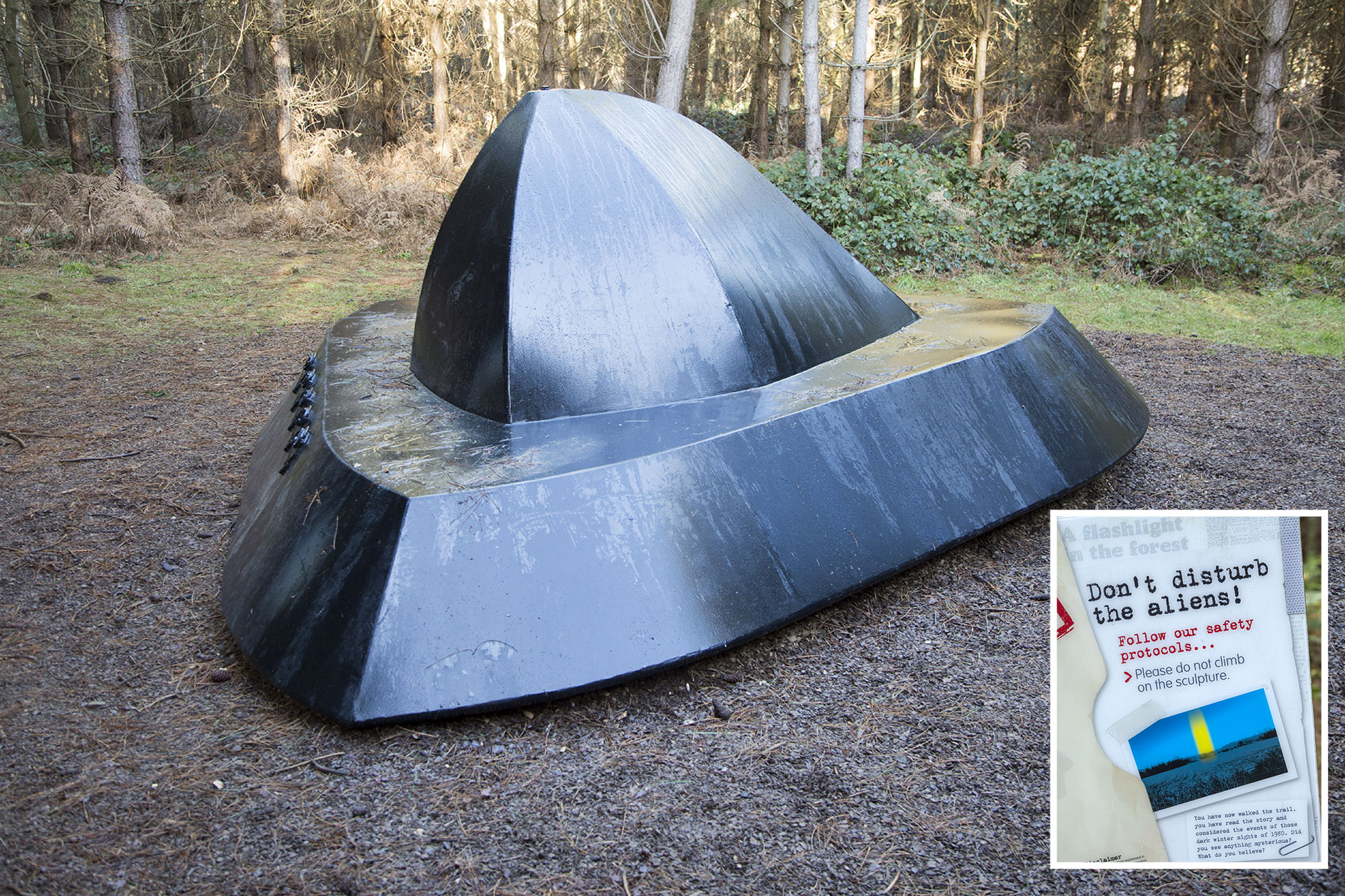
Another significant reference in the documents pertains to the incident at Rendlesham Forest, near a US Air Force base in Woodbridge, Suffolk. This event, described as a glowing “craft of unknown origin” that briefly landed before ascending rapidly in 1980, was reportedly confirmed by the US unit commander. The documents reflect a broader concern about UAP technology that many countries, including France and the United States, were also investigating.
The correspondence recognizes that while many UFO sightings lack credibility, a select few defy conventional explanations. The report states: “Some reports described objects in terms of manoeuvre, speed and shape which lie beyond our engineering knowledge and that which could be reasonably expected from hostile powers.” It emphasizes the challenges in assessing these reports swiftly to determine if an active response is warranted.
Official Acknowledgments and Future Implications
Despite the serious tone of these investigations, the documents also acknowledge the skepticism surrounding UAP research. They suggest that discussions about these phenomena often lead to jokes and skepticism, likely due to the association with fringe theories. One memo even cautioned that “mention of UAPs is guaranteed to generate mirth and a range of Little Green Men jokes.”
The unsealed documents have now been made accessible at the National Archives in Kew, southwest London. In December 2024, UK Minister for Defence Readiness, Luke Pollard, announced that the Ministry of Defence had ceased its investigations into UFOs or UAPs in 2009, and stated there are “no current plans” to allocate resources for future inquiries into alleged sightings.
The revelation of these secret files underscores a fascinating chapter in the UK’s military history, illustrating the lengths to which officials may have considered exploring technologies that could be beyond current human understanding. As narratives surrounding UAPs continue to evolve, the implications of these investigations remain a topic of intrigue and speculation.