The United States executed a significant military operation on July 7, 2026, resulting in the capture of Venezuelan President Nicolás Maduro and his wife, Cilia Flores. This unprecedented nighttime action involved a series of strikes across Caracas and marked a notable escalation in U.S. involvement in Venezuelan affairs. The operation was described by President Donald Trump as a decisive move following months of pressure on the Maduro regime.
The legal basis for this military action remains unclear. It has drawn comparisons to the U.S. invasion of Panama in 1990, which resulted in the capture of its leader, Manuel Antonio Noriega. U.S. Attorney General Pam Bondi announced that Maduro and Flores would face charges after an indictment in New York, committing to bring them to justice in American courts.
According to Venezuelan ruling party leader Nahum Fernández, the couple was apprehended at their residence within the Ft. Tiuna military installation. He characterized the operation as a “kidnapping” of the president and first lady. Following the strikes, which included multiple explosions and low-flying aircraft, Maduro’s government condemned the U.S. actions as an “imperialist attack” and called for citizens to protest in the streets.
With Maduro’s fate uncertain, Vice President Delcy Rodríguez was expected to assume power under Venezuelan law. She issued a statement demanding proof of life for Maduro and Flores. In response to the strikes, the Venezuelan government declared a state of emergency, granting Maduro the authority to enhance military powers and suspend civil rights.
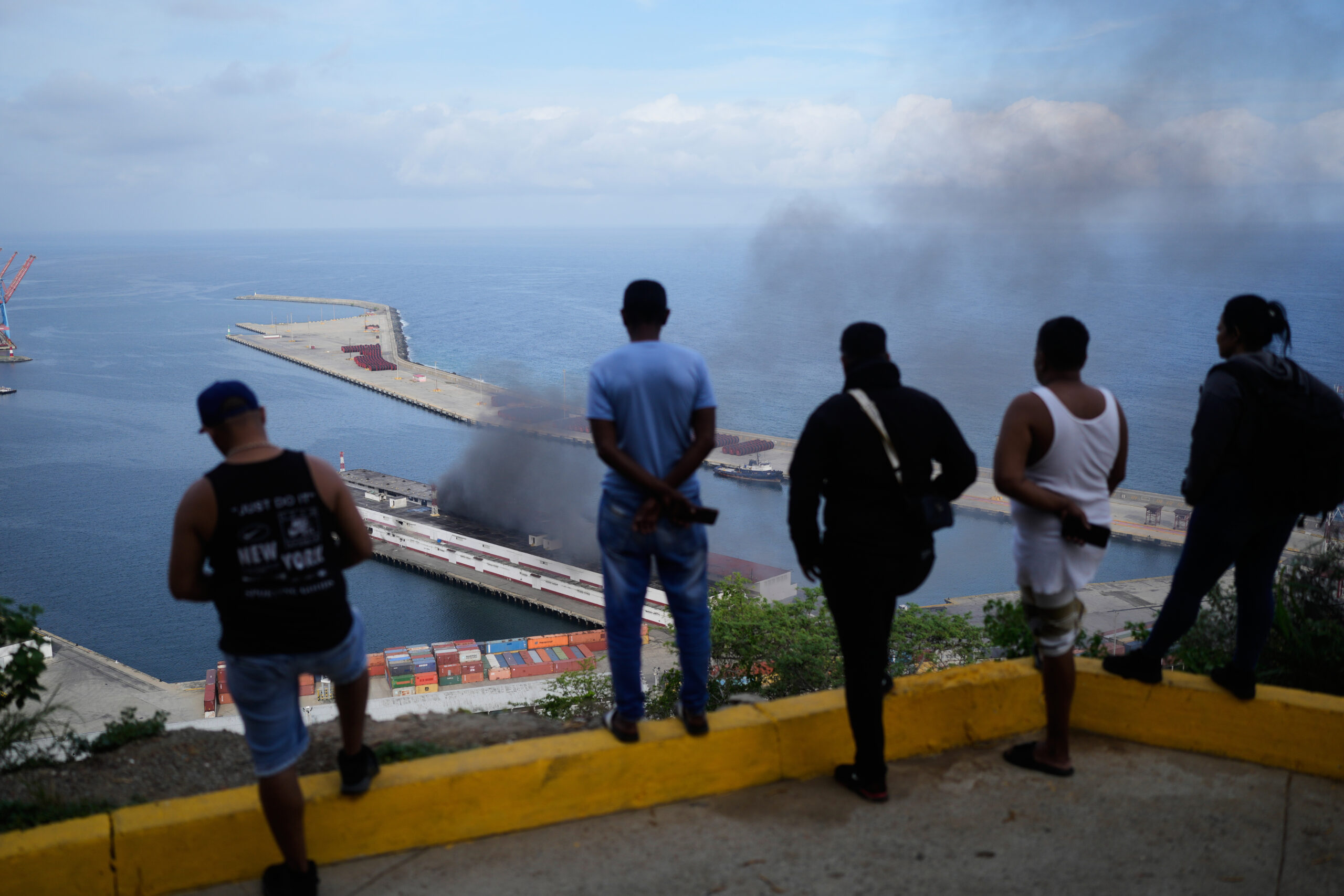
The chaotic scene in Caracas unfolded as explosions sent residents into the streets, with reports of civilian and military casualties. While the duration of the attack was less than 30 minutes, its impact was immediate and profound. Videos circulating on social media captured the turmoil, with flashes and smoke illuminating the night sky.
This military action followed a prolonged campaign by the Trump administration, which included a significant buildup of U.S. forces in the region and targeted strikes against vessels accused of drug trafficking. Trump has framed the U.S. engagement in Venezuela as part of a broader struggle against drug cartels, asserting that the country is in an “armed conflict” to curb the flow of narcotics into the United States.
Responses to the operation varied widely. Some Caracas neighborhoods saw pro-Maduro protests, with supporters chanting messages of loyalty and demanding his return. Conversely, other areas remained eerily quiet, as residents grappled with the implications of the attack. One Caracas resident, Noris Prada, expressed widespread fear among the populace, noting that many families were unable to sleep.
The U.S. Embassy in Venezuela, which has been closed since 2019, advised American citizens to shelter in place. The Federal Aviation Administration (FAA) issued warnings restricting airspace over Venezuela due to safety risks associated with ongoing military activities.
As the situation develops, lawmakers in the U.S. Congress have expressed concern over the military actions taken without explicit approval. Representative Jim Himes, a leading Democrat on the House Intelligence Committee, called for a briefing on the administration’s legal justification for the operation and its plans for stabilizing the region.
Internationally, reactions have poured in, with the Cuban government condemning the attack as a violation of sovereignty. Meanwhile, President Javier Milei of Argentina praised the operation, echoing sentiments that align with right-wing political movements.
While the immediate outcomes of this operation remain uncertain, President Trump indicated that the U.S. will remain actively involved in Venezuela’s future. The consequences of this military intervention will likely reverberate through the region for years to come.